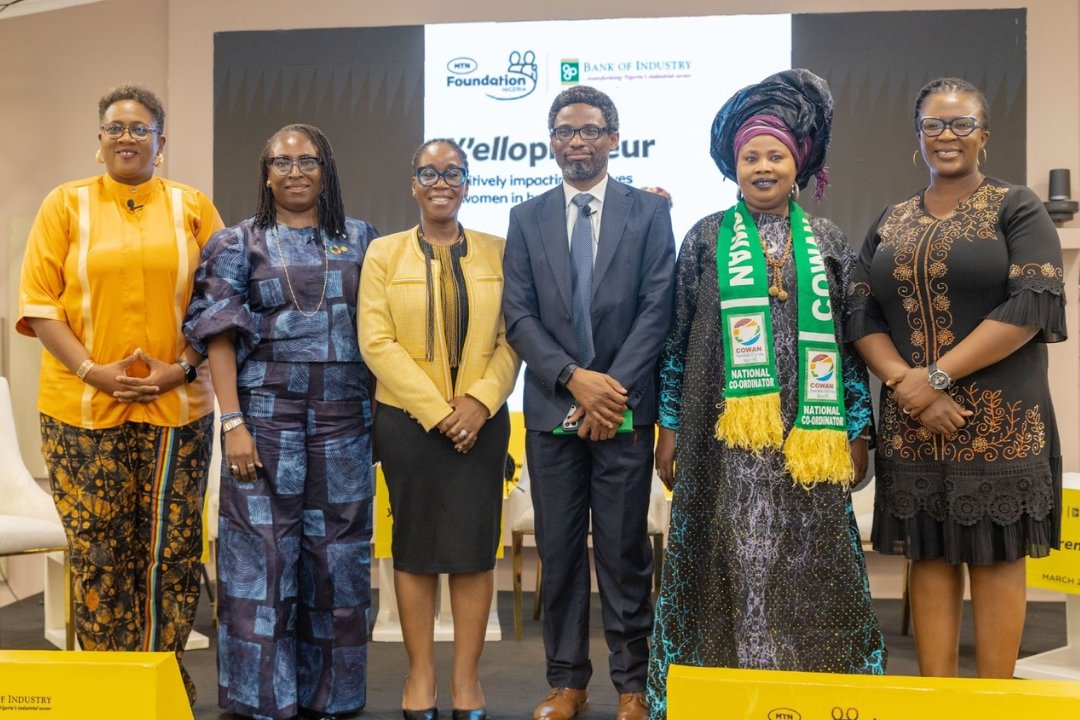

The Bank of Industry and the MTN Foundation have signed a memorandum of understanding to establish a N1 billion matching fund. This intervention, titled the Y’ellopreneur 3.0 Matching Fund, aims to improve financial access and provide training for women-led enterprises throughout Nigeria. The initiative is designed to assist 1,000 women through structured business instruction while offering affordable loans to 200 small and medium-sized businesses. These loans, reaching up to N5 million, are intended to help women overcome common barriers to capital such as strict collateral and documentation requirements.
During the signing ceremony in Lagos, Olasupo Olusi, the managing director of the Bank of Industry, explained that the programme focuses on women who operate outside formal finance systems. He noted that many women manage essential businesses within their local communities but often struggle to meet traditional lending criteria. Olusi said the partnership will test and refine a funding model for enterprises led by women while building a structure that can expand over time. He added that the programme will include training and mentorship, with about 1,000 participants expected to receive instruction in record keeping and business management.
The project combines financial support with mentorship to improve the overall productivity of these businesses. Odunayo Sanya, executive director of the MTN Foundation, stated that this third phase of the programme builds on previous successful iterations. “The foundation plans to build capacity for 30,000 businesses run by women by 2030, up from about 6,000 reached so far, and aims to unlock capital for 10,000 enterprises through the partnership,” she said. Sanya also mentioned that the initiative would seek support from other partners to further increase the funding available for business growth.
By targeting the specific needs of female entrepreneurs, the partnership hopes to drive more inclusive economic progress across the country. The training portion of the programme is expected to cover essential skills like financial record keeping and general management. This collaborative effort represents a significant commitment to strengthening productive sectors by empowering women who run micro, small and medium enterprises.