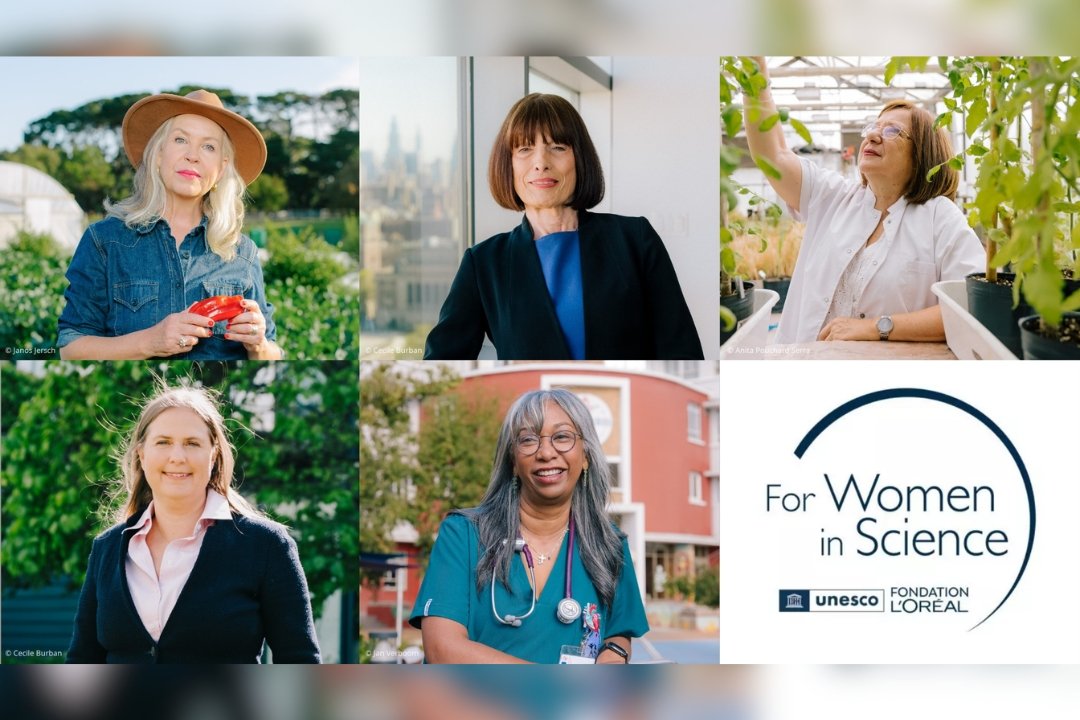

Five leading international researchers have been named as the winners of the 2026 L’Oréal-UNESCO For Women in Science International Awards. The laureates will receive recognition for their work in life and environmental sciences at UNESCO headquarters in Paris on 11 June 2026.
The 28th edition of the awards drew a record 504 nominations from 89 countries. An independent international jury led by Professor Brigitte L. Kieffer, Research Director Emeritus at the French National Institute for Health and Medical Research, selected the final five scientists. The wider scheme has now recognized more than 5,000 women globally, including 142 international laureates, seven of whom went on to win a Nobel Prize.
The announcement coincides with a milestone six-year renewal of the partnership between UNESCO and the Fondation L’Oréal. The extension intends to create an intergenerational network to support female researchers, spanning high school initiatives to localized funding schemes across 140 territories. UNESCO data shows that women comprise only one in three researchers globally, causing potential gaps and biases in global research.
The five regional laureates represent diverse fields of scientific research. Professor Liesl Zühlke from the University of Cape Town won the award for Africa and the Arab States. Her medical research focused on childhood heart conditions, particularly rheumatic heart disease, framing the illness as a socio-political health equity issue.
For the Asia and the Pacific region, Professor Felice Jacka from Deakin University was recognized for establishing nutritional psychiatry. Her studies explored how diet impacts brain and mental health, identifying nutritional issues as direct risk factors for mental disorders.
The European laureate is Professor Sarah A. Teichmann from the University of Cambridge, who utilized computational biology and genome science to map the human body at single-cell resolution. Her work provides core data sets used in biomedical research and drug discovery.
In Latin America and the Caribbean, Professor Raquel Lia Chan from the National University of Litoral was chosen for her discoveries in agricultural biotechnology. She identified specific biological mechanisms to improve plant tolerance to environmental shifts, helping to produce drought-tolerant wheat, maize, rice and soybean crops.
Professor Gordana Vunjak-Novakovic from Columbia University secured the North American award for her breakthroughs in human tissue engineering. She developed advanced biological substitutes and organs-on-a-chip to help repair damaged tissue and map human organ physiology.