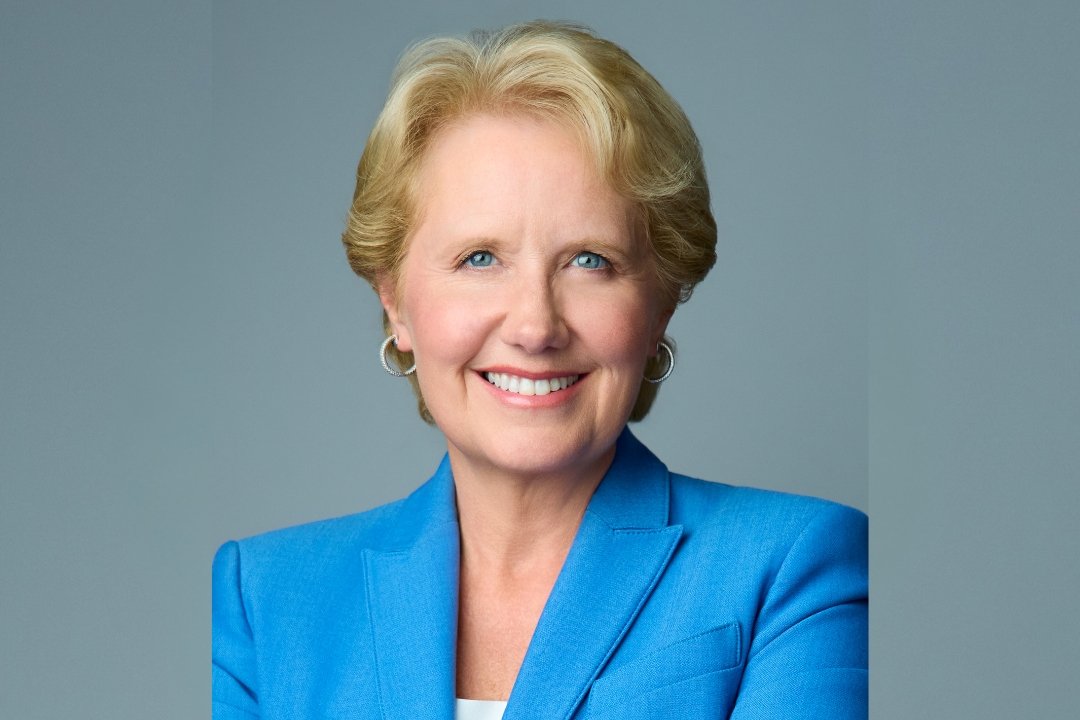

Anju Shrestha is the Chief Executive Officer of Himalayan Everest Insurance Limited (HEI), one of Nepal’s leading non-life insurers. Her career, built entirely within the company, spans nearly three decades, during which she rose from Assistant Officer to its top executive role. Under her leadership, HEI has reached NPR 4.03 billion in annual premium volume, sustained year-on-year growth well above the industry average and earned an ‘A Minus’ Issuer Rating from ICRA Nepal. She has overseen the company’s post-merger integration, digital transformation agenda and the development of specialised insurance products targeting underserved segments. In this issue of Women’s Tabloid, Anju provides her perspective on leadership, institutional resilience and what it means to build lasting trust in Nepal’s evolving insurance landscape.
Women’s Tabloid: HEI has delivered impressive financial momentum, reaching NPR 4.03 billion in premium volume last fiscal year and sustaining a remarkable 45% year-on-year growth into the current year. What are the key drivers behind this strong performance, and which business segments are leading this growth?
Anju Shrestha: Our strong growth has been driven by customer trust, disciplined underwriting, service excellence, and the successful integration of our post-merger operations. We have effectively leveraged our expanded branch network, stronger capital base, and enhanced market presence to capture new business opportunities.
While motor insurance remains a major contributor, we have also recorded healthy growth across property, engineering, health, agriculture, and corporate insurance segments. In a competitive market, our focus on customer-centric service, prudent risk management, and strategic partnerships has enabled us to achieve growth significantly above the industry average.
WT: ICRA Nepal recently assigned HEI an ‘A Minus’ Issuer Rating, noting a solvency position of 4.38 times the regulatory minimum and a combined ratio of around 80 per cent over the past three fiscal years. From a strategic perspective, how does this financial validation strengthen your positioning among your corporate partners?
AS: The ‘A Minus’ Issuer Rating from ICRA Nepal is an independent validation of HEI’s financial strength, prudent risk management, and long-term sustainability. Our solvency ratio of 4.38 times the regulatory requirement and a consistently healthy combined ratio of around 80% over the past three years reflect our strong underwriting discipline and capital position.
In Nepal’s increasingly competitive and regulated insurance market, such financial credentials provide greater confidence to corporate clients, banks, brokers, reinsurers, and other stakeholders. It strengthens our ability to secure large corporate accounts, support complex risk placements, and honour claim obligations promptly, ultimately reinforcing HEI’s position as a trusted and reliable insurance partner.
WT: As an early mover in the non-life consolidation wave, HEI successfully set the blueprint for scaling operations. Now that the market has contracted to 14 players, how is HEI leveraging its consolidated scale to outperform newer, leaner competitors?
AS: As one of the first companies to successfully complete a merger in Nepal’s non-life insurance sector, HEI has been able to realise the benefits of scale ahead of the market. Our larger capital base, wider branch network, diversified portfolio, and stronger technical capabilities allow us to serve customers more efficiently and manage risks more effectively.
While the industry has consolidated to 14 players, scale alone is not enough. Our focus has been on combining the strength of a larger organisation with agility, technology-driven service delivery, and faster decision-making. This enables us to offer comprehensive insurance solutions, settle claims efficiently, and build stronger relationships with customers and business partners, giving us a sustainable competitive advantage in the evolving insurance landscape.
WT: The Insurance Regulation 2081, effective February 2025, expanded product categories, tightened audit requirements and introduced micro-insurance provisions. Which of these changes has required the most significant adjustment in how HEI operates day to day?
AS: Among the various reforms introduced by the Insurance Regulation 2081, the enhanced governance, compliance, and reporting requirements have had the most significant impact on day-to-day operations. The new framework demands greater oversight, stronger internal controls, more rigorous risk management, and higher standards of transparency across all functions.
For HEI, these changes have required further strengthening of our compliance, audit, and reporting processes. While this involves additional operational discipline, we view it as a positive development that promotes greater accountability, protects policyholders, and contributes to the long-term stability and credibility of Nepal’s insurance industry. The introduction of micro-insurance provisions also presents an important opportunity to expand insurance access to underserved segments of the population.

WT: ICRA Nepal noted HEI’s strong liquidity and structural capacity to withstand spiked claim pressures from the major floods and protest-related losses of late 2025. How has your underlying reinsurance framework evolved to protect net profitability while maintaining rapid claim payouts?
AS: As climate-related events and large-scale losses become more frequent in Nepal, maintaining a robust reinsurance framework has become increasingly important. At HEI, we continuously review our reinsurance program to ensure adequate protection against catastrophic, high-severity, and accumulation risks while maintaining a balanced risk-retention strategy.
Our partnerships with reputed international reinsurers, combined with prudent underwriting and risk management practices, enable us to absorb claim volatility without significantly impacting profitability. This was particularly evident during the flood-related and other major loss events in 2025, where our strong liquidity position and reinsurance support allowed us to settle claims promptly while preserving financial stability. Our objective is to strike the right balance between protecting the company’s capital, ensuring business continuity, and delivering timely support to policyholders when they need it most.
WT: HEI’s Smart Claim service brought digital processing to retail claims. Beyond claims, where in the customer journey (onboarding, policy issuance or renewal) does the biggest technology gap still remain?
AS: While HEI has made significant progress in digitising claims through our Smart Claim platform, the larger opportunity lies in creating a fully seamless end-to-end customer journey. Across Nepal’s insurance industry, onboarding, policy issuance, renewals, and customer servicing still involve varying degrees of manual intervention and documentation.
Our focus is now on enhancing digital onboarding, instant policy issuance, automated renewals, and personalised customer engagement through data-driven solutions. As customer expectations continue to evolve, particularly among younger and digitally connected consumers, the future of insurance will depend not only on faster claims settlement but also on delivering a simple, convenient, and fully digital customer experience throughout the policy lifecycle.
WT: While the high-volume motor segment remains hyper-competitive, you have spoken previously about introducing specialised, niche products like women-centric insurance policies. How will diversifying into targeted products help insulate HEI from the price wars in conventional segments?
AS: Motor insurance will continue to remain an important segment for the industry, but it is also one of the most competitive and price-sensitive lines of business. Sustainable growth cannot rely solely on competing for market share through pricing.
At HEI, we see significant opportunities in developing specialised products that address the evolving needs of specific customer segments, including women, SMEs, farmers, professionals, and emerging digital consumers. Such products enable us to create value through tailored coverage, enhanced customer experience, and risk-specific solutions rather than price alone.
As insurance awareness grows and customer expectations become more diverse, targeted products will help broaden insurance penetration, diversify our portfolio, and reduce dependence on traditional business lines. This approach supports healthier underwriting performance and more sustainable long-term growth for both HEI and the industry.
WT: As HEI marks 32 years of operation and heads into FY 2083/84 (July 2026 – July 2027), what are the two or three strategic moves that will define its next chapter?
AS: As HEI enters its 32nd year, our next phase of growth will be defined by three key priorities: digital transformation, product innovation, and deeper market penetration. While Nepal’s insurance industry has grown significantly, insurance penetration remains relatively low, presenting substantial opportunities to expand coverage among individuals, SMEs, and underserved communities.
We will continue investing in technology to simplify customer interactions, enhance operational efficiency, and deliver faster, more personalised services. At the same time, we aim to develop innovative products that address emerging customer needs and evolving risk landscapes.
Equally important is our commitment to strengthening operational excellence, governance, and human capital. Our goal is not only to grow in size but also to build a more resilient, customer-centric, and future-ready insurance institution that creates long-term value for all stakeholders.

WT: Your career journey with HEI spans nearly three decades, rising from an Assistant Officer to Chief Executive Officer. How has your core leadership philosophy evolved during this transition, particularly when moving from execution-focused senior management to visionary executive leadership?
AS: Having spent nearly three decades with HEI, I have had the privilege of witnessing both the evolution of our company and Nepal’s insurance industry. Early in my career, success was largely about execution, operational efficiency, and delivering results. As I progressed into leadership roles, I realised that sustainable success comes not only from managing processes but also from inspiring people, building strong teams, and creating a shared vision.
Today, my leadership philosophy is centred on trust, empowerment, accountability, and continuous learning. In an industry undergoing rapid transformation, a leader’s role is not simply to manage change but to prepare the organisation to embrace it. My focus is on developing future leaders, fostering innovation, and ensuring that HEI remains resilient, customer-centric, and future-ready.
WT: By the time your four-year mandate concludes, what is the single key metric – whether it is premium growth, market reach, or customer expansion that will best define the success of your leadership at HEI?
AS: While premium growth and market share are important indicators, I believe the true measure of success will be the strength and sustainability of the institution we build. If, by the end of my tenure, HEI is recognised as one of Nepal’s most trusted, customer-centric, and financially resilient insurers, supported by strong governance, digital capabilities, and a high-performing team, I would consider that a meaningful achievement.
Ultimately, trust is the most valuable asset in the insurance business. Sustained growth, customer loyalty, and long-term value creation naturally follow when that trust is consistently earned and maintained.