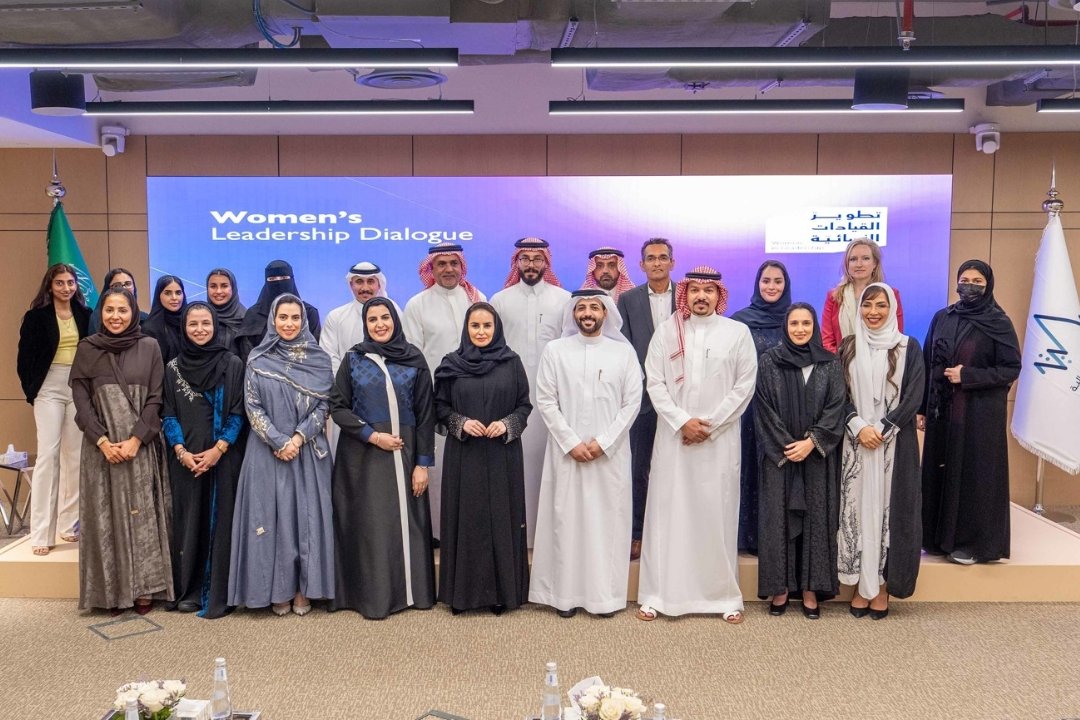

The Financial Academy has launched a national training programme called the Women in Leadership initiative to increase female representation across the financial services sector in Saudi Arabia. The official unveiling ceremony on Monday 08 June 2026 drew an audience of prominent female figures, regulatory officials, banking representatives and educational partners.
The scheme aims to prepare more than 2,000 women for advanced roles, directly addressing the broader economic objectives of Saudi Vision 2030 by encouraging workforce diversity. Organisers have designed structured learning tracks targeting 400 women already occupying executive or senior management positions, alongside an additional 100 candidates specifically selected for company board memberships. Curated alongside the London Business School and the Governance Center, the educational courses will combine practical executive workshops with professional mentoring schemes and corporate governance qualifications.
Recent figures demonstrate that women currently hold more than 44% of senior and middle management positions across the Kingdom, showing a rise of over 50% when compared against baseline data from 2017. Financial sector leaders stated that the strategic focus must now shift toward creating clear institutional pathways that provide high-potential female employees with direct access to senior boardrooms and executive roles.
The Financial Academy operates as an independent administrative entity that is linked directly to the Chairman of the Board of the Capital Market Authority (CMA). The organisation focuses on developing professional human resources by upgrading the skills, technical knowledge and operational culture of workers spanning the banking, finance, insurance and capital market ecosystems.
Mana bin Mohammed Al-Khamsan, CEO of the Financial Academy, said that the “Women in Leadership” initiative stems from the Academy’s belief that building specialised leadership is a key enabler for the sustainable growth and competitiveness of the financial sector. He noted that the upcoming phase demands leaders who possess the capability to make strategic decisions, drive transformation, and create a sustainable institutional impact.
Al-Khamsan further explained that the initiative was designed in partnership with London Business School and the Governance Center to provide an integrated leadership pathway. This pathway combines executive training, professional mentorship, and qualification for board membership, contributing to preparing qualified female leaders to shape the future across various financial services sectors and reinforcing their presence in executive and decision-making positions.
Deemah bin Yahya Al-Yahya, Secretary-General of the Digital Cooperation Organization and Board Member of Saudi National Bank (SNB), said that the Kingdom has moved past the question of women’s participation to a phase of expanding their influence at the highest levels of leadership, decision-making, and governance. She pointed out that women now occupy more than 44% of senior and middle management positions in the Kingdom, a surge of over 50% compared to 2017, highlighting that Saudi women are no longer merely participating in the national economic transformation, but have become its drivers.
Al-Yahya also stated that today’s challenge is no longer about discovering female talent, but rather about ensuring the availability of leadership pathways that provide them with the necessary experience and opportunities to reach executive positions and board memberships. She noted that while mentorship builds capabilities, professional sponsorship creates opportunities, emphasizing that the financial sector needs leaders who open doors for talents rather than just offering them advice. She added that the question is no longer whether women are ready to lead, but whether our institutions are creating enough pathways to empower this leadership.
The training rollout reflects a wider regional shift towards formalising executive corporate mentoring to maintain momentum in structural market transformations.