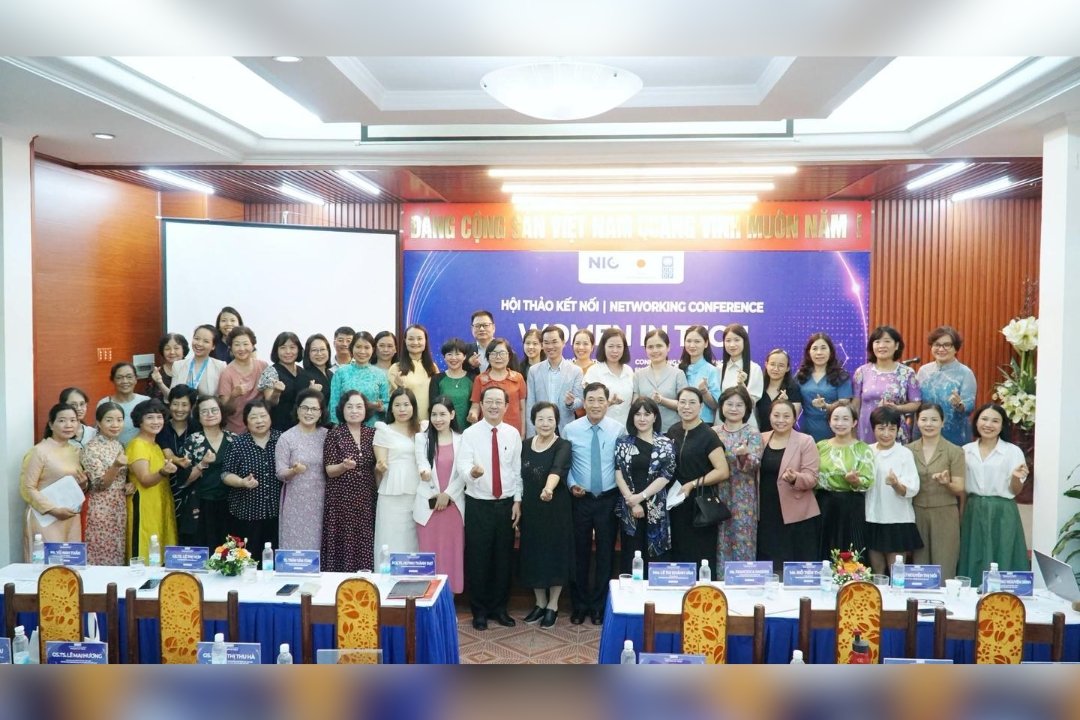

Female researchers presented green manufacturing, healthcare, and agricultural technologies at the Women in Tech Networking Conference in Hanoi on August 11, 2026.
The event aimed to connect female scientists directly with business executives and innovation bodies to speed up the commercialisation of academic research. Among the displayed innovations were fuel-saving systems, industrial microalgae farming, medicinal mushroom compounds, herbal antibiotics, silver nanoparticles, JEVA juice concentration methods, and ultrasonic processing equipment for agriculture.
Co-organisers included the National Innovation Center (NIC), the United Nations Development Programme (UNDP), the Vietnam Association for Science Information and Technology (VASTI), BK Holdings of Hanoi University of Science and Technology, and the Center for Science and Technology Application and Entrepreneurship under the Vietnam Association for Intellectual Women (VAFIW).
Funding for the initiative came from the Japanese Government as part of the “Vitalising the Vietnam National Innovation Centre” project managed by UNDP and NIC. Attendees included representatives from state departments, international institutions, research centres, universities, and commercial enterprises.
Matchmaking sessions allowed companies to state their technical requirements in healthcare, sustainable materials, and farming equipment. Intellectual property and technology valuation experts provided guidance during these discussions.
“Many promising research outcomes have not yet reached the market or connected effectively with businesses that have the capacity to scale and deliver innovations to society. The Women in Tech Technology Networking Conference was therefore designed to connect women scientists and businesses, innovation to market needs, and turning research into real-world solutions,” said Do Tien Thinh, Deputy Director of the National Innovation Center.
Dr Tran Van Tung, President of VASTI, stated: “Bridging the gap between scientific research and market demand remains a critical challenge. Researchers need pathways to bring their innovations into practice, while businesses require high-quality homegrown technologies to improve productivity, competitiveness, and sustainable growth.”
Industry officials stressed that better integration between scientists and investors remains essential for economic progress.
Associate Professor Dr Huynh Thanh Dat, Vice Head of the Party Central Committee’s Commission for Communication, Education and Mass Mobilisation, highlighted: “Experience shows that open and inclusive research environments, which encourage participation across generations, disciplines, and perspectives, tend to foster more sustainable creativity and innovation. In such environments, the active participation of women scientists not only enriches research and innovation but also helps build an academic culture grounded in collaboration, responsibility, and knowledge sharing.”
UNDP Deputy Resident Representative Francesca Nardini noted that while women are making important contributions to science and technology, the potential of women scientists remains underutilised, particularly in leading STEM research, owning intellectual property and commercialising research results.
“Creating more opportunities for women scientists to lead research, own intellectual property, connect with businesses and commercialize their innovations is therefore not only about gender equality. It is also about strengthening Viet Nam’s innovation capacity, enterprise competitiveness and future growth.” Nardini added.