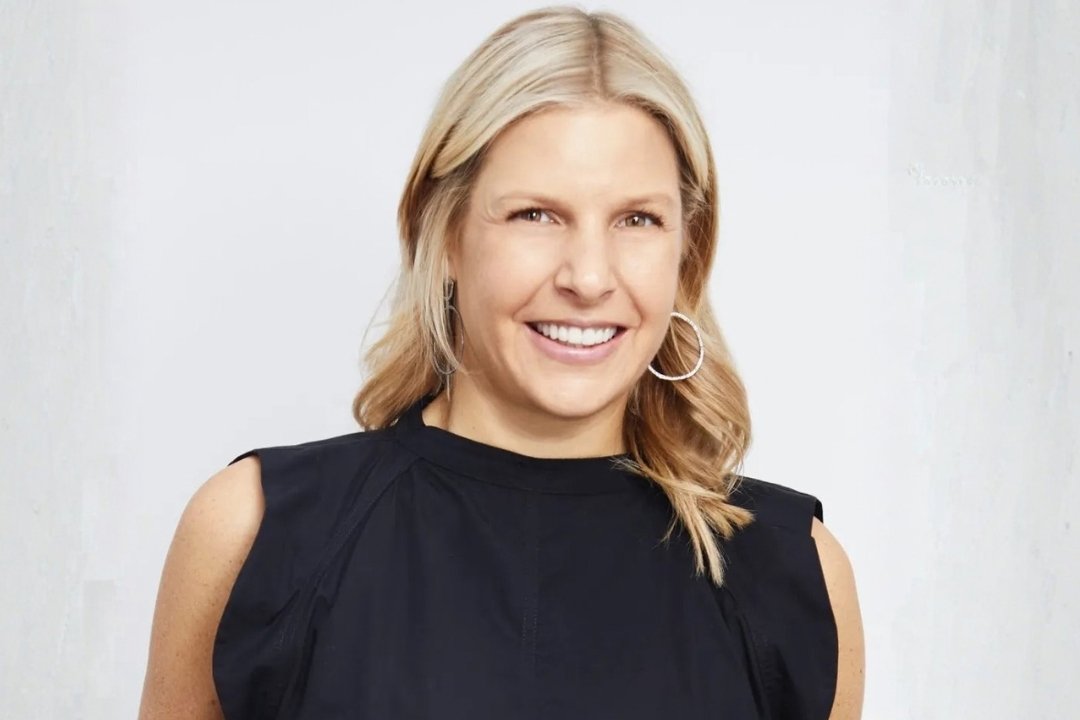

Caryn Seidman-Becker has built her reputation on seeing value where others see problems. In 2010, she acquired the assets of CLEAR, then a struggling identity verification business that had gone bankrupt during the financial crisis, for $6 million. More than a decade later, the company has become a publicly listed technology business with operations spanning travel, healthcare, sports and digital identity.
That transformation has placed Seidman-Becker firmly among the women shaping the next generation of technology businesses.
Her story is particularly relevant now. She appeared at the Forbes Power Women’s Summit in New York on 10 September, where she discussed CLEAR’s evolution beyond airport security and its ambitions in identity technology.
From investment to entrepreneurship
Before taking over CLEAR, Seidman-Becker had already built a career in investment management.
From 2002 to 2009, she was managing partner of Arience Capital, an investment firm she started that focused on value-oriented investments across multiple industries. CLEAR represented a very different challenge.
The company had been founded in the aftermath of 9/11 as a way of using biometrics to verify travellers’ identities, but financial difficulties eventually pushed it into bankruptcy.
Seidman-Becker saw something others had missed. Rather than treating CLEAR simply as a failed airport business, she believed its underlying identity technology could support a much larger opportunity.
She acquired the company’s assets and its existing biometric database for $6 million and relaunched the business in 2010.
The early years were not an overnight success. After relaunching CLEAR, it took several years to build its airport network. A major turning point came in 2016, when Delta Air Lines began offering CLEAR to frequent travellers and acquired a stake in the company. American Express followed as a partner in 2019.
The business eventually went public in 2021.
Building beyond the airport
The most interesting part of Seidman-Becker’s story today is that she is not treating CLEAR’s airport business as the end point.
CLEAR’s core proposition is identity verification. Its technology uses biometric information to confirm that a person is who they claim to be. That same capability can potentially be applied wherever secure identity matters.
The company now operates across travel, sports, healthcare and other consumer and enterprise applications. CLEAR says it has more than 43 million verified users and hundreds of partners.
Healthcare has become one of its most significant areas of expansion.
CLEAR’s identity technology is being integrated by healthcare organisations to help verify patients when they arrive for appointments and treatment. The company has also expanded into digital healthcare identity, including a Medicare contract that allows new enrollees to use facial verification to access their accounts.
The underlying business idea is straightforward: identity verification is not only useful when someone is passing through an airport. It can also matter when entering a hospital, accessing a digital service, attending a sports venue or completing a transaction.
That gives Seidman-Becker a much larger market to pursue.
A business that has become highly profitable
The financial results show how dramatically CLEAR has changed since its bankruptcy-era acquisition.
For the full year 2025, CLEAR reported revenue of $900.8 million, up 16.9% year on year. Net income reached $168.1 million, while adjusted EBITDA was $262.2 million. Total CLEAR membership reached 38 million at the end of the year, an increase of 31.5%.
CLEAR also reported 60 CLEAR+ airports and 340 retail locations offering TSA PreCheck enrolment as of the end of 2025.
Forbes reported in June 2026 that the company’s market value had reached approximately $7.6 billion and estimated Seidman-Becker’s 14.5% stake at around $1.1 billion, making her one of America’s self-made female billionaires.
The numbers are striking, but the more important business lesson lies in how the value was created.
Seidman-Becker did not build CLEAR by starting with an entirely new idea. She identified an existing technology business whose first model had failed, acquired it at a distressed valuation and spent years repositioning and scaling it.
The next identity business
Seidman-Becker now sees CLEAR as an identity company rather than simply an airport service.
Artificial intelligence is making that distinction increasingly important. As AI-generated content, automated systems and digital transactions become more sophisticated, businesses face a growing need to establish who is actually behind an interaction.
That creates an opportunity for companies specialising in secure identity.
CLEAR’s challenge is that the company is moving from a market where it has a strong established position, airport security, into areas where it faces much larger technology and identity businesses.
Seidman-Becker’s track record suggests she is comfortable with that kind of challenge.
Her career has moved from investment management to acquiring a distressed business, rebuilding it, taking it public and then attempting to redefine the market in which it operates.
At the Forbes Power Women’s Summit this month, her message was focused on what comes next for CLEAR. The company is now trying to make identity verification part of everyday life rather than something people encounter only at an airport.
For Seidman-Becker, that may ultimately prove to be the bigger business opportunity.
Her story is therefore not simply about the success of CLEAR. It is about the value of recognising potential in an overlooked business, having the conviction to rebuild it and continuing to look for the next market once the original opportunity has been established.