
The energy transition is often described as a contest of technologies: wind against gas, lithium against hydrogen. But the real friction has never been on a solar farm. It has always been in the boardroom. The shift from a carbon-heavy past to a sustainable future is driven by decisions, and in 2026, a specific generation of women is at the heart of that process.
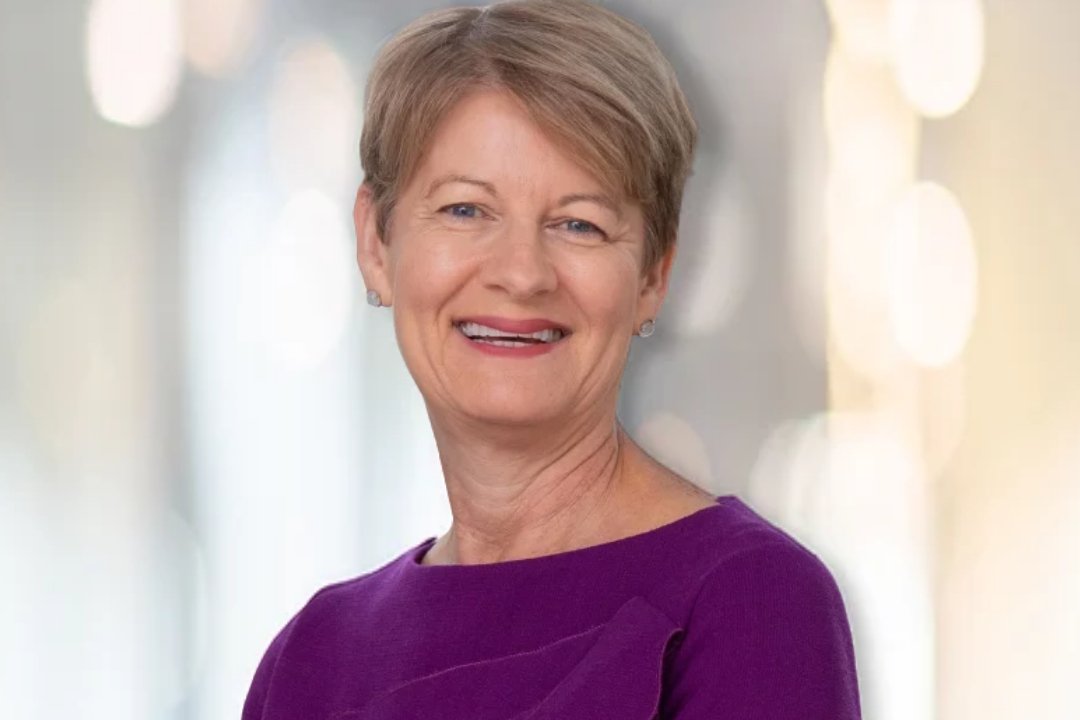
On 20 April 2026, the Supervisory Board of OMV confirmed Emma Delaney as its new Chairwoman of the Executive Board and Chief Executive Officer, effective September 1. She will be the first female CEO in the company’s 130-year history. She joins from bp, where as Executive Vice President she led an organisation of more than 50,000 people across 50 countries, spanning fuels, biofuels, aviation and e-mobility, and brings more than three decades of energy sector experience. Her appointment is one of several senior leadership changes reshaping the top of the global energy industry this year. It is a signal, not an isolated event.
The Long Game
To understand why this matters, you have to look at the industry these women entered thirty years ago. It was a world of rigid hierarchies and field cultures that left almost no room for different perspectives. For women who joined the energy sector in the late nineties and early 2000s, the path was rarely straightforward. They were frequently the only woman in the room at remote refineries or on offshore platforms, proving their technical capability in an environment that treated their presence as an anomaly rather than an asset.
They did not simply survive that culture. They mastered it. They learned how the grid actually works, how supply chains break under pressure and how large capital projects succeed or fail. OMV, the integrated energy, fuels and chemicals company that Delaney will lead, is itself undergoing a fundamental shift toward sustainable aviation fuel, circular materials and net zero targets by 2050. That is exactly the kind of complex, long-term transformation that rewards the depth of knowledge this generation has spent decades building. By the time the world understood the urgency of moving away from carbon-heavy systems, these women had already built the experience required to manage that shift. They are not theorists. They are practitioners.
The Energy Ceiling
The data, however, tells a more complicated story. According to IRENA’s October 2025 report, Renewable Energy: A Gender Perspective, women currently hold 32 per cent of full-time jobs in the global renewable energy workforce. That is higher than in oil and gas, where the figure sits at around 23 per cent, and higher than in nuclear. On the surface, renewables look better than most of the energy sector.
But workforce numbers and leadership numbers are two very different things. At the senior management and board level, women account for just 19 per cent of roles across the renewable energy sector. That figure has not changed since IRENA first measured it in 2019. The IEA’s 2025 Gender and Energy Data Explorer puts the broader energy sector figure at 18 per cent, up from 13 per cent in 2015. Progress is being made, but slowly, and the share still falls short of the economy-wide average of 25 per cent. This is the energy ceiling: a sector that looks better than its fossil fuel counterparts on paper, but has not yet put women in the roles where the real decisions are made.
For investors and regulators looking at the social side of ESG reporting, that gap is becoming harder to ignore. A leadership figure who has not moved in six years is not making slow progress. It is a structural problem.
The renewable energy sector now employs over 16 million people globally, according to international employment reviews tracking the energy transition. This shift represents one of the biggest employment movements in modern industrial history. What is still being settled is who runs it.
The Shift in the Room
The executives now moving into the most senior energy roles are not there because of a diversity programme. They are there because thirty years in one of the world’s hardest industries prepared them for it.
Zoë Yujnovich became Chief Executive of National Grid in late 2025, after a career that took her through Shell’s Integrated Gas and Upstream operations and the CEO role at the Iron Ore Company of Canada. She is now overseeing one of the largest grid investment programmes in UK history. Amanda Dasch was appointed Chief Development Officer at Ørsted in May 2025, having previously run its Americas business as CEO. She now leads commercial development across Europe, the Americas and Asia-Pacific for the world’s largest offshore wind developer. Emma Delaney brings the same depth of cross-border experience to OMV’s transition agenda.
What these appointments share is not a background. It is a pattern. Each of these women built careers in sectors, traditional energy, mining and heavy industry, that were not built with them in mind. Over time, they developed what might be called operational diplomacy: the ability to get large, complex organisations moving in the same direction across different countries, regulations and commercial pressures. That skill is exactly what the energy transition needs from the people running it.
They can see what needs to go because they were never entirely inside it.
The Generational Arc
The energy transition is the biggest industrial undertaking in human history, and it is still gathering pace. The Baltic Sea is one of the fastest-growing offshore wind regions in the world, with new capacity agreements being signed between governments and developers. North Africa is taking shape as a major solar export corridor, channelling generation toward European industrial demand. The decisions about who shapes them are being made right now.
The women at the top of this sector are not a trend. They are a generation shaped by the same decades of experience, carrying the same clear sense of what the industry has to become. Their careers began when the question was how much could be extracted from the ground. They are ending them at a time when the question is how much can be saved. They are among the best-placed people in the world to answer it.
The most powerful resource in the world is not beneath the ground. It is at the head of the table.