
The last time a technology rewrote the rules of global business this fast, it cost investors $5 trillion. Between 1995 and 2000, the dot-com boom attracted billions of dollars, launched thousands of companies and minted a generation of overnight billionaires. Then, in eighteen months, it collapsed. Not because the technology failed. Because the people running it did.
The AI boom of 2023 to 2026 has followed a different script. The capital flows are larger, with over $300 billion in total ecosystem capital commitments dedicated to AI infrastructure and development in 2024 alone, according to PitchBook data. The market penetration is faster. And the stakes, measured not just in shareholder value but in social infrastructure, healthcare, legal systems and national security, are incomparably higher. But something else is different too. The governance conversation has arrived early. And that changes everything.
We must build these technologies to empower, not to replace. We must ensure that AI is designed and used responsibly. It is not just about what technology can do; it is about what it should do.
From “Move Fast and Break Things” to “Trust or Lose Everything”
In 2012, Mark Zuckerberg’s infamous motto was not a warning. It was a strategy. Speed was the competitive advantage; consequences were someone else’s problem. The era it defined produced extraordinary wealth and extraordinary damage in roughly equal measure. By 2024, the bill had arrived: $5 billion in FTC fines, congressional hearings, a global backlash against algorithmic manipulation and a trust deficit that no amount of rebranding has fully repaired.
The AI industry watched and took note.
The companies that have pulled ahead in this cycle, among them Anthropic, Google DeepMind, Mistral and Cohere, are not the ones that moved the fastest. They are the ones that moved with the most credibility. Boards want partners, not experiments. Governments want accountability, not apologies. Enterprise clients want guarantees, not promises. The currency of this boom is not disruption. It is trust.
This is not a soft observation. It is a commercial reality. McKinsey’s 2024 research shows that 78% of organisations are now deploying AI in at least one business function, a dramatic increase from prior years. This widespread adoption is making corporate AI governance an increasingly critical focal point. In regulated industries such as finance, healthcare, legal and defence, governance frameworks have become essential for competitive advantage. The product has to work. But first, it has to be trusted.
The Research That Boards Cannot Ignore
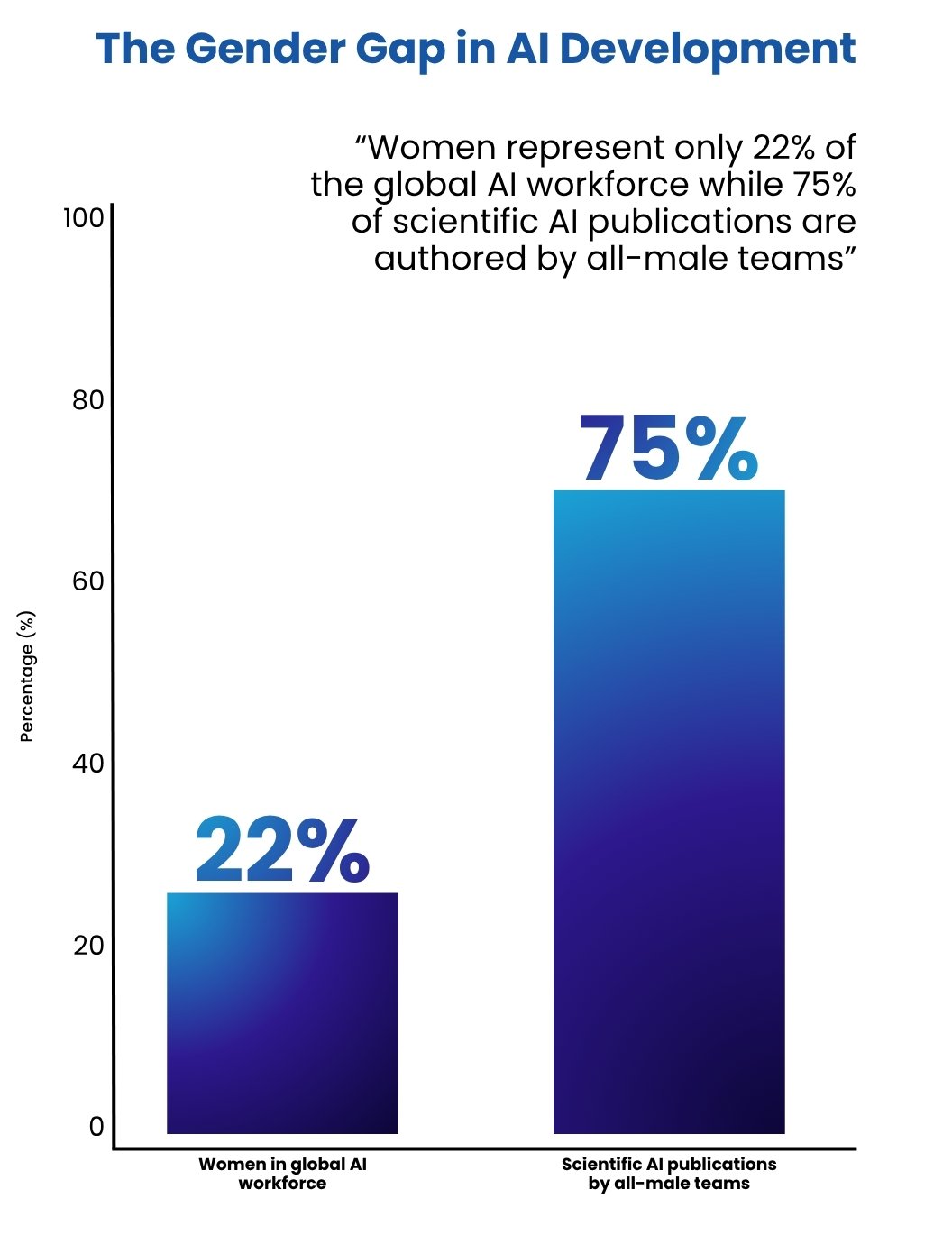
The absence of women in AI development teams creates a measurable problem. According to Forbes research, 75% of scientific AI publications are authored by all-male teams. This concentration of perspective during critical algorithm design phases means that entire categories of bias go undetected until deployment. When monocultures design systems, they miss failure modes that diverse teams would catch as a matter of course.
The real-world consequence of this perspective gap is not theoretical. According to data compiled by UN Women and UNESCO, prominent Large Language Models consistently display measurable gender bias. These systems associate women with domestic roles—”home,” “family,” “caring”—while linking men to professional terms like “executive,” “business,” and “career.” This is not accidental. It is the product of training on data generated by the 75% of researchers and developers who are men. The systems learned from their blind spots.
The financial implications are direct and structural. The EU AI Act, which came into force in August 2024, carries specific enforcement mechanisms for companies that fail to address algorithmic bias in high-risk systems. Non-compliance with prohibited AI practices carries fines of up to €35 million or 7% of global annual turnover, whichever is larger. For a Fortune 500 company, that calculation concentrates minds at board level with considerable speed. That figure does not include the longer-term cost of lost enterprise contracts or reputational damage.
What matters is not sentiment about diversity. It is decision-making quality at the precise point where commercial ambition meets ethical constraint. That point, increasingly, is where fortunes are made or lost. Boston Consulting Group’s research on AI success factors shows that AI outcomes depend 10% on algorithms, 20% on technology infrastructure, and 70% on people and business processes. Teams that include voices trained in ethics and cultural context make better strategic decisions about where and how to deploy AI. That is not sentiment. That is commercial advantage.
The ESG Angle That Has Moved from Nice-to-Have to Non-Negotiable
Five years ago, a board could treat AI diversity as a reputational metric, something to mention in the annual report and largely ignore in the boardroom. That calculation has changed.
The EU AI Act, which came into force in August 2024, includes specific requirements for diversity in high-risk AI system development and oversight. Companies deploying AI in categories including recruitment, credit scoring, healthcare triage and law enforcement must demonstrate documented evidence of diverse development and audit teams. Non-compliance carries fines of up to 3% of global annual turnover, a number that concentrates minds at board level with considerable speed.
In the UK, the Financial Conduct Authority’s 2025 AI Governance Framework extended similar requirements to financial services firms using AI in client-facing decisions. The Bank of England’s Prudential Regulation Authority followed with guidance linking AI governance diversity to Operational Resilience ratings. For an FTSE 100 financial institution, that linkage is not abstract. It directly affects capital requirements.
Beyond regulation, institutional investors have updated their ESG scoring models accordingly. BlackRock, Vanguard and State Street, collectively managing over $20 trillion in assets, now include women in AI leadership as a discrete metric in their governance assessments. Companies without meaningful representation in technical AI roles face sharper questions at AGMs and, in several documented cases in 2025, active engagement campaigns from major shareholders.
The message arriving in boardrooms from multiple directions is consistent: diversity in AI leadership is no longer a values question. It is a risk management question.
What “The Gender Dividend” Actually Means in Practice
The phrase is deliberate. A dividend implies a return on investment. It implies that something of value was committed, and something greater comes back.
The current data supports that framing precisely. According to the World Economic Forum, women make up approximately 22% of AI professionals globally. This significant underrepresentation creates an echo chamber effect during critical design and deployment phases. Closing this representation gap would expand the pool of perspectives available to catch bias, improve risk identification, and accelerate product development. The economic value of that diversity is not speculative. It is modelled on historical productivity gains from workforce diversity interventions, stress-tested against AI-specific risk data and published with transparent methodology.
More practically, the companies that move first in building genuinely diverse AI leadership structures will set the governance standards that the rest of the industry is measured against. In the AI economy, governance is not a cost centre; it is a competitive moat.

The Shift in Institutional Trust
The institutional market is paying attention, and in 2026 the pressure is coming from both directions. A 2026 Morgan Stanley report found that 92% of individual investors globally are interested in sustainable investing, with performance cited as the primary driver. That rising retail conviction translates into bottom-up pressure on the pension fund trustees, insurance executives and LP committees who allocate capital on their behalf.
At the top of those institutions, the logic is sharper still. Pension funds and insurance companies operate under a strict fiduciary duty to match long-term assets against long-term liabilities, a discipline known as asset-liability management. Patient capital approaches, with their emphasis on contracted revenue, regulatory durability and long-term infrastructure assets, provide a structural answer to that requirement. These institutions are not backing female-led AI governance initiatives because it is the right thing to do. They are backing them because diverse teams produce better risk management outcomes.
They are backing the managers who treat AI development like an engineering problem that requires rigorous testing and diverse input rather than a social movement. This generation of women has reframed the AI governance narrative. It is no longer about doing good. It is about managing risk in an era where algorithmic bias is a measurable financial liability.
The Policy Shift
Governments have stopped talking about women in AI. Some have started funding them.There is a reliable way to distinguish a genuine structural shift from a public relations exercise. Follow the money.
For years, the conversation about women in artificial intelligence lived almost exclusively on the keynote circuit: panel discussions, diversity pledges and carefully worded commitments buried in corporate responsibility reports. Meaningful in intention, modest in impact. The landscape in 2026 looks materially different in places, though unevenly so. Certain governments have moved from rhetoric to capital allocation, writing women’s participation in AI into law, into budget lines and into the conditions attached to public funding. When policy follows investment, the direction of travel is rarely reversed. When it does not, the gap between intent and action remains visible.
What follows is a selection of initiatives that matter, chosen for verifiability, scale and the signal they send about where regulatory and commercial pressure is heading next.
Europe
Europe’s approach is characterised by something its counterparts have historically struggled to produce: binding commitment backed by public money. The EU AI Act is now the legislative framework within which all of this operates. What the following initiatives represent is the institutional response and its limitations.
The EU Gender Equality Strategy 2026–2030
Adopted by the European Commission on 5 March 2026, this strategy puts concrete actions on the table for embedding gender equality across education, health, work and leadership. It directly addresses AI-related risks as a distinct category of harm affecting women, marking a significant departure from previous strategies that treated technology as a general concern rather than a specific one. The EU Council has simultaneously called for the mainstreaming of a gender perspective into the AI Act’s implementation and into the forthcoming Apply AI Strategy. Whether these calls translate into funded programmes remains the open question. The architecture is there. The budget lines are not yet attached.
Germany’s Boardroom Quota: Progress and Its Limits
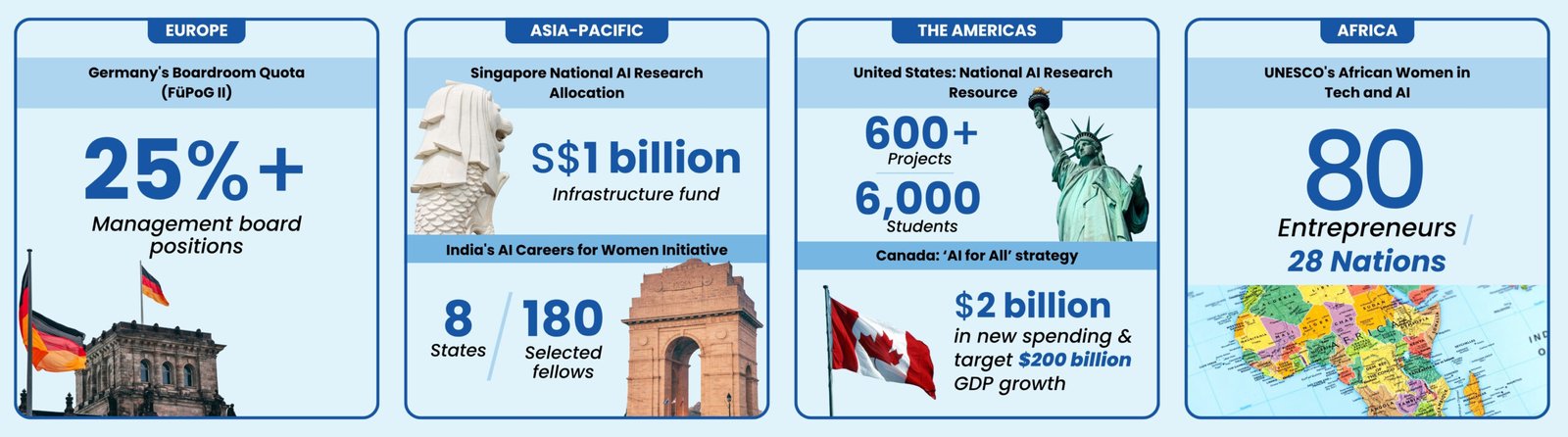
Germany’s FüPoG II legislation, which introduced binding quotas on executive board composition, has produced measurable results. Women now hold more than 25% of management board positions in DAX 40 companies, a record high and a meaningful increase from 13.3% in 2020. For the first time, four DAX companies are led by female chief executives. The legislation carries enforcement mechanisms: companies that fail to appoint female board members must justify and report the omission publicly. The honest caveat is that the quota applies only to around 70 large listed companies, and the effect on the broader technology sector including AI-focused firms and start-ups remains limited. Progress is real; universality is not.
Asia-Pacific
India: A Ministry-Backed Skills Push
Launched in April 2025 by India’s Ministry of Skill Development and Entrepreneurship in partnership with Microsoft, the AI Careers for Women initiative is one of the most substantive government-backed efforts to address the gender gap in AI yet seen. It operates across eight states, namely Telangana, Andhra Pradesh, Karnataka, Uttar Pradesh, Gujarat, Maharashtra, Rajasthan and Odisha, connecting universities with industry-linked AI training and employment pathways. Its LinkedIn Fellowship, a three-month programme for non-STEM women students and faculty, received over 2,000 applications in its first round and onboarded 180 fellows nationally, with IISc Bengaluru as academic partner. This is not a pilot gesture. It is a structural attempt, with ministerial authority behind it, to retain women in India’s AI workforce at the career stage when most are at risk of leaving it.
Singapore: Infrastructure Investment with Inclusion Intent
Singapore’s government has committed S$1 billion over the five years from 2025 to 2030 to boost public AI research capabilities, the country’s second major tranche of AI research investment following more than S$500 million spent between 2019 and 2023. The funding targets fundamental AI research, applied development and talent pipelines. On the private side, Microsoft launched its MPowerHer programme in April 2026, officially unveiled by Singapore’s Minister of State for Digital Development, providing AI skills training, mentorship and career support for women including those returning to work after a career break. It is open to members of SG Women in Tech, Mums@Work and Code; Without Barriers. The distinction between government-funded and government-endorsed matters here. Singapore’s approach has been to create the conditions for inclusion through infrastructure and signal through partnership rather than mandate through quota.
The Americas
The United States: Infrastructure Without Explicit Targets
The National Artificial Intelligence Research Resource, known as NAIRR, launched as a pilot in January 2024 and is now a sustained national infrastructure supporting more than 600 research projects and 6,000 students across all 50 states. It was built on an explicit commitment to broadening participation, with access deliberately targeted at smaller institutions, rural universities and historically underfunded colleges, the institutions most likely to serve underrepresented populations including women. The NAIRR does not publish a specific allocation percentage for women. What it does is remove the most concrete structural barrier to frontier AI research, which is access to computing power. For researchers at institutions without GPU infrastructure, that matters more than any fellowship quota.
Canada: A Sovereign Push with Structural Exposure
Canada’s AI strategy underwent a massive structural shift in June 2026 with the launch of the federal “AI for All” strategy, a flagship policy backed by a $2 billion capital injection. Managed alongside the Pan-Canadian AI Strategy, the new roadmap prioritises building 850 megawatts of sovereign domestic computing power by 2030 to remove resource bottlenecks for researchers. However, the policy highlights an intense gender dimension: data reveals that 71% of women workers in key regions like Québec hold roles with high AI exposure, compared to just 49% of men. While the framework commits heavily to digital literacy training, it faces ongoing pressure from workforce analysts to move beyond basic upskilling and establish binding, enforceable protections against systemic hiring bias.
Africa
UNESCO’s African Women in Tech and AI Programme
This is the most concrete and independently verified programme operating at scale on the continent. Jointly implemented by UNESCO, Morocco’s Ai Movement (part of Mohammed VI Polytechnic University) and the OCP Foundation, the initiative has trained women entrepreneurs from across all five regions of Africa in data science, machine learning, AI ethics and project development. In 2024 alone, 80 women from 28 African countries received intensive training and 15 of the most promising entrepreneurial projects were selected for incubation and funding. Projects span agriculture, health, education, water management and sustainable energy, fields where AI built for African contexts by African women has direct commercial and social value that externally developed tools have consistently failed to deliver.
The significance here is commercial rather than charitable. Women building AI tools calibrated to African languages, healthcare systems and agricultural conditions are doing the most relevant AI development work for a market of more than 1.4 billion people. Investors and multinationals entering African markets without engaging this ecosystem will do so at a measurable disadvantage.
The Pattern and the Gap
The pattern across these regions is the same in outline and significantly different in detail. Public institutions have made a structural decision, in varying degrees, that women’s participation in AI is a policy objective worth measuring. The EU has the legislative framework and the gender strategy. Germany has the quota law. India has the ministry-backed skilling programme. Canada has the national strategy. The US has the research infrastructure. Africa has UNESCO and a growing cohort of funded entrepreneurs.
What most do not yet have is the combination: binding targets, funded pipelines and enforcement. The gap between intent and outcome remains the most reliable indicator of which initiatives will matter in ten years and which will remain in the footnotes. Boards that treat the former as background noise and the latter as compliance theatre are misreading both.
The Leaders
But policy alone does not drive change. The women who lead the most influential AI companies and research institutions are the ones converting policy momentum into commercial reality. They are the ones boards will negotiate with, the ones whose standards will become industry law, and the ones whose decisions today will determine whose voices shape AI tomorrow. What follows are five leaders who are already writing that future.

Image credit: Khumo Makiti/LinkedIn
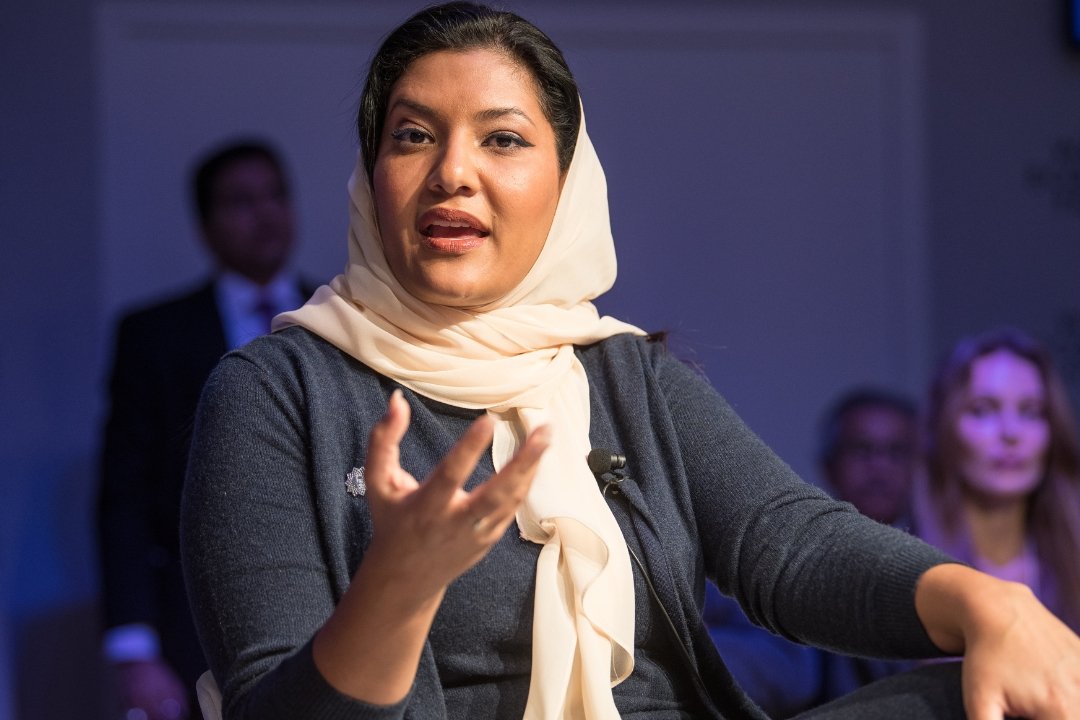
Mira Murati
CEO, Thinking Machines Lab
Mira Murati is the most recognisable face of AI development in the world today. Albanian-born and US-based, she served as Chief Technology Officer at OpenAI from 2022 to 2024, where she led the research, product and safety teams behind ChatGPT, DALL-E and GPT-4. She briefly served as interim CEO during OpenAI’s boardroom crisis in November 2023 before returning to the CTO role. In February 2025 she co-founded Thinking Machines Lab, a public benefit corporation built around the principle that advanced AI must be accessible and ethically grounded from its foundations. By July 2025 the company had closed a $2 billion seed round led by Andreessen Horowitz, with participation from Nvidia, AMD and Accel, valuing the startup at $12 billion and making it the largest seed round in Silicon Valley history at the time. In 2026, Nvidia announced a multiyear chip supply agreement with the lab, and the company’s headcount has grown to more than 150 people. Its first product, Tinker, allows developers and researchers to fine-tune large AI models for specific tasks without the cost and complexity of traditional infrastructure. She has been named in Time’s 100 Most Influential People in AI (2024) and appeared on Fortune’s 100 Most Powerful Women list in both 2023 and 2026.

Image credit: Khumo Makiti/LinkedIn
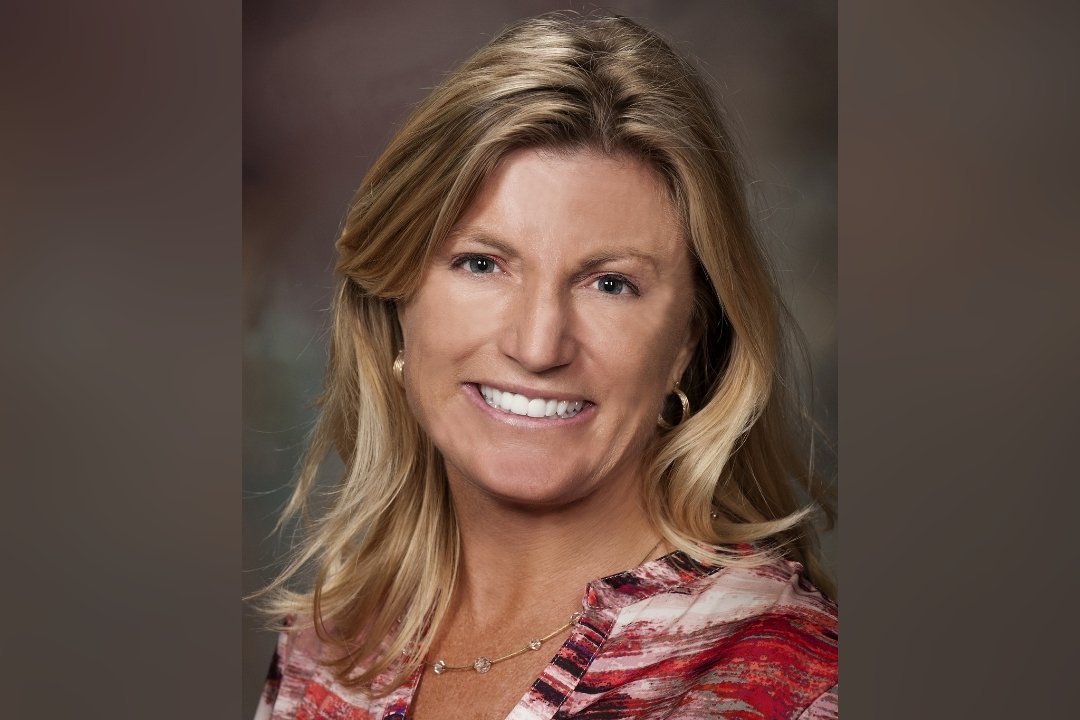
Daniela Amodei
President, Anthropic
Daniela Amodei is the President and co-founder of Anthropic, the AI safety company behind the Claude series of large language models. She co-founded Anthropic in 2021 alongside her brother Dario Amodei and five colleagues, all of whom left OpenAI over a shared conviction that safety principles needed to be embedded into AI systems from the ground up rather than added as a policy layer after the fact. That conviction became the defining idea behind Constitutional AI, a framework that governs how Claude reasons and behaves, and which has since been studied and adapted across the industry. As President, Amodei oversees company operations, strategy and external relations, with a particular focus on scaling Claude into enterprise applications whilst maintaining the governance standards that differentiate Anthropic in the market. In February 2026, Anthropic raised $30 billion at a post-money valuation of $380 billion. On 28 May 2026, the company closed a further $65 billion Series H round led by Altimeter Capital, Dragoneer, Greenoaks and Sequoia Capital, pushing its post-money valuation to $965 billion and making it the most valuable private AI company in the world. Run-rate revenue crossed $47 billion earlier that month. On 1 June 2026, Anthropic officially filed a confidential S-1 prospectus with the US Securities and Exchange Commission, formally beginning the process towards a public listing. She was named in Time’s 100 Most Influential People in AI in 2023 and has appeared on Forbes’ list of the most powerful women in business.
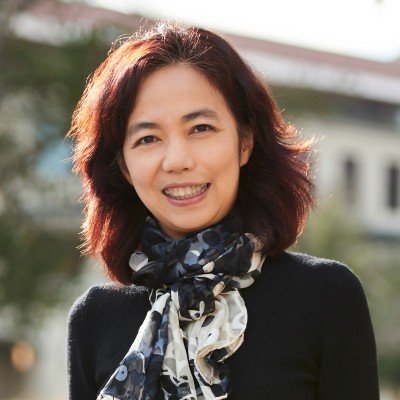
Image credit: Khumo Makiti/LinkedIn
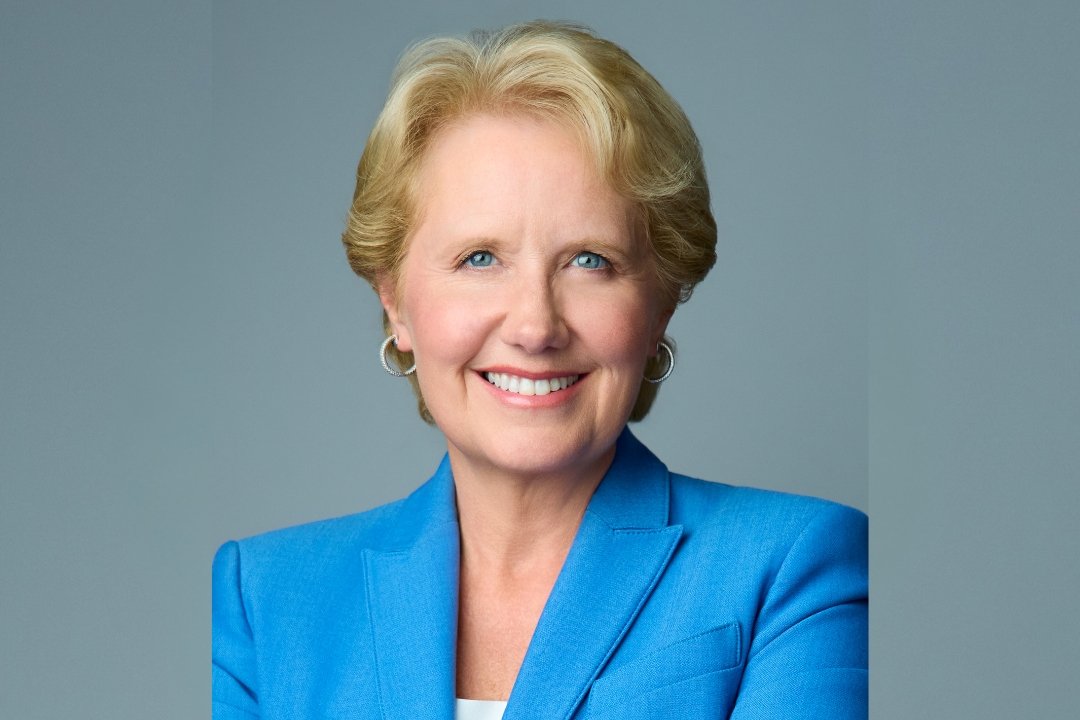
Dr Fei-Fei Li
CEO and Co-Founder, World Labs
Known as the “Godmother of AI,” Fei-Fei Li is the founder and CEO of World Labs and a professor of computer science at Stanford University. Born in Beijing and trained in the United States, she created ImageNet, the large-scale visual dataset that transformed computer vision from academic theory into the practical engine behind billions of devices worldwide. She co-founded the Stanford Institute for Human-Centred AI, establishing it as a leading centre for research on AI that serves human values rather than optimising purely for performance. In September 2024 she launched World Labs, raising $230 million at a $1 billion valuation. In February 2026 the company closed a further $1 billion round backed by Autodesk, Nvidia, AMD, Andreessen Horowitz, Fidelity and others, with Bloomberg reporting discussions at a $5 billion valuation. Autodesk’s $200 million anchor investment, alongside an advisory role, signals commercial intent to integrate spatial AI into architecture and design workflows. World Labs’ first product, Marble, generates and edits persistent three-dimensional environments from text, images or video. Li was elected to both the National Academy of Engineering and the National Academy of Medicine in 2020. In 2025 she received the Queen Elizabeth Prize for Engineering, shared with Geoffrey Hinton, Yoshua Bengio, Yann LeCun, Jensen Huang, John Hopfield and Bill Dally, for their collective contributions to the foundations of modern machine learning. That same year she was named one of Time’s Architects of AI as part of the magazine’s Person of the Year feature.
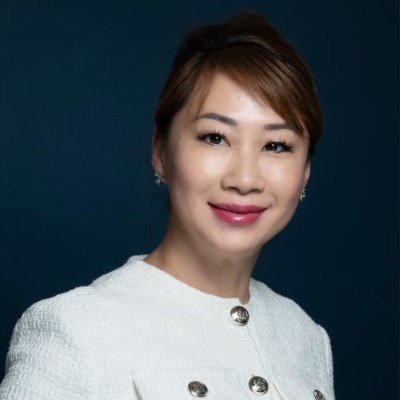
Image credit: Khumo Makiti/LinkedIn
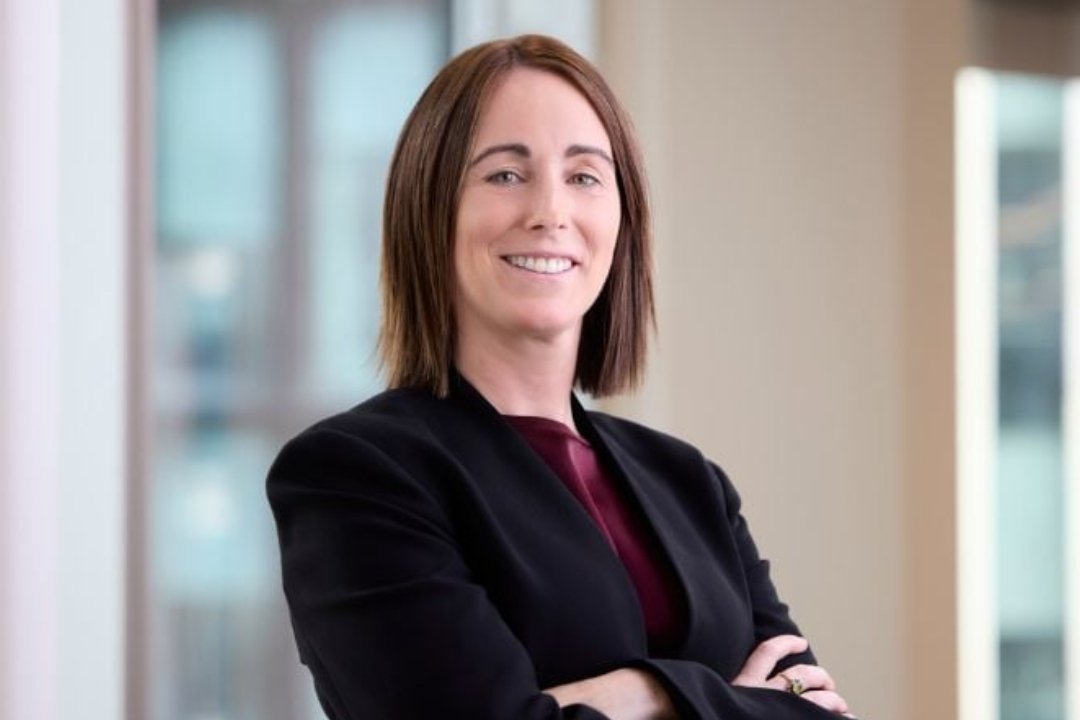
Pascale Fung
Co-Founder and Chief Research and Innovation Officer, AMI Labs
Pascale Fung holds one of the most expansive footprints in AI of any researcher working today, spanning academia, Big Tech and a new frontier AI startup. She is a Chair Professor at the Hong Kong University of Science and Technology, holding appointments in both the Department of Electronic and Computer Engineering and the Department of Computer Science and Engineering, and a visiting professor at the Central Academy of Fine Arts in Beijing. She served as founding director of the Centre for AI Research at HKUST from 2018 to 2024. Since April 2024 she has served as Senior Director of AI Research at Meta’s Fundamental AI Research laboratory in Paris, leading work on AI agents and world modelling. In late 2025 she co-founded AMI Labs alongside Yann LeCun and Alexandre LeBrun, taking the role of Chief Research and Innovation Officer; the startup raised a $1.03 billion seed round at a $3.5 billion pre-money valuation and is focused on AI systems that understand the physical world. Her foundational research on multilingual AI, identifying that models trained primarily on English would fail across the thousands of languages spoken globally, remains one of the most cited arguments for building language diversity into AI by design. She is a fellow of the Association for the Advancement of Artificial Intelligence, the Association for Computational Linguistics and the Institute of Electrical and Electronic Engineers. She is an expert on the Global Future Council on Artificial Intelligence and Robotics at the World Economic Forum, sits on the expert network of the UN Advisory Body on AI and has advised the governments of the EU, Japan, India and the UAE. She was named on the Forbes 50 Over 50 Asia list in 2024.
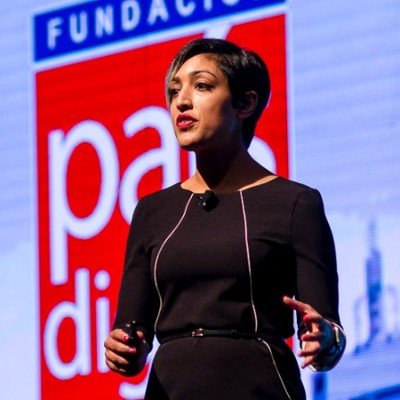
Image credit: Khumo Makiti/LinkedIn
Dr Rumman Chowdhury
CEO and Co-Founder, Humane Intelligence
Dr Rumman Chowdhury is the CEO and co-founder of Humane Intelligence Public Benefit Corporation, an organisation focused on the evaluation and auditing of AI models. Born in Rockland County, New York, to Bangladeshi immigrant parents, she holds two undergraduate degrees from MIT, a master’s degree in quantitative methods from Columbia University and a PhD in political science from UC San Diego. Her career has been built on the principle that AI systems must be tested rigorously for failure modes, bias and systemic risk before deployment. She previously led the Machine Learning Ethics, Transparency and Accountability team at Twitter and served as Global Lead for Responsible AI at Accenture Applied Intelligence. In 2024 she was appointed US Science Envoy for Artificial Intelligence by the US Department of State, becoming the first person to hold that specific title and part of the first all-female cohort in the programme’s history. In September 2025 she formalised her work through the Public Benefit Corporation structure, reflecting a deliberate shift towards embedding a public benefit mandate into the organisation’s legal foundations. She is a Responsible AI Fellow at Harvard University’s Berkman Klein Center for Internet and Society and a former member of the AI Safety and Security Board at the US Department of Homeland Security. She has been named in Time Magazine’s 100 Most Influential People in AI and BBC’s 100 Women.
The Conclusion
The evidence has moved beyond argument. Diverse teams identify more problems before deployment. Boards and investors that ignore this are making an economically irrational decision. The question is no longer whether women in AI leadership matters. The question is why you would bet against the data.
The Competitive Imperative
Investing in diverse technical leadership is both a defensive and an offensive advantage. Defensively, it reduces the probability of algorithmic bias incidents, regulatory penalties and reputational damage. Offensively, it accelerates product development, expands market reach and creates the governance credibility that enterprise clients now demand as a condition of purchase. The companies that have won this cycle are not the ones that moved fastest. They are the ones that moved with the most credibility. That advantage compounds.
What 2027 Looks Like
Three structural shifts are already underway. The Chief AI Officer role has moved from a niche appointment to a boardroom standard: IBM’s Institute for Business Value found that 76% of organisations had a CAIO in 2026, up from 26% the previous year. These positions will go to people who have navigated governance, regulatory and reputational constraints at scale rather than engineers who learned AI as a side discipline. The era of training on enormous, indiscriminately sourced datasets is ending; regulators are tightening data sourcing rules and ethically grounded datasets will command premium valuations. And regulatory compliance is becoming a competitive moat: the companies that move first on governance frameworks write the standards everyone else is measured against.
Alongside these shifts, AI safety testing and algorithmic auditing are becoming a distinct and fast-growing market segment. The AI red teaming market was valued at approximately $2.3 billion in 2026 and is projected to reach $6.2 billion by 2030, according to Research and Markets. The talent building these services is, disproportionately, women who have spent their careers thinking about risk before deployment.
The Real Question
AI’s future is being written right now. The policies are being written. The standards are being written. The market leaders are being determined. The companies and institutions that will dominate the next phase of AI commercialisation are the ones building diverse, governance-focused teams today.
For investors, founders, boards and policymakers, the question is whether you are among them.