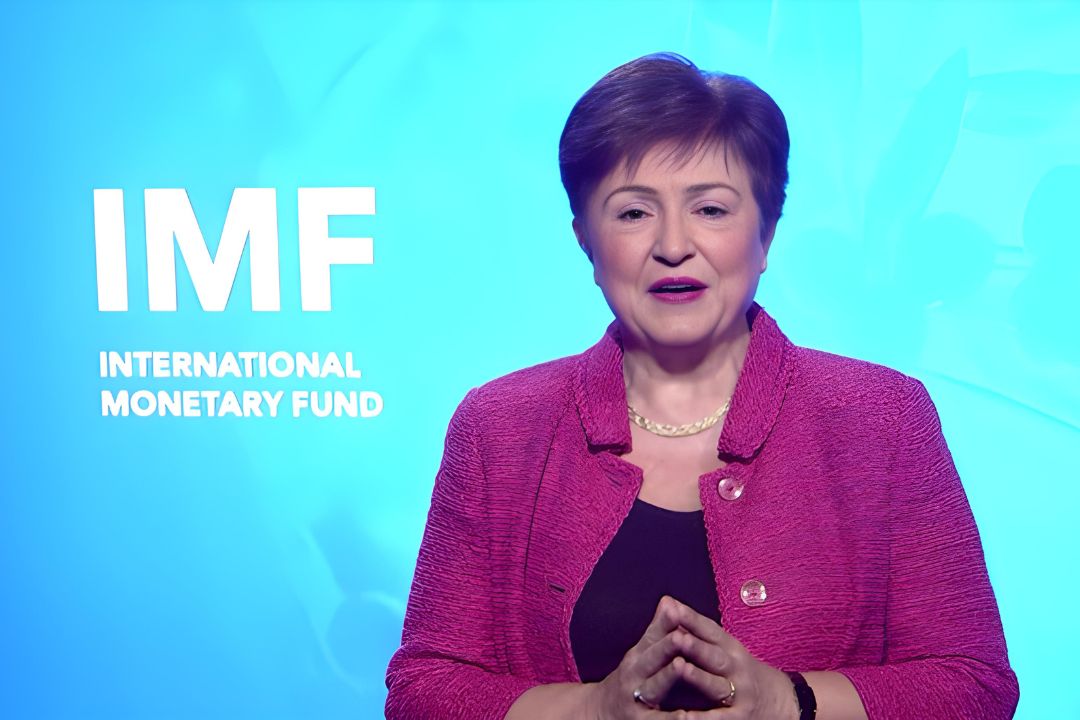

The International Monetary Fund (IMF) has revealed concerns regarding the anticipated slowdown of economic growth in the Middle East during 2024, primarily attributed to reductions in oil production and ongoing conflicts like the Israel-Gaza conflict. Despite uncertainties, “the global economy has been surprisingly resilient,” IMF managing director Kristalina Georgieva told the Arab Fiscal Forum in Dubai
The IMF recently adjusted its GDP growth forecast for the Middle East and North Africa (MENA) region to 2.9% for the year, lower than previous projections from October 2023. Georgieva highlighted the adverse effects of conflicts on tourism revenues and global freight costs, especially due to Red Sea attacks and Yemen’s Houthi rebels’ actions targeting commercial vessels.
To address these challenges, the IMF advocates for phasing out energy subsidies in the region, with potential savings of $336 billion, while emphasizing investments in advanced technologies like Artificial Intelligence (AI) to enhance competitiveness. The economic impacts of conflicts, notably in Gaza, have been severe, with significant declines in economic activity observed. Georgieva stressed the necessity of a durable peace and political solutions for the Palestinian economy’s dire outlook, with the IMF pledging continued support and assistance to relevant authorities. The repercussions of conflicts have a ripple effect that spreads to nearby economies affecting sectors such as tourism and resulting in rising freight costs. Georgieva highlighted the prevailing uncertainty in the economic landscape, urging vigilance despite some optimism about global economic resilience.