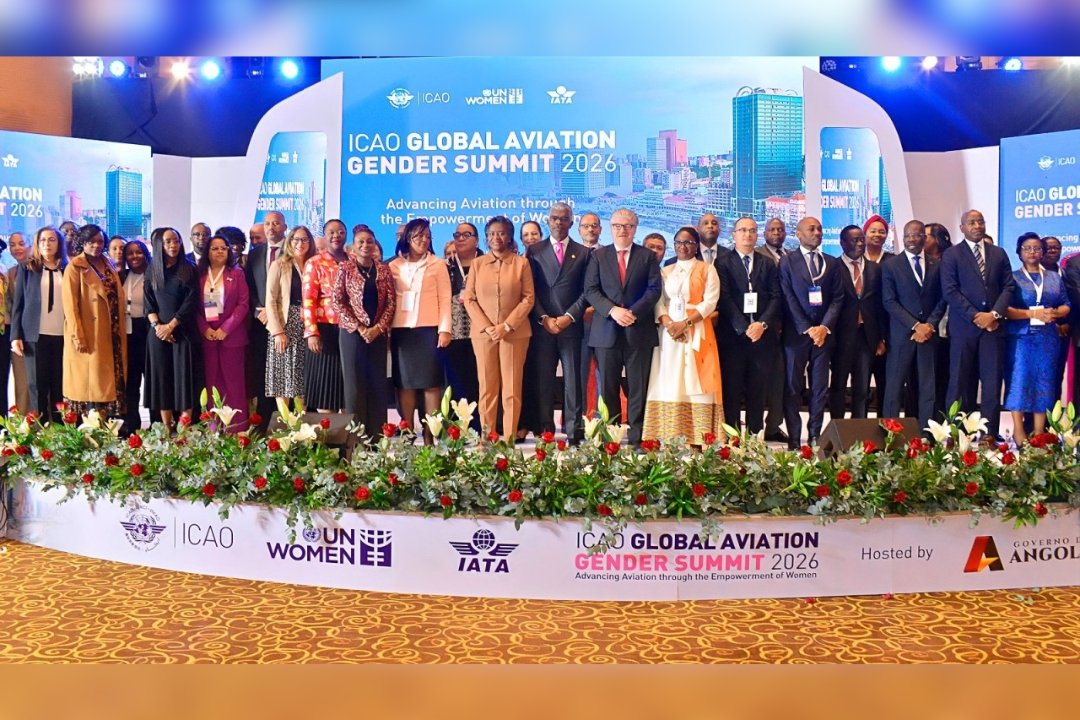

More than 950 participants gathered in Luanda, Angola, for the ICAO Global Aviation Gender Summit 2026. Hosted by the Government of Angola alongside UN Women and the International Air Transport Association, the meeting brought together government ministers, industry leaders, academics and international officials. The event focused on practical measures to raise the proportion of women working in the sector.
Global figures published by the International Civil Aviation Organization show that women remain significantly underrepresented in key technical professions. Female workers account for roughly 4 per cent of pilots, 3 per cent of aircraft maintenance engineers and technicians, and 20.6 per cent of air traffic controllers worldwide.
Delegates highlighted the need to collect better sex-disaggregated data to evaluate progress, strengthen accountability and support evidence-based policy choices. Discussions also focused on improving access to education, training, mentorship and leadership pathways, particularly within senior operational and decision-making roles. Expanding these opportunities was identified as a critical step to secure the long-term talent pipeline of the industry.
ICAO presented several tools to support member states during the event. These included its Global Network of Gender Focal Points, which currently covers 105 Member States, and the forthcoming Mainstreaming Women’s Participation and Advancement Toolkit. The organisation also highlighted its Landmark Global Study on Women in Aviation, which gathers data from more than 140 countries.
Speaking at the close of the event, ICAO Secretary General Juan Carlos Salazar said: “The future of aviation depends on whether we succeed in unlocking the full potential of the people who will shape it.”
He added: “Women are not simply part of aviation’s future. They are essential to it.”
Outside the main proceedings, Secretary General Salazar held talks with the President of Angola, His Excellency João Manuel Gonçalves Lourenço. He also met with ICAO Global Ambassadors and joined over 90 young girls taking part in the Pink Hard Hat Challenge organised by UNESCO. Summit delegates concluded that increasing female participation remains essential for building a resilient, innovative and sustainable global aviation workforce.