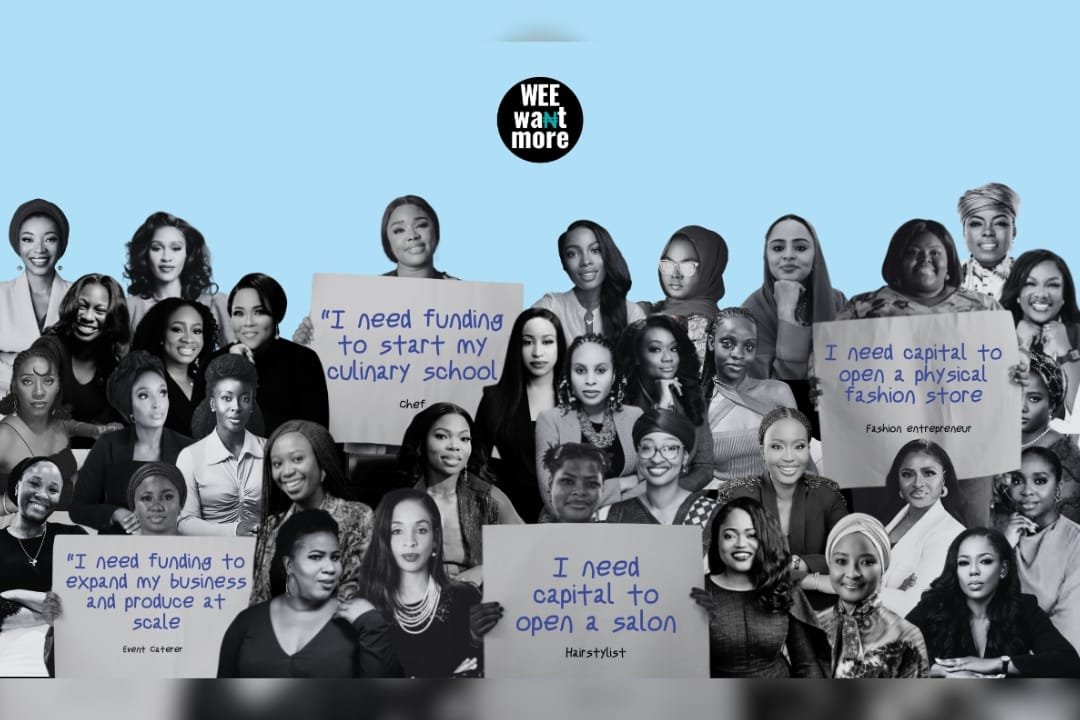

A coalition representing Nigerian women entrepreneurs has called on the federal government and financial institutions to allocate at least 40% of Micro, Small and Medium Enterprise (MSME) loans to women-led businesses.
In a statement released by media officer Ms Hannatu-Asheloge Osifeso on Monday, the coalition highlighted the widespread financial exclusion experienced by women business owners, despite their substantial contributions to the country’s economy.
The coalition’s demand follows the launch of a national campaign on 23rd April, aimed at tackling structural inequalities in access to finance. Since then, over 2,500 Nigerian bank customers have signed a petition pushing for greater financial inclusion for women.
“Despite their contributions to Nigeria’s economy, women remain largely underserved, receiving less than 10 per cent of small business loans,” the group stated. They added that this is in sharp contrast to the high rate of loan repayment among female borrowers, who are widely recognised for their financial reliability and discipline.
The coalition is urging policymakers to introduce gender-responsive reforms and adopt inclusive lending practices. It stressed the need for financial institutions and regulators to dismantle the existing systemic barriers and modernise their loan frameworks.
Through their campaign platform, WeeWantMore.ng, the group collected data showing that GTBank, Access Bank, and Fidelity Bank were among the most frequently cited institutions by customers as failing to adequately support women-led businesses. According to the group, this reflects growing public frustration with the exclusion of female entrepreneurs from mainstream financial support.
The coalition also raised concerns about collateral requirements such as the need to provide land ownership documents, which continue to disadvantage women as many of them do not hold property titles due to longstanding cultural and legal constraints.
Quoting insights from experts, the coalition criticised financial institutions for relying on outdated practices that perpetuate gender-based discrimination in lending decisions. Mojisola Hunponu-Wusu of Woodhall Capital noted, “Although women repay 95 per cent of their loans, they receive less than 10 per cent of SME financing.” She called on the Central Bank of Nigeria (CBN) to take decisive action.
The group further urged the CBN Governor to publicly commit to implementing a minimum gender-based lending quota, setting a target of at least 30% of MSME loans for women-owned businesses.
Habibah Waziri, Managing Director of BGR Consulting, backed the proposal, stating, “Nigerian women drive half of the nation’s economy, yet less than 10 per cent of SME funding is allocated to them. Closing this funding gap is vital for economic development and gender equity.”
The coalition also recommended that authorities introduce dedicated credit schemes for women and simplify loan application processes by adopting alternative models such as cash flow-based lending. These models, they argued, would enable credible women entrepreneurs to access finance without traditional collateral constraints.
Joy Una, a key figure in the WEEWantMore campaign, added: “It is indefensible for banks to continue relying solely on traditional collateral requirements when more inclusive, cash flow-based lending systems can serve credible women entrepreneurs.”
The group concluded that bridging the financial gap for women is not only a matter of fairness but also a significant economic opportunity for banks and the wider Nigerian economy.