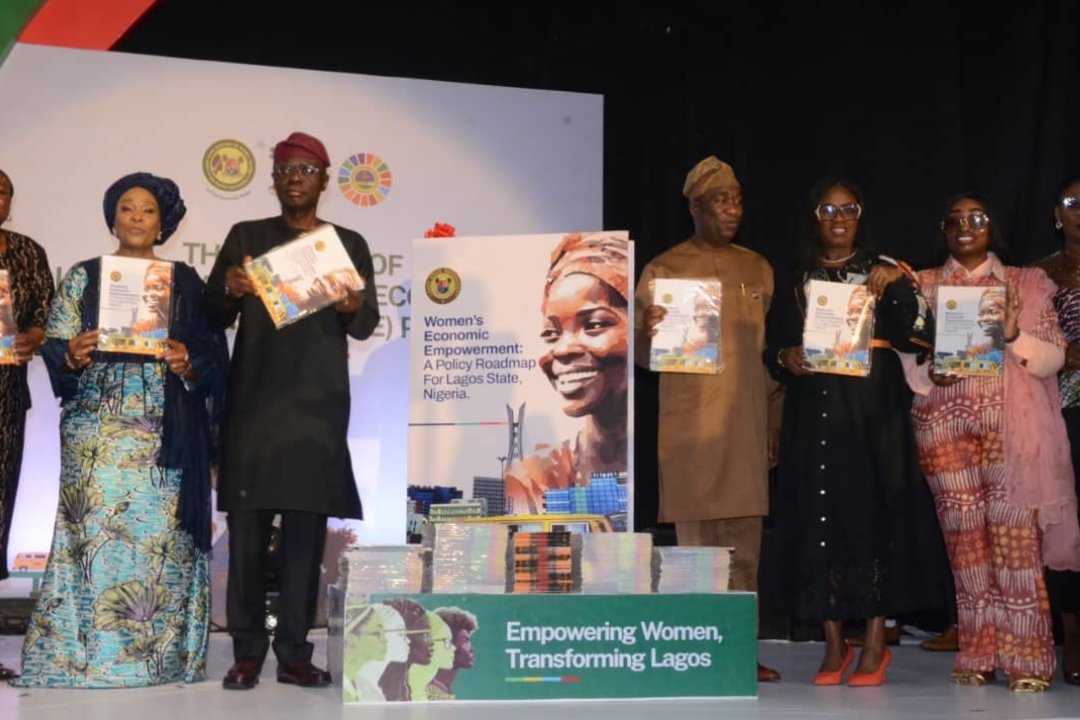

Lagos State Governor Babajide Sanwo-Olu has formally launched the Women Economic Empowerment (WEE) Policy Roadmap, a major step towards achieving gender equity and broad-based economic inclusion across the state.
The newly launched roadmap is aligned with the state’s broader development objectives, national policies, and global frameworks such as the Sustainable Development Goals (SDGs). It focuses on five priority pillars: agriculture, entrepreneurship, traditional labour markets, emerging industries, and education and skills acquisition.
Speaking at the unveiling in Lagos on Tuesday, Sanwo-Olu reaffirmed his administration’s dedication to bridging systemic gender gaps and expanding opportunities for women in both established and emerging sectors.
The roadmap was described as a critical shift in the state’s approach to economic development, aimed at tackling long-standing inequalities.
Through his social media X, Babajide Sanwo-Olu expressed his thoughts by stating:
“Lagos State Women Economic Empowerment (WEE) Policy Roadmap, a milestone that reflects our firm commitment to gender equity and inclusive growth.
This roadmap is a practical plan built around the lived experiences of women across Lagos, from entrepreneurs and farmers to students and professionals. It focuses on removing the barriers that continue to limit women’s economic participation.
We engaged widely in building this policy, listening to voices from the public and private sectors, NGOs, women’s groups, and women living with disabilities. Their insights helped us shape a roadmap that is grounded, inclusive, and realistic.
From agriculture and entrepreneurship to education, STEM, and the labour market, we’re setting out clear actions to empower women with tools, training, finance, and opportunities to thrive. We will work across all sectors to bring this to life and ensure every woman in Lagos has the opportunity to reach her full potential.
When women thrive, Lagos thrives.”
He also praised the Commissioner for Women Affairs and Poverty Alleviation, Bolaji Cecilia Dada, and her team for leading the initiative, while also thanking all stakeholders involved.
First Lady Dr. Ibijoke Sanwo-Olu, represented at the event by Oluremi Hamzat, wife of the Deputy Governor, said the policy represents a shift away from limiting structures toward a future of greater opportunity for women. She encouraged women in the state to remain focused and committed.
Commissioner Bolaji Cecilia Dada echoed the administration’s vision for inclusive economic growth and gender equality, and stressed the importance of removing structural barriers.
She also highlighted the ministry’s plans to use the roadmap to expand vocational training, enhance micro-enterprise support, build public-private collaborations, and advocate for women working in the informal economy.