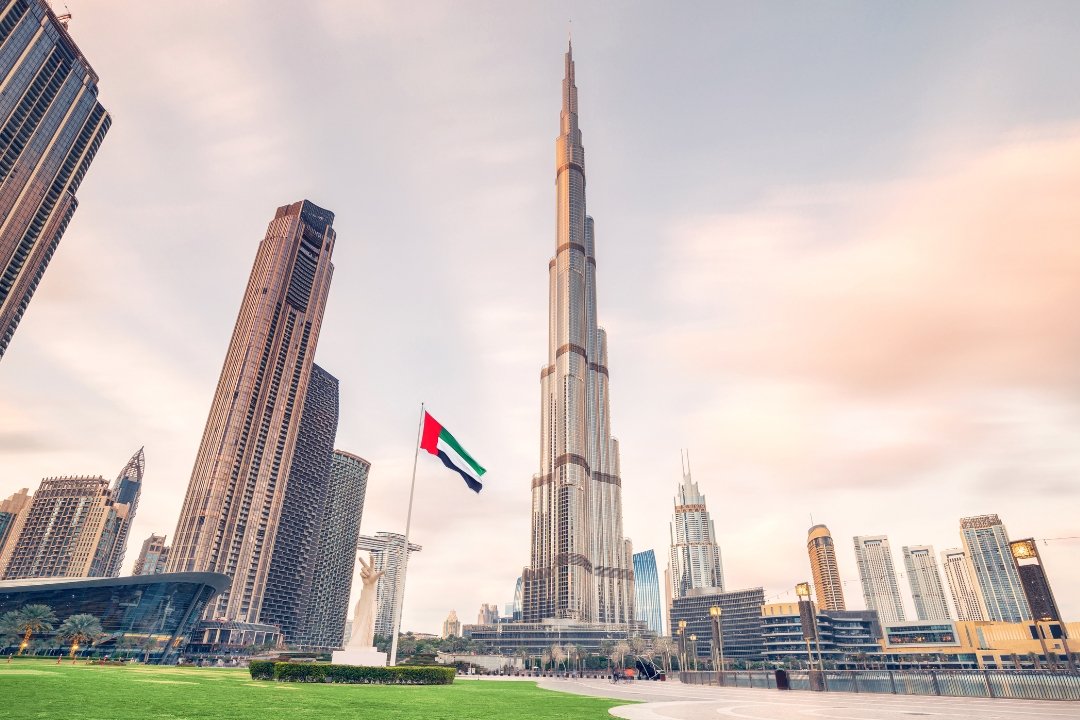

We the UAE 2031 is a ten-year plan that was launched by the United Arab Emirates at the UAE Government Annual Meetings in 2022. The vision outlined a ten-year strategic agenda designed to strengthen the country’s global standing while reinforcing social cohesion and economic resilience at home. Central targets include doubling national GDP to AED 3 trillion in 2031 from AED 1.49 trillion in 2022, expanding non-oil exports and placing Emirati cities among the world’s most liveable.These objectives are framed as government targets, as outlined in official strategy documents and public policy statements, and form the backbone of a vision that is both outward-looking and domestically grounded.
The UAE has long been characterised by an ability to translate ambition into action, and We the UAE 2031 signalled the beginning of a recalibrated national chapter. In November 2025, UAE Minister of Cabinet Affairs Mohammad Al Gergawi announced that 67% of the targets set under the vision have been achieved. Now, with 5 years to the goal set under this vision, all eyes are on the UAE to understand its progress and its implications.
The vision is anchored in four integrated pillars: Forward Society, Forward Economy, Forward Diplomacy and Forward Ecosystem. Together, they provide a cohesive framework for navigating a decade shaped by technological acceleration, sustainability imperatives and evolving global power dynamics. Innovation, digital transformation and human talent sit at the core of this approach, reinforcing the UAE’s position as a global hub for trade, investment and future industries. Vision 2031 is a declaration of intent to shape global change rather than react to it.
To achieve this vision, the UAE has made significant strides through wide ranging initiatives that are discussed in this article.
A diversified economic model for sustainable growth
Economic diversification remains central to the UAE’s long-term resilience. Vision 2031 prioritises the shift towards a future-ready, non-oil economy, and further reduce dependence on hydrocarbons. This transition is already visible. By early 2025, non-oil activity accounted for more than three-quarters of total economic output and continued to grow faster than the wider economy.
In the 2025-Q2 financial reports released in December 2025, it was announced that the non-oil economy in this quarter was AED174.1 billion and accounted for 56.8% of the total GDP. It also saw a 6.6% year-on-year growth. This points to sustained momentum within the UAE’s knowledge-based economy.
Within the framework of increasing the non-oil contribution, Operation 300bn plays a pivotal role in reshaping the country’s industrial base. The programme is designed to expand the industrial sector’s contribution to GDP from AED 133 billion to AED 300 billion by 2031, reinforcing its role as a driver of economic growth. It aligns industrial expansion with national priorities and international commitments, including sustainable growth, clean energy deployment, industrial innovation and responsible production and consumption. From 2020 to 2024, the industrial sector’s contribution to the national economy saw a significant increase. At a 62% increase since 2020, the industrial sector added AED 190 billion to the GDP in 2024.
High-growth sectors such as technology, financial services, advanced manufacturing, renewable energy and healthcare are also powering this transformation. They are supported by strong infrastructure, adaptive regulation and rising foreign direct investment. As of Q2-2025, manufacturing was the largest non-oil contributor to the GDP, valued at AED30.1 billion and accounting for 9.8% of total GDP.
Strategic initiatives, including Operation 300bn and targeted industrial policy, reflect a long-term commitment to globally competitive, high-value production and services.
Trade, connectivity and global economic integration
Domestic economic reform is closely aligned with an outward-looking trade strategy. Under Vision 2031, the UAE aims to increase non-oil foreign trade to AED 4 trillion and raise non-oil exports to AED 800 billion. These are national targets set by the federal government, reflecting a decisive shift towards diversified, value-led commerce.
The Comprehensive Economic Partnership Agreement (CEPA) programme is a central pillar of this effort. By early 2025, the UAE had concluded 26 CEPAs with strategically important markets, including Malaysia, Kenya, New Zealand, Ukraine and the Central African Republic, according to official trade communications.
The economic impact is already measurable. Agreements with India, Türkiye, Indonesia and Georgia have delivered sharp increases in bilateral trade. Government and trade-ministry reporting cites a 20.5% rise in non-oil trade with India, alongside a 75.2% increase in UAE exports by the end of 2024. Key beneficiary sectors include logistics, clean energy, financial services, advanced manufacturing and sustainable food systems, reinforcing the UAE’s role as a critical node in global trade networks.
AI as a strategic growth engine under Vision 2031
Artificial intelligence has become a central pillar of the UAE’s economic strategy, evolving from a technology focus into a broader engine of growth, competitiveness and national capability. Under the We the UAE 2031 framework, the country’s leadership has placed AI at the heart of its long-term development agenda, with targets to embed AI across key sectors and drive measurable contributions to the economy.
Since launching its National Strategy for Artificial Intelligence in 2017, the UAE has sought to position AI as a core contributor to its non-oil economy. Analysts and industry reports project AI to account for around 20% of non-oil GDP by 2031, reflecting a strategic pivot toward technology-led growth.
The UAE’s AI market is also showing rapid expansion. From a base of roughly AED 12.74 billion in 2023, AI sector value is expected to grow at a 44% compound annual rate, reaching approximately AED 170.14 billion by 2030 – driven by startups, research institutions, training initiatives and supportive policy frameworks.
To accelerate adoption and leadership, federal initiatives have strengthened governance and expertise around AI. One high-profile example is the deployment of Chief AI Officers (CAIOs) across government and industry, with recent research showing the UAE leading global adoption of dedicated AI leadership roles. 33% of organisations in the UAE now have CAIOs, compared with 26% globally.
These leadership roles support the practical implementation of AI strategies across both public and private sectors, strengthening integration, governance and the value delivered from technology investments.
Investment and infrastructure planning also underpin the UAE’s ambitions. Sovereign funds and partnerships with global tech firms are backing data centre construction, semiconductor development and next-generation computing capacity, reinforcing the country’s ability to support high-performance AI workloads.
Public and private enterprises are increasingly deploying AI across sectors such as healthcare, logistics, finance and public services – reflecting the nation’s broader economic transformation toward a digital-first economy. Growth in AI adoption is contributing to the UAE’s global competitiveness and enhancing its role as a regional hub for tech innovation.
The strategic emphasis on AI under Vision 2031 reflects not only the UAE’s diversification strategy but also its ambition to develop capabilities, leadership roles and ecosystems that sustain innovation and competitiveness well into the next decade.
Tourism, culture and a unified national narrative
Tourism under Vision 2031 has evolved into a strategic lever for economic diversification and international positioning, while also reinforcing national identity. Hospitality data published by tourism authorities and industry bodies cite hotel revenues of AED 45 billion in 2024 reflecting a 3% year-over-year growth.
The UAE Tourism Strategy 2031, launched under the Projects of the 50, aims to raise tourism’s contribution to GDP to AED 450 billion. These targets are confirmed within official tourism strategy documents.
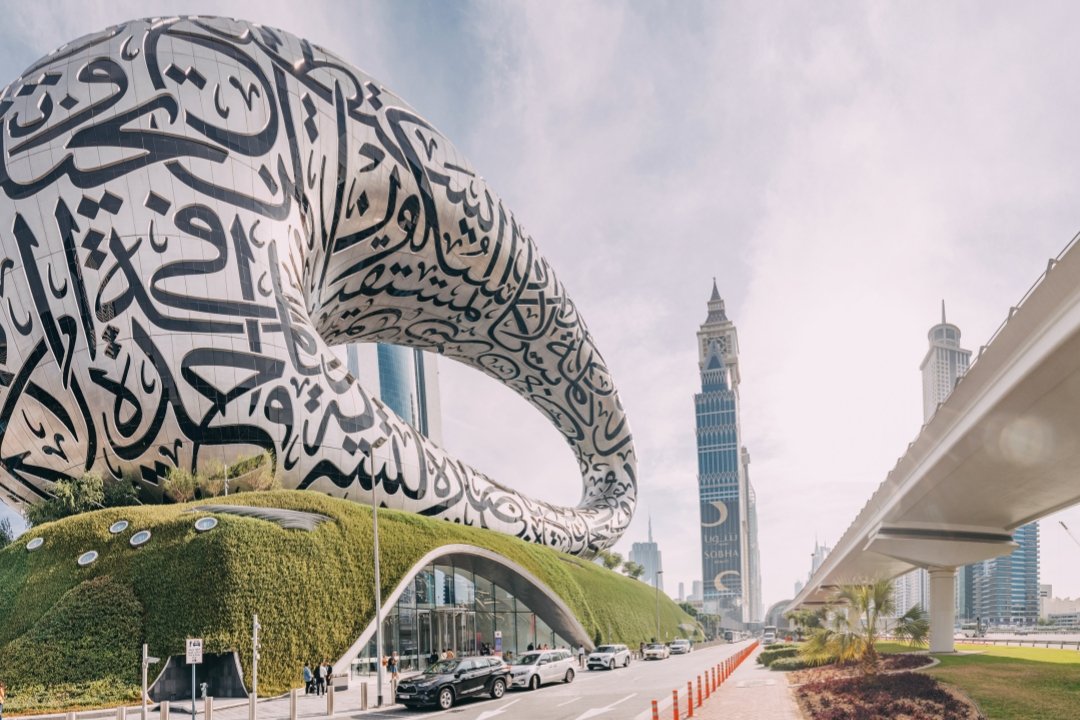
Central to this strategy is the development of a unified national tourism identity, presenting the UAE as a single, compelling destination while allowing each emirate to showcase its distinct cultural, natural and urban character, from Dubai’s innovation-led skyline to Abu Dhabi’s heritage institutions and Fujairah’s nature-driven experiences.
Investment in specialised tourism segments, workforce development and future-ready infrastructure is broadening the visitor base and increasing long-term value creation. Complementary initiatives such as Abu Dhabi’s Tourism Strategy 2030 and Dubai’s 2040 Urban Master Plan integrate sustainability, smart mobility and cultural preservation into urban and tourism planning, ensuring tourism growth supports both economic performance and national identity.
Key milestones in 2024 and 2025 further highlight the UAE’s expanding global tourism standing. In 2025, Masfout was named one of UN Tourism’s World’s Best Tourism Villages, reflecting national progress in heritage-led and sustainable tourism beyond major cities. In 2024, the United Arab Emirates was recognised as the Middle East’s top tourist destination, reinforcing its position as a diversified and internationally competitive tourism economy.
Sustainability, climate leadership and long-term resilience
Sustainability and climate action form a core strategic pillar under We the UAE 2031, positioning environmental responsibility as a driver of resilience and global leadership. The UAE’s engagement at the seventh United Nations Environment Assembly (UNEA-7) reinforced its commitment to a development model grounded in environmental stewardship, multilateral cooperation and investment-led climate solutions.
Guided by the legacy of the late Sheikh Zayed bin Sultan Al Nahyan, the UAE has translated ambition into action through initiatives such as the $30 billion ALTÉRRA climate investment fund to catalyze a total of $250 billion in global climate investments by 2030, particularly in developing and emerging economies. The UAE has further extended its climate action through the Mangrove Alliance for Climate, positioning mangroves as a scalable, nature-based solution to climate challenges.
In 2025, the UAE reported significant sustainability advancements, including the launch of the Global Energy Efficiency Alliance and the implementation of the National Energy and Water Demand Management Programme 2050. The latter program aims for a 42–45% improvement in energy efficiency across the built environment, industrial, and transport sectors by 2050. These efforts reflect Vision 2031’s emphasis on embedding sustainability across economic policy, diplomacy and innovation.
Progress towards Net Zero by 2050 is supported by alignment between climate goals, financial systems and water security strategies. National frameworks such as the Net Zero 2050 Strategy, the UAE Water Security Strategy 2036 and measures to phase down hydrofluorocarbons under the Kigali Amendment demonstrate a comprehensive, whole-of-government approach. By linking climate mitigation to economic opportunity, through renewable and nuclear energy, circular economy initiatives and youth-led environmental governance, the UAE is positioning itself as a credible global model for climate action that supports prosperity and stability.
Women’s economic participation as a national growth lever
Under Vision 2031, women’s participation is framed as a strategic economic imperative. The National Policy for Empowerment of Emirati Women 2023–2031 aligns closely with this agenda, embedding women’s economic inclusion within national development planning. By promoting equitable participation across sectors, the policy recognises Emirati women as essential contributors to productivity, innovation and long-term competitiveness.
Structural reforms support this objective by enabling sustained workforce participation while safeguarding quality of life. Measures promoting flexible work arrangements, childcare access, healthcare provision, mental well-being services and family cohesion create an environment in which professional advancement and social stability can coexist. Parallel investments in education, STEM disciplines, vocational training and digital skills are preparing Emirati women for growth sectors including fintech, renewable energy, advanced manufacturing and artificial intelligence.
Entrepreneurship support, through access to finance, mentorship and market integration, further strengthens women-led enterprises as engines of innovation and job creation. Governance mechanisms, including gender-disaggregated data, updated legislation and enforcement frameworks, ensure accountability and measurable impact.
In 2025, the launch of the “Mother of the Nation 50:50 Vision” charted a long-term strategy to expand Emirati women’s opportunities in education, leadership and future sectors, marking five decades of progress led by the General Women’s Union. At the same time, the UAE showcased its sustainable vision at the G20 Labour and Employment Ministers’ Meeting, highlighting comprehensive development and gender equality in the labour market. While institutions such as NAMA Women Advancement exemplify this ecosystem, translating policy into outcomes at both national and international levels.
Vision 2031: A framework for enduring global competitiveness
We the UAE 2031 positions the country at a defining moment in its national trajectory. By integrating economic diversification, global trade, digital leadership, human capital development and inclusive growth, the vision presents a coherent strategy for resilience in a rapidly changing world.
More than a policy framework, Vision 2031 reflects a maturity of ambition rooted in delivery. Its emphasis on non-oil growth, innovation, women’s economic participation and global partnerships signals a shift from foundational development towards sustained international competitiveness.
There is a measured sense of anticipation as the UAE moves into the next phase of implementing Vision 2031. Over the coming years, its progress will offer a considered view of how long-term strategy translates into sustained national and international outcomes.