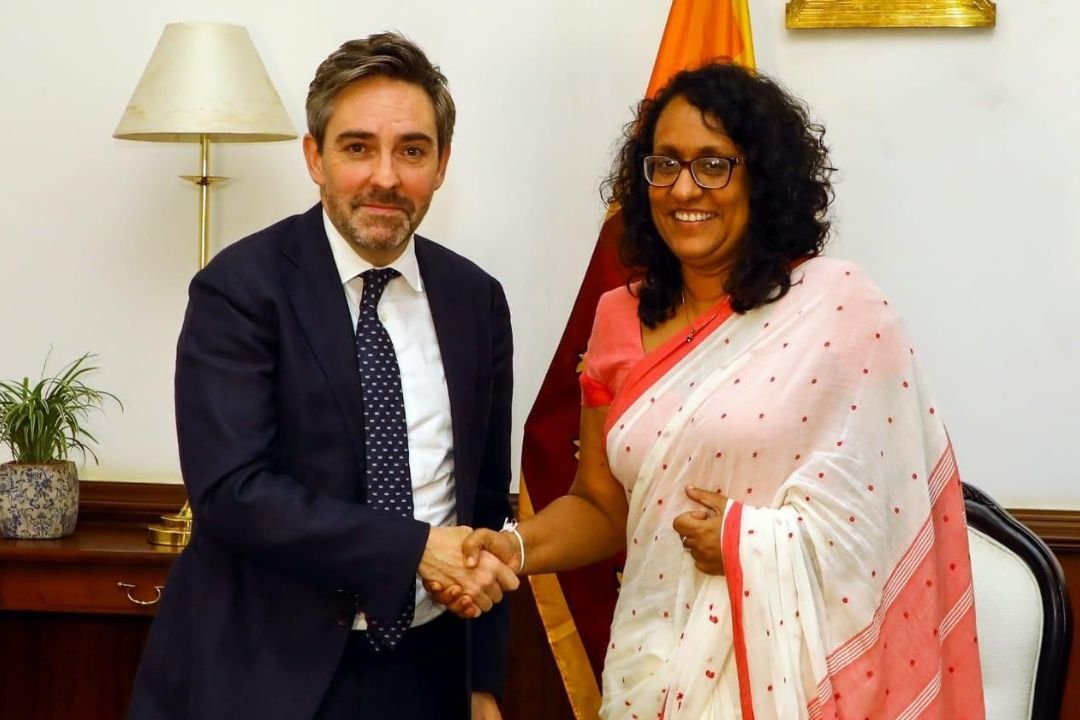

Marc-Andre Franche, the United Nations Resident Coordinator for Sri Lanka, recently reaffirmed his dedication to supporting the country’s development and women’s empowerment initiatives. During a meeting with Prime Minister Harini Amarasuriya, he specifically addressed Sri Lanka’s ongoing efforts to promote gender equality and enhance opportunities for women. In addition to discussing women’s empowerment, Franche extended his warm regards to the Prime Minister and pledged support for the country’s broader goals of poverty reduction and digital transformation.
The meeting was attended by key officials, including Pradeep Saputhanthri, Secretary to the Prime Minister, and Mahinda Gunarathna, Additional Secretary. Also present were Dayani Mendis, Director General of the United Nations and Human Rights Division at the Ministry of Foreign Affairs, along with Patrick McCarthy and Nethmini Medawala from the Office of the UN Resident Coordinator.
The United Nations began its work in Sri Lanka in 1952, and just three years later, on 14 December 1955, Sri Lanka became a full member of the UN. Over the past six decades, the UN has partnered with the Sri Lankan government and its people to improve living conditions and provide opportunities for all citizens, especially the vulnerable and disadvantaged.
Through its 23 specialized agencies, funds, and programs, the UN works across the country to address a wide range of needs, from long-term development to emergency support. The organization has developed strong partnerships with various stakeholders, including the Sri Lankan government, civil society groups, non-governmental organizations, and international donors, to tackle challenges related to development and humanitarian crises.
Looking ahead, the UN remains committed to helping Sri Lanka achieve sustainable and inclusive economic growth. This includes ensuring equal access to quality social services, fostering human development, and supporting efforts to promote reconciliation for lasting peace in the country.