
The Manama Declaration issued at the close of the World Entrepreneurs and Investment Forum (WEIF) held this week in Bahrain highlighted the need for women entrepreneurs to be treated as the drivers of economic change rather than passive recipients of support, according to
The declaration places women at the centre of economic transformation and states that their full participation in business and innovation systems is necessary for inclusive and sustainable growth. It also calls for stronger representation of women across emerging sectors, including the green, blue and orange economies, which are linked to environmental protection, sustainable use of ocean resources and creative industries.
The forum was organised by the UN Industrial Development Organization’s (UNIDO) Investment and Technology Promotion Office in Bahrain. It brought together policymakers, investors and entrepreneurs from around the world to discuss how to shape a more resilient global economy and create new opportunities for women-led businesses.
Alongside panel discussions and networking sessions, the event highlighted inclusive entrepreneurship through three exhibitions, including one titled “Determined Creative Entrepreneur”. Among those exhibiting was Nisreen Samour of Micro Art Center in Bahrain, which focuses on training and developing artistic talent, particularly among artists with disabilities. “Today, we have about nine students participating, each specializing in an artistic field that aligns with their interests and abilities,” she said.
“I personally train them, and we are currently working on developing their skills and empowering them to produce professional artwork that will help them effectively enter the art market and the job market, thus contributing to increased productivity and the center’s overall performance” she added.
The World Entrepreneurs and Investment Forum was preceded by the annual conference of the International Women Entrepreneurial Challenge (IWEC), a New York-based NGO that supports the growth of women-owned businesses. Speaking at the conference, UNIDO Director General Gerd Müller described women’s entrepreneurship as a key driver of sustainable development, innovation and economic inclusion.
“We must ensure that women everywhere have a level playing field and are given the opportunity to unlock their full potential,” he stated, pointing to ongoing barriers to finance, technology and access to higher-skilled roles faced by women worldwide.
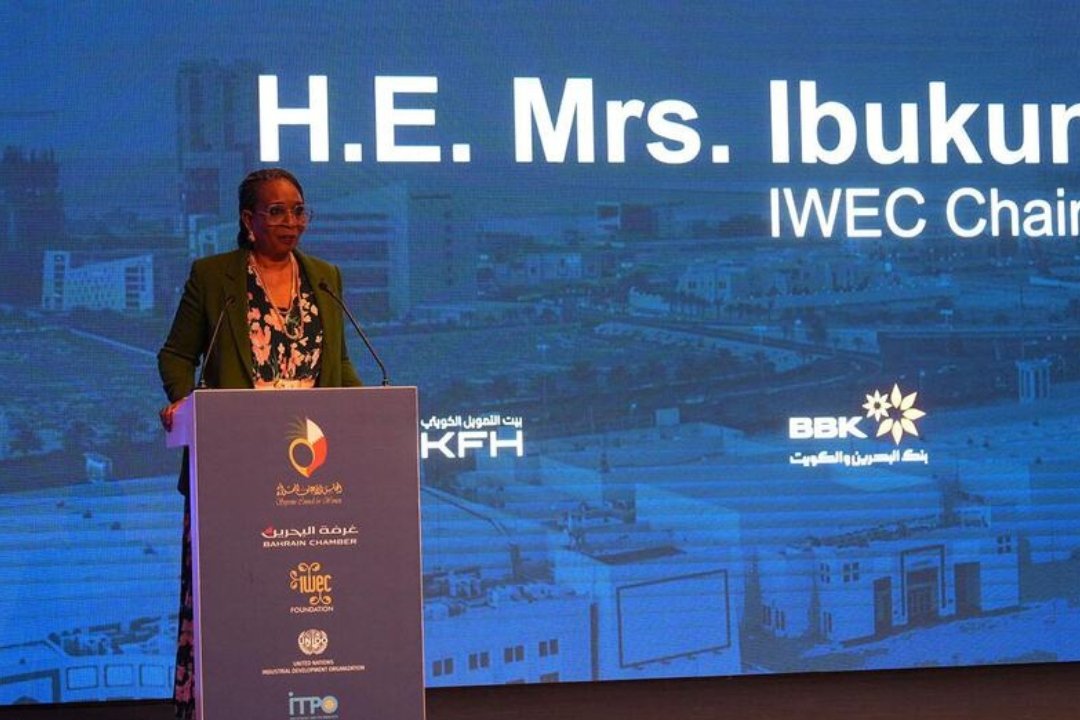
In her opening address at the IWEC conference, Chair Ibukun Awosika spoke about the role of women as agents of business growth, leadership and national development. She said women represent half of the world’s productive assets and, when given the opportunity to lead, can drive corporate and political change. Referring to her own career, Ms Awosika spoke about building a manufacturing group over 36 years before becoming the first and only woman chair of sub-Saharan Africa’s oldest financial institution, First Bank of Nigeria.
“What women represent to the world is 50 per cent of its assets — productive, constructive assets that are game changers when fully deployed,” she said.
She added: “Every nation that has enough wisdom to invest and to actualize the talent that is in 50 per cent of its population is a country that is set to win.”
According to information published by IWEC, the organisation has recognised 575 awardees globally, selected annually through partner organisations, representing women-owned businesses from around the world. During the Bahrain event, IWEC recognised a new group of awardees from the Middle East and Africa.
Among those recognised was Sonia Mohamed Janahi, founder of Maya La Chocolaterie, who spoke about the role UNIDO has played in supporting women entrepreneurs. With backing from UNIDO, Janahi expanded her Bahraini chocolate brand into Africa by setting up a cocoa processing plant in Côte d’Ivoire. The expansion has created jobs, supported ethical supply chains and helped raise the profile of African-produced chocolate internationally.
Another awardee was Nigerian entrepreneur Oluwakelemi, who spoke about her gifting and lifestyle retail business. The company employs women and supports household incomes across Nigeria, with plans for international expansion.