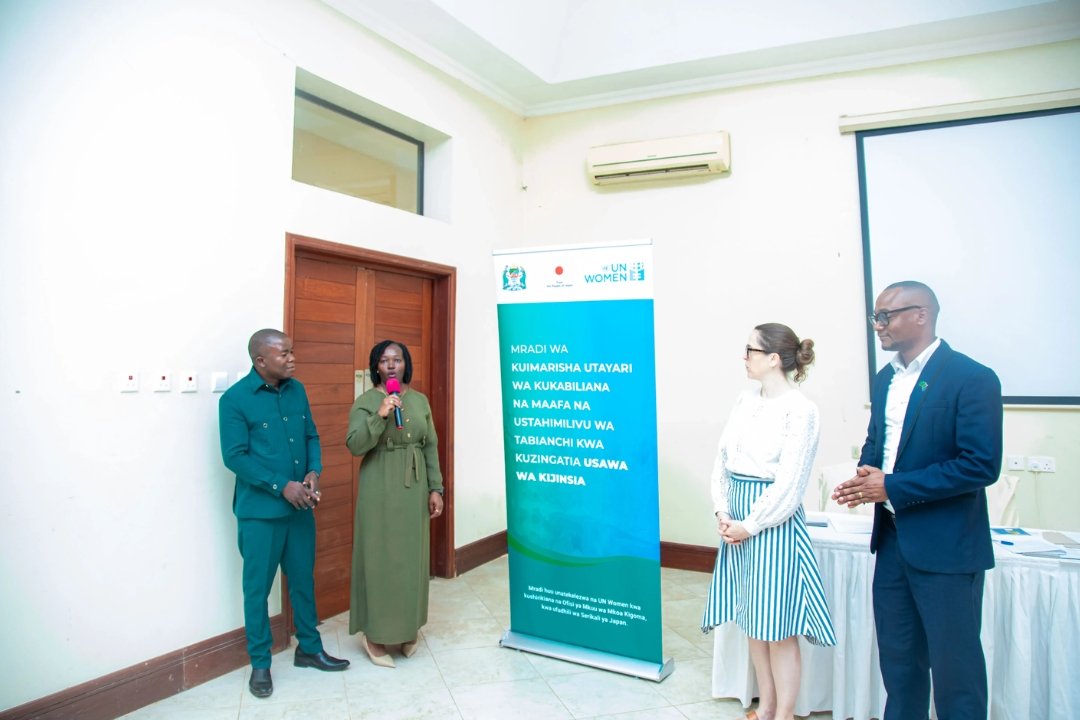

UN Women and the Kigoma Regional Authority have introduced a joint initiative funded by the Japanese government to enhance local climate resilience and disaster preparedness.
The strategy, named the Strengthening Gender-Responsive Disaster Preparedness and Climate Resilience project, aims to help vulnerable populations better anticipate and manage environmental threats. This local rollout forms part of a wider regional programme operating across Tanzania, Rwanda and Malawi to address climate challenges.
Extreme weather disruptions hit women, youth and households headed by women hardest due to entrenched social inequalities and limited access to resources. Data from the Integrated Food Security Phase Classification indicates that 466,000 individuals in Tanzania encountered severe food insecurity crises between February and May 2025. This growing food instability highlights the need for immediate community support networks.
The new programme focuses on developing a risk reduction framework that incorporates gender considerations. Organisers plan to upskill local civil servants and encourage active female leadership in emergency planning and community recovery phases. Furthermore, the initiative will fund sustainable, climate-adapted employment opportunities for youth and women living in vulnerable, flood-prone environments.
The targeted field operations will assist 700 residents directly in the most vulnerable zones of Kigoma, alongside an estimated 3,500 indirect beneficiaries. Regional authorities, district leaders, international development partners and village delegates met recently to plan the logistical integration of the project with existing civil safety structures.
Speaking on behalf of the Regional Administrative Secretary, Madam Zabibu Mkamba, Assistant Administrative Secretary for Public Service in the Kigoma Regional Commissioner’s Office, said: “For Kigoma Region, this project is an important step in strengthening local systems so that communities are better prepared, better informed and more resilient to climate-related shocks. Women and youth must not only be protected during disasters; they must also be meaningfully involved in shaping the solutions that keep families and communities safe.”
Ms Katherine Gifford, UN Women Tanzania Representative a.i., said: “Climate change and disasters are not gender-neutral. Women and girls often face the greatest risks, yet they are also at the forefront of resilience and recovery. Through this partnership, we are investing in stronger institutions, local leadership and climate-resilient livelihoods so that women and youth are not only protected from disasters but are empowered to shape the solutions.”