
A business expansion begins with a spending decision. Equipment, additional stock and new staff may have to be paid for before they produce extra income. For a woman running an established company, the financing question is specific: can she obtain enough money, at an affordable cost, for long enough to make the investment work?
Those conditions make the next stage of entrepreneurship a distinct challenge. Securing a first loan does not settle what happens when a business needs a larger sum or a longer repayment period. The terms of the next offer will help determine which plans the owner can pursue and how much financial pressure she takes on.
The scale of the financing problem is substantial. In its MSME Finance Gap 2026 report, the International Finance Corporation estimates a shortfall of about US$520 billion in 2023 for formal micro, small and medium-sized businesses owned or led by women in the emerging market and developing economies studied. This is a modelled estimate of unmet potential credit demand across business needs. It includes more than expansion finance.
That wider shortage gives weight to a more specific question: how well does the finance available to an entrepreneur match the investment she wants to make? A project may take time to generate income, while repayments begin earlier. An offer may also leave part of the investment cost unfunded. Assessing whether finance is useful requires looking at the amount, timing and cost together.
The obstacles can begin before those terms are discussed. The OECD’s Financing Women’s Economic Empowerment in MENA identifies barriers including unequal access to assets, limited collateral and credit histories, and financial products that inadequately meet women entrepreneurs’ needs. Its analysis covers Algeria, Egypt, Jordan, Lebanon, Libya, Morocco, the Palestinian Authority and Tunisia.
The World Bank’s Women, Business and the Law 2026 report found that 91 of the 190 economies it assessed had no law prohibiting discrimination against women seeking credit.

Within the lending process, a business needs a way to present its financial position. The Middle East Investment Initiative’s Tamweeli Assist helps smaller enterprises use accounting software and interpret their financial statements. Its Tamweeli platform enables initial funding proposals to reach several financial intermediaries without naming the applicant. These services support smaller businesses generally, including those led by women.
For an owner, useful accounts should do more than complete an application. They can help her assess whether a proposed repayment fits the company’s income and existing commitments, and compare the consequences of different offers. A lender also gains information on which to base a decision. This work can make an application stronger, although a separate requirement for collateral may still prevent the owner from qualifying.
The design of a financing programme therefore deserves as much attention as its headline value. In Morocco, the European Bank for Reconstruction and Development (EBRD) has signed a facility of up to €20 million, or its Moroccan dirham equivalent, with Attawfiq Micro-Finance. Approved in 2026 under the bank’s Women in Business programme, it is intended to support micro, small and medium-sized enterprises led by women through credit and advice.
The package also provides for staff training and advice for entrepreneurs, alongside European Union backing to cover part of the loan portfolio’s potential losses and incentives for digital investment. For women applying, its value will lie in the service they receive and the terms they are offered.
That assessment needs to follow the money beyond the institution receiving it. Support for a lender can create room to serve customers it has struggled to reach, but the entrepreneur still needs an accessible application process and a workable offer. The questions are concrete: what security is required, what will the borrowing cost, and how does the repayment schedule relate to the investment?
The allocation for women also needs to be visible within broader lending arrangements. An EBRD facility with Bank al Etihad in Jordan, approved in 2022 and currently listed as disbursing, comprises up to US$35 million equivalent in Jordanian dinars. Within that total, up to US$10 million is designated for lending to small and medium-sized enterprises led by women. Tracking the use of that allocation is necessary to judge how much finance ultimately reaches the intended businesses.
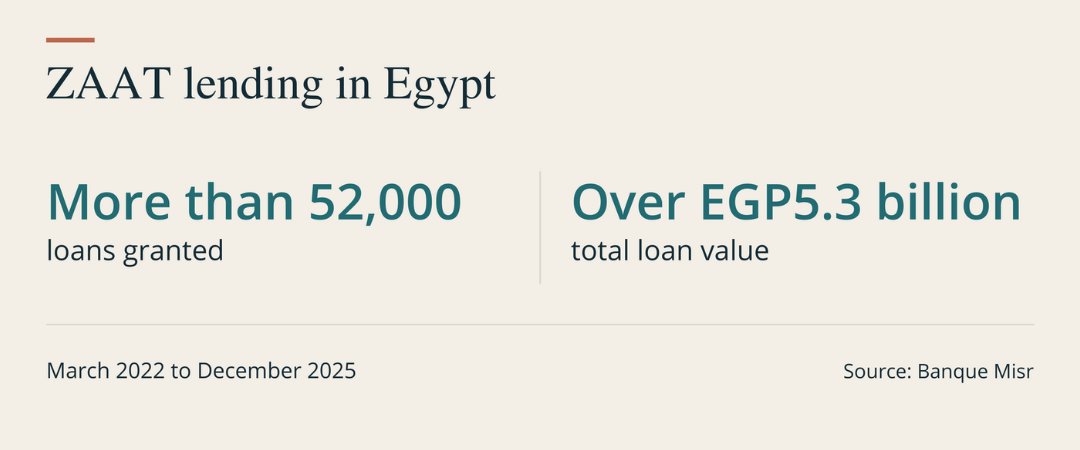
In Egypt, Banque Misr says its ZAAT programme granted more than 52,000 loans totalling over EGP5.3 billion between its launch in March 2022 and December 2025.
The more revealing question is what the borrowing made possible. A fuller picture would follow the businesses behind those loans: the investments they completed, the needs they were funding and whether they could obtain further finance as their plans changed.
Lenders and development institutions should be able to show who is applying, who is approved and what borrowers are offered. Following those businesses over time would help establish whether women can return for suitable finance as their companies grow.
Entrepreneurs also need information they can use before accepting an offer. Clear explanations of costs, security and obligations allow an owner to judge finance against her own plans. Advice on preparing an application is most useful when it also helps her assess the consequences of borrowing. Expanding a business should remain a commercial decision she can evaluate.
The growth capital question ultimately comes back to the investment. Finance supports expansion when its size, cost and timing allow a business to put a viable plan into practice and manage the obligations that follow. Women entrepreneurs need a credible route to that finance as their companies develop. The strongest evidence of progress will be found in the investments they can complete and the next financing decisions they are able to make.