

When people speak about environmental action, they often picture a single tree planted on a sunny morning, a social media post celebrating sustainability, or a community clean-up event.
Yet some women are redefining what environmental leadership truly means.
Across the world, women are restoring forests, reviving depleted farmland, protecting water sources and rebuilding ecosystems that entire communities depend upon. Their work extends far beyond planting trees. They are creating livelihoods, strengthening food security, preserving biodiversity and giving future generations a reason to stay rooted in the places they call home.
The story of environmental restoration is increasingly becoming a story of female leadership.
What begins with a handful of seedlings frequently evolves into something much larger. A restored forest creates shade and improves soil quality. Healthier soil supports agriculture. Better harvests strengthen household incomes. Stronger incomes allow families to invest in education and healthcare. Over time, entire communities are transformed.
This ripple effect demonstrates a powerful truth: environmental restoration is not only about protecting nature. It is about restoring opportunity, dignity and resilience.
Few stories illustrate this principle more powerfully than those of three women working thousands of miles apart. One protects disappearing seeds in rural India. Another is transforming household health in Kenya’s informal settlements. The third is defending one of the world’s most important ecosystems in the Brazilian Amazon. Their methods differ, but their impact is remarkably similar: they are restoring resilience, protecting communities and proving that environmental leadership often begins far from boardrooms and government offices.
On World Environment Day, as the global theme calls on the world to be Inspired by Nature, these women are proof that the most durable climate solutions do not come from policy cycles. They come from people with the most direct stake in the outcome.
India: The woman who guards the seeds
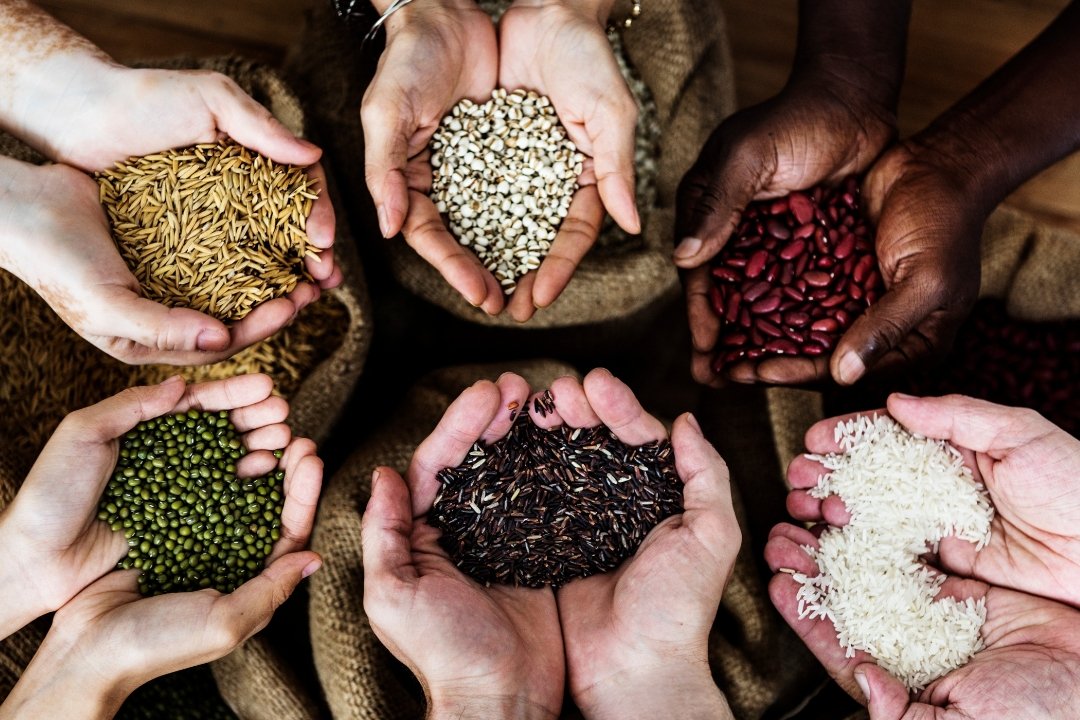
In the Sahyadri hills of Maharashtra, in a village called Kombhalne, Rahibai Soma Popere tends a seed bank that holds over 150 indigenous varieties of 53 food crops: fifteen types of rice, nine of pigeon peas, sixty vegetables, millets and oilseeds that the agrochemical market declared commercially unviable decades ago.
Popere, a tribal farmer from the Mahadeo Koli community, had no formal education and no institutional backing when she began. What she had was a clear diagnosis. The hybrid seeds being sold to farmers in Akole district required costly chemical fertilisers, produced yields that fluctuated badly in drought years and left her family’s soil increasingly thin. Children in the village were getting sick. She traced the pattern and acted on it.
She began collecting indigenous varieties from older farmers in neighbouring villages, people who had kept small paper packets of seed tucked away long after the market moved on. As her collection grew, she formalised it into the Kalsubai Parisar Biyane Sanvardhan Samajik Sanstha, a women-led seed-saving collective and set a rule that turned a personal effort into a self-sustaining network: borrow one kilo of seed, return two after harvest.
Hundreds of farmers across Maharashtra now source their seeds from her. The Indian government recognised her with the Padma Shri in 2020. The BBC listed her among its 100 most influential women worldwide. She continues to live in Kombhalne.
The practical significance of her work goes beyond cultural preservation. The native varieties she conserves are drought-resistant, need no chemical inputs and restore soil biology rather than degrading it. For smallholder farmers operating in a region with increasingly erratic rainfall and rising input costs, her seed bank functions as a climate-resilience infrastructure that no government scheme has yet replicated.
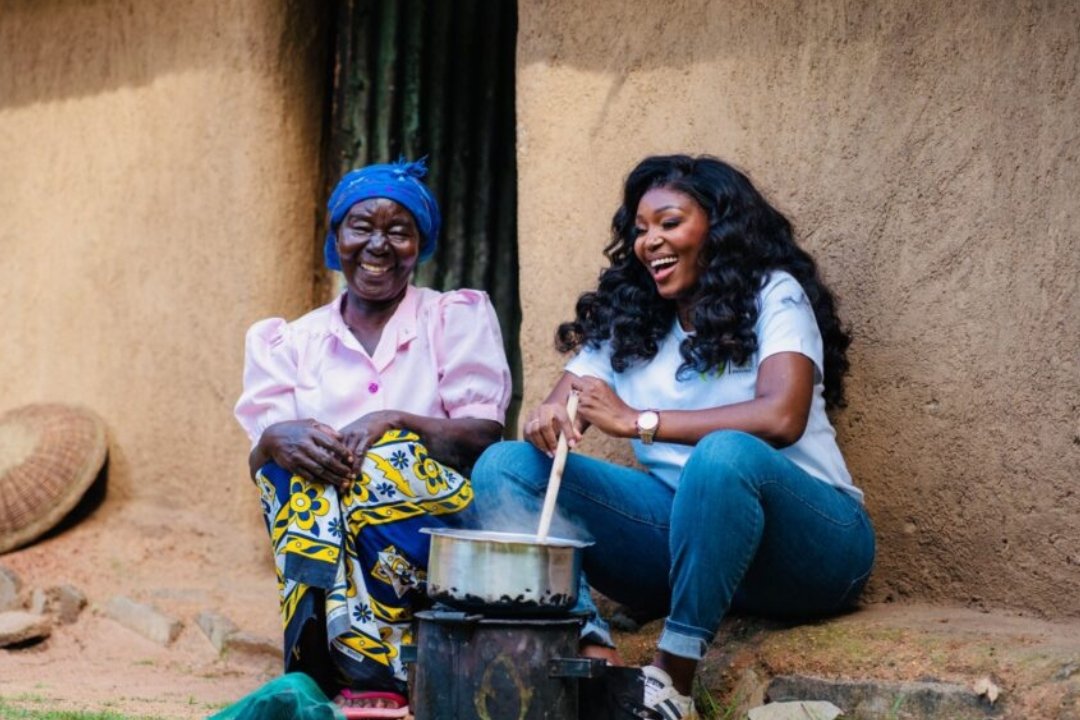
Image source: mukurustoves.org
Kenya: Clean air by design
Charlot Magayi grew up in Mukuru, one of Nairobi’s largest informal settlements, where cooking over open charcoal fires was a daily reality. She lost both parents by the age of ten. At sixteen, as a school dropout and new mother, she sold charcoal on the streets of the same neighbourhood where she had grown up breathing its smoke.
The critical observation came when her daughter was burned by a traditional cooking stove. Magayi began investigating household air pollution and found that open fires and conventional stoves expose families to toxic particulates at concentrations up to fifty times above World Health Organization clean-air thresholds. In Kenya, over 36 million people were living with that daily exposure, the majority of them women and children.
In 2017, with no outside capital, she founded Mukuru Clean Stoves in Mukuru. The stoves are manufactured from locally sourced recycled waste metal and burn processed biomass, a combination of recycled charcoal, wood and sugarcane waste. They produce up to 90 per cent less harmful pollution than open fires and cut household fuel costs by half. They retail at around ten US dollars.
The enterprise has since distributed over 700,000 stoves across Kenya, reaching more than 3.5 million people. Distribution runs through networks of local women entrepreneurs, which means the model generates economic independence at the same time as it reduces pollution. In 2022, Magayi received the Earthshot Prize, worth one million pounds. TIME magazine named her one of its 100 Climate Leaders in 2025. The World Economic Forum admitted her to its Young Global Leaders Class of 2026.
What she built is a case study in designing out a problem that policy had failed to reach. The stove is the intervention, but the architecture around it, a women-run supply chain operating at the household level, is what makes the scale possible.
Brazil: Mapping the forest before it goes
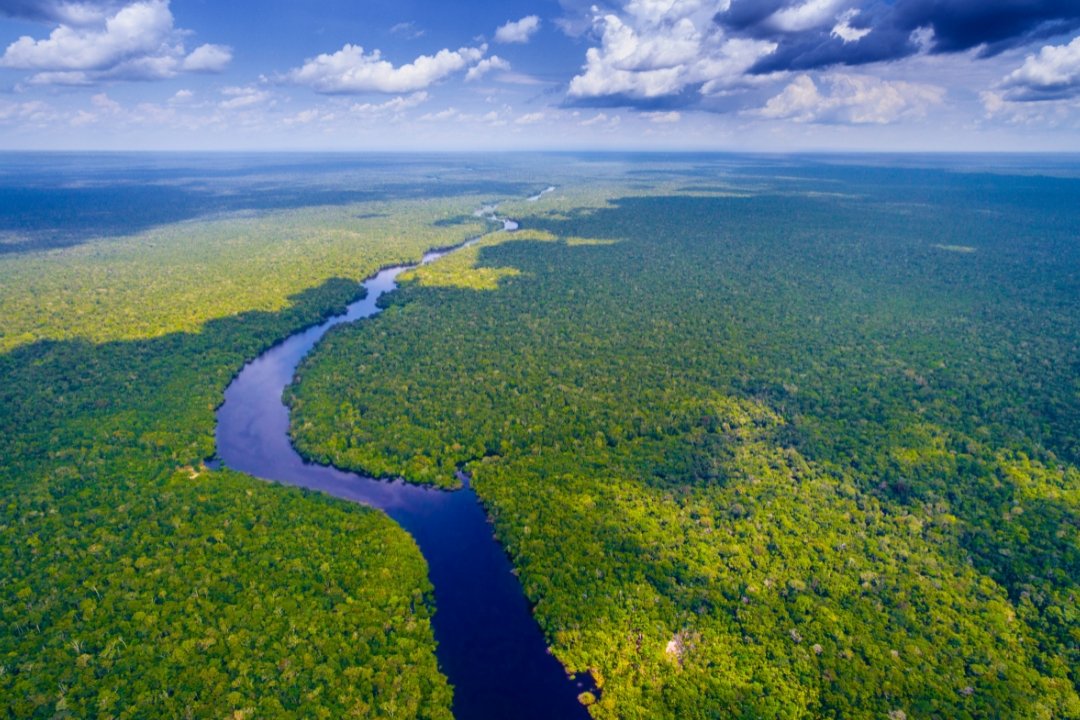
In the Xingu River basin, along the southern fringes of the Brazilian Amazon, deforestation does not announce itself. The Amazon retreats in increments: a soy field here, a cattle track there, rivers that run lower each dry season, fish that no longer reach the villages they once fed. For the Yawalapiti people, the ecological change is inseparable from physical threat. The land-grabbers who follow the forest boundary carry weapons.
Watatakalu Yawalapiti has defended her ancestral territory since she was a teenager. The daughter of indigenous leaders from the Alto Xingu, she grew up in a political environment where protecting ancestral land was the central organising concern of community life. She went on to hold leadership roles in the National Indigenous Movement, co-founded ANMIGA (the National Articulation of Indigenous Women Warriors of Ancestry) and coordinated ATIX Mulher, an organisation focused specifically on indigenous women of the Xingu Territory.
The formation of ANMIGA as a distinct body, separate from the male-led tribal councils that had historically negotiated on behalf of indigenous communities, was not a symbolic gesture. As illegal logging and industrial agriculture increased pressure on indigenous territories, women, who are the primary cultivators and seed keepers in most Amazonian communities, found that compromises made at the political level landed hardest on them. They needed their own platform.
The work ANMIGA does is territorial in the most literal sense. Women are mapping degraded forest boundaries, documenting the ecological knowledge held by older community members and making the case, at the Brazilian federal level and in international forums, that indigenous land rights are the most cost-effective deforestation barrier available. As Watatakalu has stated directly: “There is no point talking about climate change, the future, without listening to women.”
In January 2026, she was among the indigenous leaders who responded publicly when major soy industry firms withdrew from zero-deforestation commitments, detailing on record the effects on Xingu water sources, food supplies and community safety. That is not activism as performance. It is a technical account from the most qualified observers available.
The fight to protect Mother Earth is the mother of all fights.
ANMIGA (National Articulation of Indigenous Women Warriors of Ancestry), Brazil
What these three cases have in common
None of these women set out to build a climate programme. Rahibai Popere simply wanted her family to eat well. Charlot Magayi wanted her daughter safe from toxic smoke. Watatakalu Yawalapiti wanted her community to stay on the land that had sustained them for generations.
The connection between those personal decisions and what climate science now identifies as necessary, including seed sovereignty, clean cooking and indigenous land governance, is no coincidence. It reflects a clear reality: women who manage resources at the household level make choices that protect nature because their survival depends on it directly.
That is the signal this World Environment Day is asking the world to read.