

A 2025 consumer study found that 72% of consumers rated the experience of retail as a crucial factor in their purchasing decision. For an industry valued at close to $30 trillion, this signals a structural shift in how retail competition is defined.
Growth is no longer secured through footprint, pricing or product range alone. It increasingly depends on how well organisations design, manage and monetise experience. It is a strategic and capital allocation decision that increasingly sits at board level.
Experiential retail, often referred to as Retailtainment, has moved from a peripheral idea to a core strategic consideration. Stores are being reimagined as places where value is created through interaction, participation and emotional connection, and not just transaction. This transition requires leaders to reassess how they define return on investment, how they measure performance and how closely they listen to customers.
Retailers that remain relevant are those that treat changing customer behaviour as strategic intelligence rather than marketing insight. Advances in data and analytics now allow businesses to make informed decisions about layout, service design and in-store interaction. The opportunity is significant, but execution risk remains high.
With the global retail market projected to exceed $50 trillion by 2030, the strategic choices organisations make in response to this shift will have effects that extend beyond individual brands. Retail sits at the centre of employment, supply chains and urban economies, making its evolution economically consequential.
The demands of a younger clientele
Younger consumers are playing a decisive role in the renewed relevance of physical retail. A 2024 Adyen study shows that 73% of shoppers aged 18 to 27 visit physical stores at least once a week, compared with 65% of older age groups. Their behaviour reflects a different relationship with shopping: 57% of younger consumers describe it as an experience rather than a task, versus 35% among older consumers.
This distinction matters commercially. When shopping is viewed as an experience rather than a transaction, customers spend more time in-store, engage more deeply with brands and are more likely to return.
Across age groups, four factors consistently shape positive retail experiences: Engagement, Authenticity, Personalisation and Reliability. These are not soft metrics, rather they influence dwell time, conversion and lifetime value.
For businesses, the question is not how to attract younger consumers through novelty, but how to align operating models with these expectations without compromising margins or operational discipline.
In-store retail in the era of e-commerce
E-commerce continues to grow, accounting for approximately 22% of global retail sales, up from 19% in 2022, while physical retail remains resilient. About 61% of consumers still choose to shop in-store because they value the sensory and social aspects of the experience. Consistent with earlier findings on younger shoppers, this challenges the assumption that digital-first generations will abandon physical retail altogether.
As online channels deliver speed and convenience, physical stores are being forced to justify their existence in different terms. Increasingly, they function as destinations rather than distribution points. This shift demands clarity of purpose. Stores that attempt to be everything at once often fail to deliver anything distinctive.
Storytelling has become central to this evolution. Retail environments are now expected to offer moments worth sharing, both in person and online. Research shows that 60% consumers expect stores to provide social experiences they can enjoy with others. For businesses, this creates a strategic tension between scale and distinctiveness, and between operational efficiency and emotional engagement.
The evolving role of consumers
One of the most significant shifts in retail is the rise of prosumption, where customers actively shape what they buy. Customisation, co-creation and interactive design are no longer niche concepts. They reflect a broader expectation that consumers should have agency in the process, not just choice at the end.
This participatory dynamic changes the relationship between brand and customer. Retail becomes less about persuasion and more about involvement. When customers invest time and creativity, perceived value increases. This has implications for pricing power, loyalty and brand meaning.
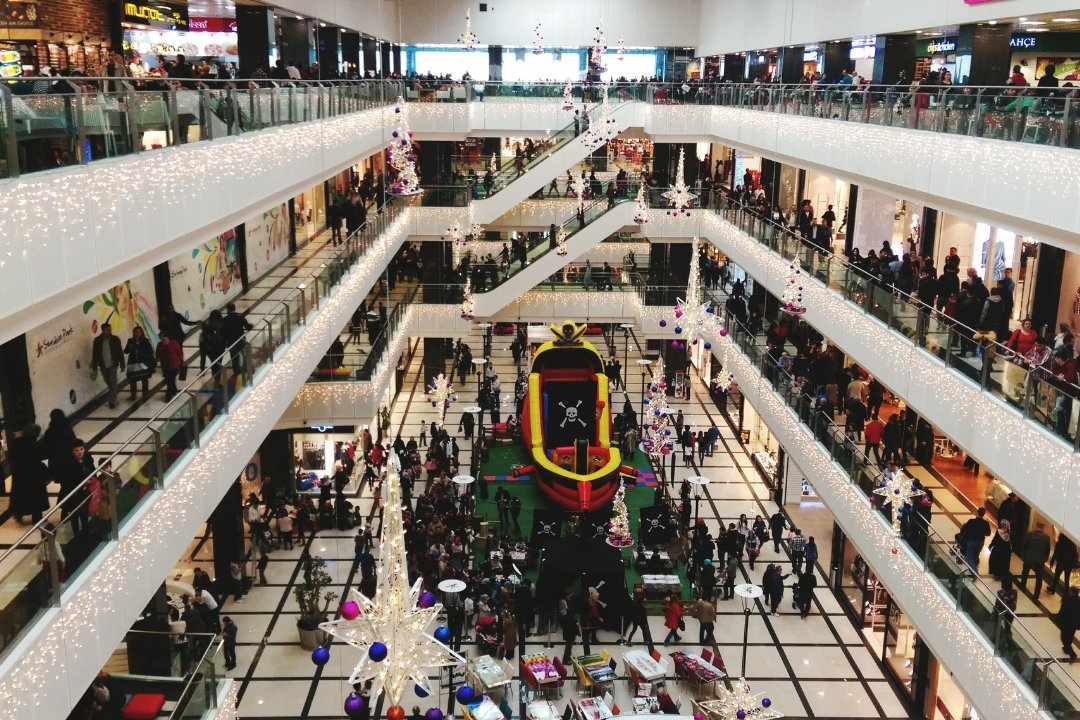
Retailtainment emerges naturally from this shift. A blend of Retail and Entertainment – Retailtainment transforms shopping into an immersive experience. The objective extends beyond selling products to creating moments that customers enjoy, remember and share. Retail, in this context, becomes about presence, interaction and emotional connection.
Experience as a commercial decision
Experiential retail offers clear commercial upside when executed with discipline. It can support brand differentiation, deepen customer loyalty and reduce price-led switching. In highly competitive markets, distinctive in-store experiences give customers a clear reason for choosing one brand over another.
In this context, loyalty is shaped less by points or discounts and more by experiences that are relevant and memorable. Experiences rooted in physical locations are difficult to replicate online and can help counter showrooming behaviour.
There is also an increasing connection between experience and values. Many consumers now expect brands to demonstrate social and environmental awareness. Experiential retail can create space for community engagement, education and responsible consumption. Importantly, it can also slow down the act of buying. When customers engage more deeply, purchasing decisions tend to be more considered and carry greater perceived value.
Data plays a critical role here. Experience-led environments generate rich insight into customer behaviour and preference. When applied effectively, this data improves relevance and operational efficiency. When applied poorly, it adds complexity without commercial return.
Investment levels reflect this shift. Most companies plan to increase spending on customer experience, while consumer expectations continue to rise. Zendesk Benchmark Data shows that 76% of customers now expect personalisation, and Deloitte reports that brands that excel in this area are 71% more likely to see improved customer loyalty. At the same time, 80% of companies say they plan to increase investment in customer experience. The challenge for businesses is ensuring that this investment delivers commercial return, not just increased brand visibility.
Choosing what to invest in
Experiential retail takes many forms, from digitally integrated stores to live events, interactive design, AI-enabled personalisation and partnerships with creators or communities. The risk lies in treating all formats as equally valuable.
The priority is careful selection: Which initiatives align with brand identity? Which can be scaled without diluting quality? Which justify long-term capital rather than short-term attention?
Successful experiential strategies share common traits. They are engaging without being superficial, distinctive without being alienating, and operationally robust. Crucially, they are grounded in a clear understanding of the customer and a realistic assessment of execution capability.
Global precedents
Mall of the Emirates in Dubai incorporates Ski Dubai, transforming shopping into an adventure. Nike’s House of Innovation stores allow customers to design products and engage more deeply with the brand. IKEA’s immersive showrooms invite customers to explore living spaces, socialise, and dine. Sephora integrates augmented reality and AI-driven tools to personalise the in-store beauty experience. Apple’s flagship stores combine technical support, workshops, and community events, positioning stores as destinations rather than sales floors. Adidas concept stores blend retail with fitness studios and interactive experiences, reinforcing lifestyle-based brand engagement.
Together, these examples illustrate that experiential retail functions as a deliberate strategic lever. By transforming physical spaces into immersive, interactive environments, leading brands are strengthening engagement, reinforcing brand identity, and generating measurable commercial outcomes. Experience has become a core dimension of competitive advantage in retail.
A strategic imperative, not a creative experiment
Global examples demonstrate what is possible when experience is treated as a strategic priority. From immersive flagship stores to environments that integrate food, culture, and community, leading brands have shown that experience can drive both engagement and revenue. The growth of the experiential retail market reflects this shift.
For businesses, the priority is no longer establishing the importance of experience, but ensuring it is managed with clarity and strategic discipline. Organisations that approach experiential retail as a deliberate strategic asset, governed with the same rigor as capital, operations, and risks are best positioned to realise its commercial potential.
Those who confuse attention with value may build spaces that impress briefly but fail to perform. Those who align experience with strategy, investment and execution are more likely to create relevance that endures.
According to the International Council of Shopping Centers, the experiential retail market is currently valued at approximately $132 billion and is projected to quadruple by 2035. These figures signal a decisive shift in how retail spaces are designed and experienced, signalling a transformative decade ahead for the industry. The question is no longer whether experiential retail matters, but how effectively they can align strategy, investment and execution to compete in a market where experience increasingly defines value.