
A new report from Heriot-Watt University, produced in collaboration with Grant Thornton, shows that women now hold 85 board seats in the UAE’s financial services sector, accounting for 15.8 percent of positions. The figure surpasses the national average of 14.8 percent reported in the 2025 GCC Board Gender Index, signalling comparatively stronger progress within financial services.
The publication, titled “Discovery Series 2025: Women Transforming Financial Services,” draws on an in-depth review of 2025 financial-year disclosures from 73 listed firms. In total, the study analysed 539 board members across companies on the Abu Dhabi Securities Exchange, Dubai Financial Market, and Nasdaq Dubai.
Despite the improvement, the findings highlight persistent gaps. According to the report, eight of the 73 companies included have no female representation at board level. The analysis also found that out of 49 companies examined for executive positions, only three have a woman serving as Chief Risk Officer, equivalent to 6 percent. A further six companies have a woman in the role of Head of Internal Audit, representing 10 percent. These figures indicate that women remain underrepresented in key governance, audit, and risk oversight roles.
Commenting on the findings, Hisham Farouk, CEO of Grant Thornton UAE, said the country continues to advance an innovation-led financial landscape. He stated that the Discovery Series has become a practical tool for tracking developments and informing policy direction.
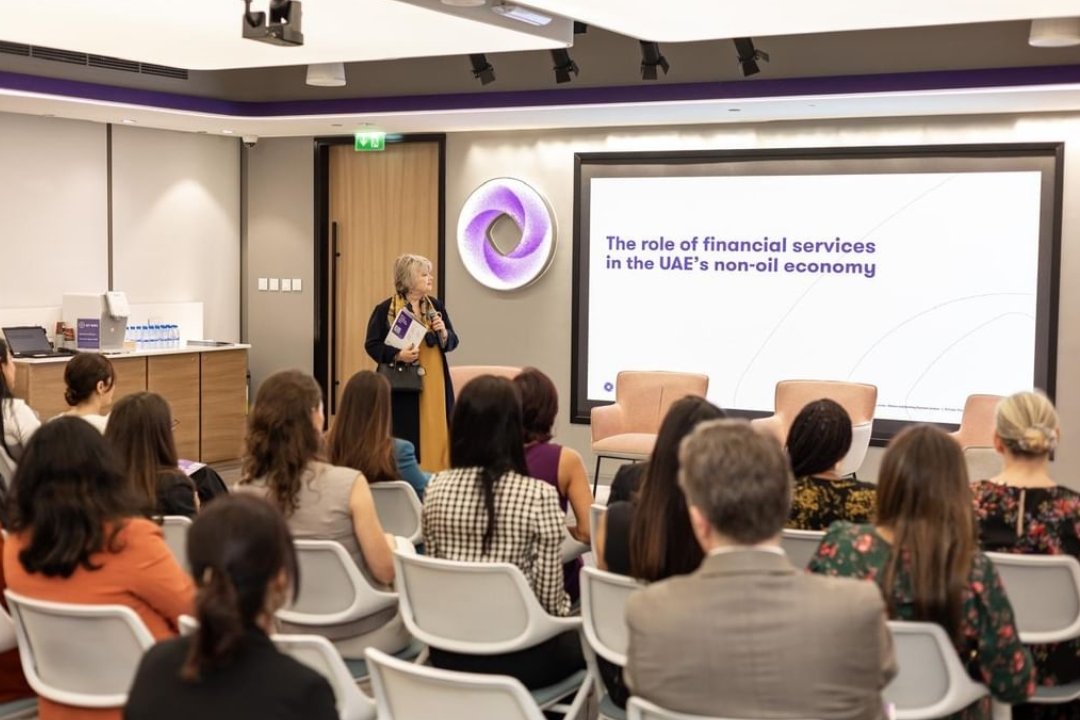
Professor Heather McGregor, Provost and Vice Principal of Heriot-Watt University Dubai, said the objective of the study is to deliver “an evidence-based picture of women’s leadership representation in financial institutions,” while also highlighting their importance in shaping governance, managing risks, and driving institutional change.
She noted that the report’s data is an important reference that will support policy development and increase women’s representation in senior leadership positions, aligning with the UAE’s broader gender-balance priorities and its ambitions for a diverse, sustainable economy.