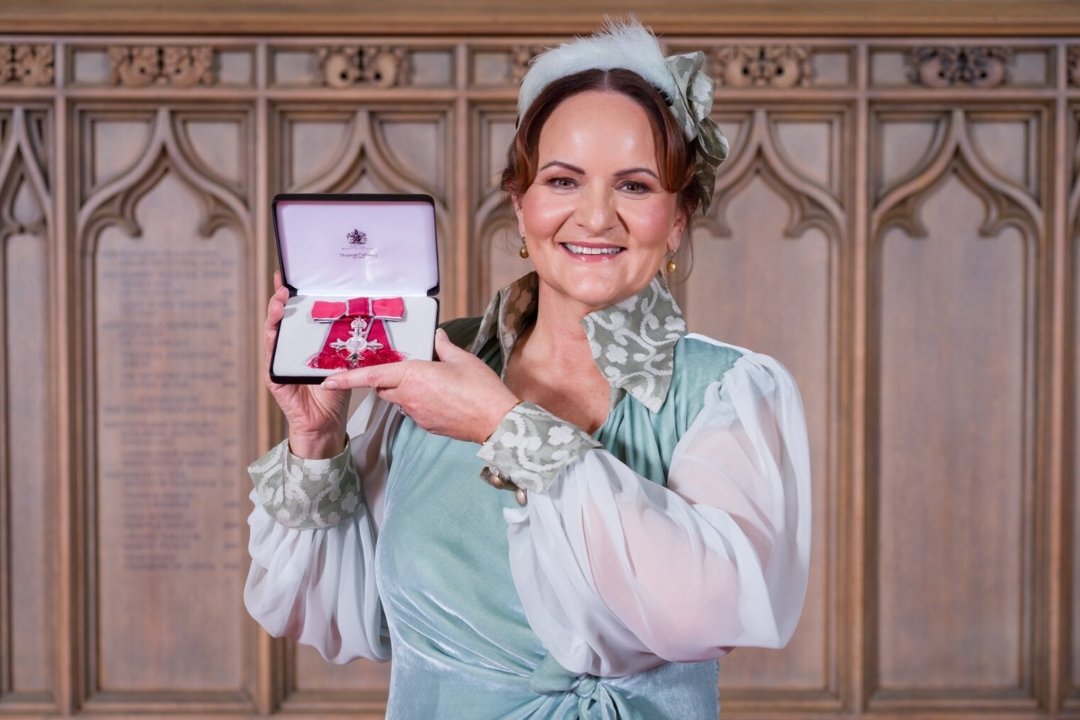
Independent candidate Catherine Connolly has been elected as the 10th President of Ireland, following a decisive victory in the country’s 2025 presidential elections. Polling took place on 24th October, with results announced the following day. Her official inauguration is scheduled for 11 November, marking the beginning of a new era in Irish leadership. The ceremony is set to take place in Dublin Castle this afternoon, where Connolly will take the oath of office from Chief Justice Donal O’Donnell. Connolly, who secured the highest share of first preference votes in Irish presidential history with 63%, will become Ireland’s third female president.
In her acceptance speech, Connolly addressed the nation first in Irish and then in English, reflecting her deep-rooted respect for Ireland’s linguistic heritage. “I will be a president who listens and reflects and who speaks when it’s necessary,” she said. “I will be a voice for peace, a voice that builds on our policy of neutrality, a voice that articulates the existential threat posed by climate change, and a voice that recognises the tremendous work being done the length and breadth of the country”.
Her victory represents a reaffirmation of Ireland’s commitment to empathy-driven public life and active neutrality, values Connolly has championed throughout her career.
Connolly’s 2025 Presidential Campaign
Connolly’s presidential campaign was grounded in empathy and inclusion. Her message, delivered under the banner “A President Who Listens”, centred on giving voice to those who often go unheard: from housing rights advocates to carers, teachers, and rural communities.
A key theme of her campaign was the housing crisis, an issue she described as emblematic of Ireland’s broader social challenges. Citing the growing gap between wages and property prices, Connolly highlighted how many Irish families face increasing economic insecurity despite national growth. Her focus on the housing crisis and wage gap could signal a shift towards individual economic empowerment, leading to a wider improvement in the country’s economy and GDP. The focus on inclusivity could also pave the way for more economically empowered women and female entrepreneurs, amongst other positive socio-economic improvements from the ground-up.
Connolly also reaffirmed her commitment to Ireland’s neutrality, describing it as “an active, living tradition of peace-making, bridge-building, and compassionate diplomacy.” Her campaign placed strong emphasis on equality, justice, cultural identity, and environmental awareness, presenting her as a modern leader deeply attuned to Ireland’s values and traditions.
Connolly’s early life and political journey
Catherine Connolly’s rise to the presidency is the culmination of over two decades in public service. Born in 1957 in Galway, Connolly entered active politics in 1999, encouraged by the outgoing president, Michael D. Higgins. Like Higgins, Connolly’s political roots lie in Galway, a city whose sense of community and culture has deeply shaped her identity.
She was born in Shantalla, Galway, and grew up in a large working-class family. Growing up in such a household instilled in her a strong sense of responsibility, discipline, and community. She has often credited her upbringing as something that shaped her socialist politics and leadership style.
Her early professional life was defined by a dual commitment to care and advocacy. Trained first as a clinical psychologist, Connolly earned her Master’s degree in Clinical Psychology from the University of Leeds in 1981, before returning home to study law at the University of Galway, where she graduated in 1989. By 1991, she had qualified as a Barrister-at-Law, practising in Galway while raising two young sons with her husband, Brian.
Connolly’s political career began when she was elected as a councillor on Galway City Council in 1999, later serving as Mayor of Galway from 2004 to 2005. In 2016, she was elected as an Independent Teachta Dála (TD) for Galway West, running on a platform of equality, accountability, and the promotion of the Irish language.
Her parliamentary colleagues recognised her impartiality and integrity in 2020 when she became the first woman ever elected as Leas-Cheann Comhairle (Deputy Speaker) of Dáil Éireann (the lower house and principal chamber of the Irish Parliament). Throughout her parliamentary career, Connolly served on key committees, including the Public Accounts Committee and the Committee for the Irish Language, reflecting her consistent advocacy for transparency and cultural preservation.
By the time she announced her presidential campaign in July 2025, Connolly was already known as a steady, empathetic figure in Irish politics.
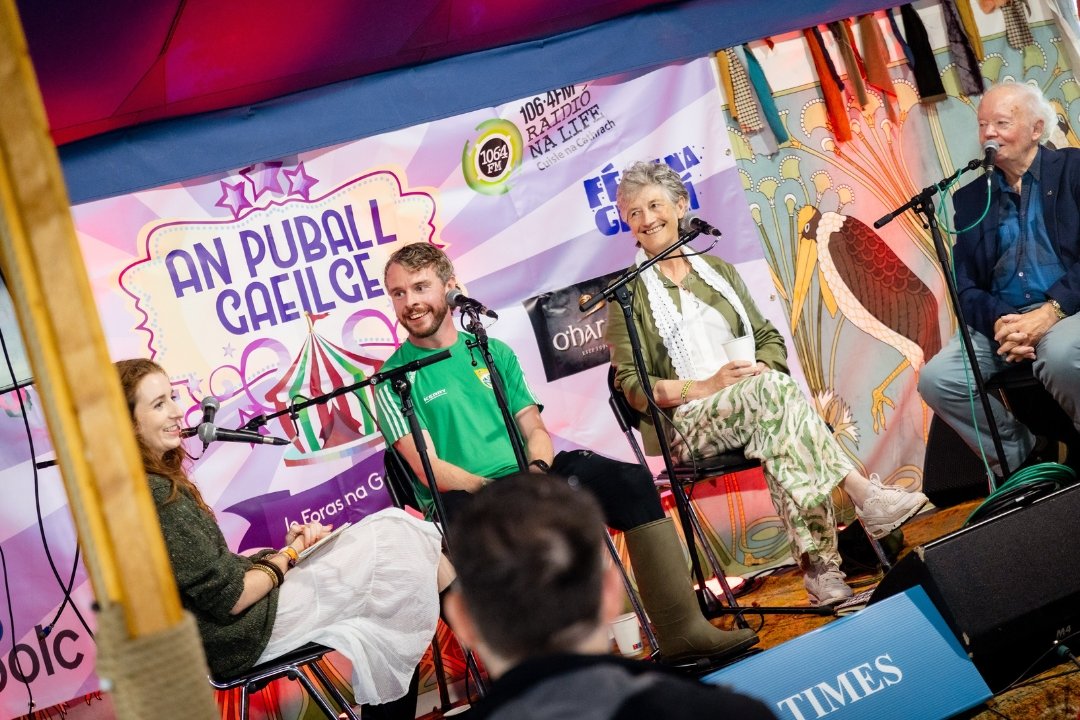
Image source: catherineconnollyforpresident.ie
Connolly’s ideals on the economy, development and foreign relations
Connolly’s public statements and record reveal a clear economic philosophy grounded in fairness and sustainability. She has consistently supported inclusive growth, advocating for balanced regional development that benefits rural communities as much as urban centres.
Connolly’s approach to economic development focuses on social responsibility and environmental stewardship. In her parliamentary work, she has highlighted the need to move beyond short-term growth metrics towards long-term investment in public housing, healthcare, and renewable energy. Her leadership style suggests a belief in aligning Ireland’s prosperity with the well-being of its people and the planet.
On the international stage, Connolly has positioned herself as a proponent of compassionate diplomacy. Drawing from Ireland’s long-standing commitment to neutrality, she envisions a foreign policy that prioritises conflict resolution, humanitarian aid, and sustainable partnerships, particularly in the Global South.
What does Connolly’s presidency mean for Ireland?
Catherine Connolly’s ascent to the presidency reflects a broader shift in Irish public life that values empathy, independence, and authenticity. Her career, rooted in both care and law, demonstrates a lifelong commitment to listening and serving rather than commanding.
As she prepares to take office, Connolly inherits a symbolic yet significant role: to represent Ireland’s conscience at home and abroad. In her own words, “The Presidency is not the solution to all our challenges. But it can be a light. A centre of calm. A place where the values of this nation are guarded and renewed.”