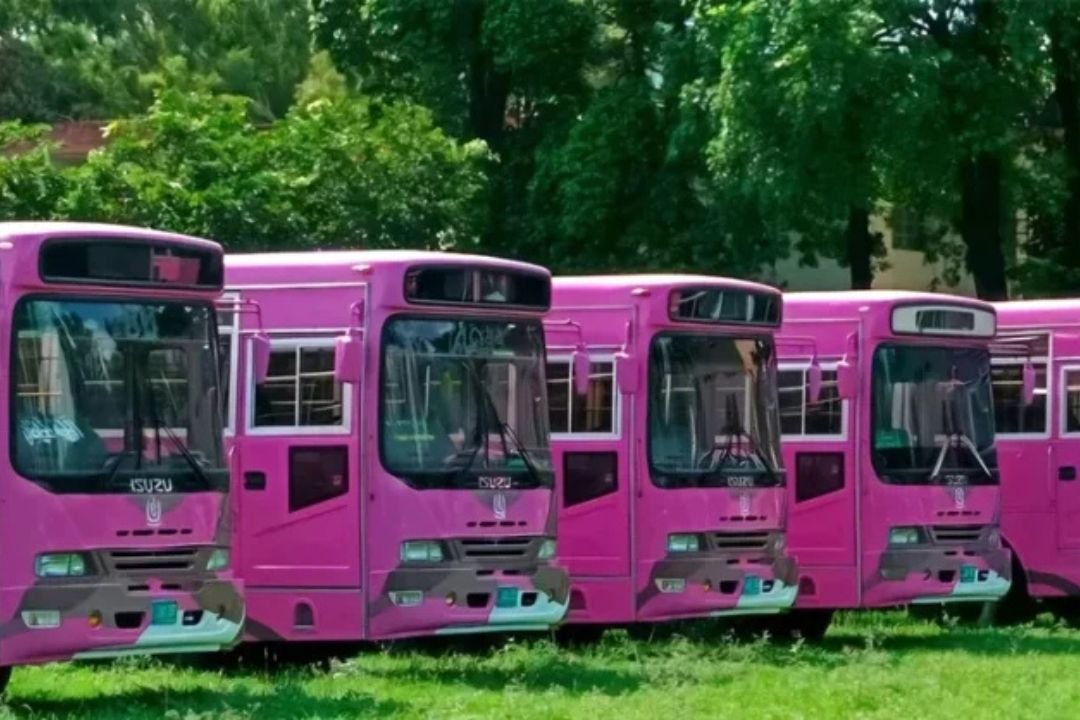

Civil society organisations and women’s rights activists across Islamabad expressed their support for the launch of the Pink Bus Service, hailing it as a crucial step toward empowering women and improving access to education.
The new initiative is seen as a much-needed solution to the transportation challenges that many women face, particularly when it comes to reaching educational institutions. The move has been hailed as an example of the government’s commitment to creating an environment that supports women’s education.
Talha Khan, the Executive Director of Community Empower Network, voiced his approval, praising the Ministry of Federal Education and Professional Training for their proactive approach. He highlighted how the Pink Bus Service is a groundbreaking effort to improve the lives of women and girls. Khan added that this service could have a significant impact on reducing the school and college dropout rates for young women, making education more accessible.
Human rights activist Zartasha Niazi also weighed in on the new initiative, describing it as a game-changer in the fight for women’s rights and empowerment. According to Niazi, the Pink Bus Service represents an important milestone in developing a safer, more inclusive public transportation system. She emphasised how the service offers women a safe space in a previously challenging environment, reminding society that the rights and dignity of women and girls are just as important.
The Pink Bus Service is particularly popular among students, with many reporting an improvement in their daily commute. Fatima, a student at F/6 Model College, shared her personal experience, noting that travelling in a women-only bus has made her feel far more secure and less worried about harassment. “Honestly, getting to college used to be a real struggle for me before the pink buses came along,” she said. “But now, I feel so much more at ease, and I always arrive on time.”
Fatima also acknowledged how the service has alleviated the financial and safety concerns that used to disrupt her education. “The Pink Bus Service is providing a safe and reliable mode of transportation for female students and teachers, enabling them to pursue their education without worrying about transportation costs or safety concerns,” she added.
The positive feedback from civil society has led to calls for the expansion of the Pink Bus Service. Activists and organisations are urging the government to extend the service to rural areas, where access to education is often severely hindered by a lack of transport options.
This strong support from civil society highlights the growing recognition of how vital accessible, safe transportation is for women’s education and overall empowerment. Many are hopeful that the Pink Bus Service will continue to improve and be extended, benefiting more women and girls across the country.