
Microsoft has announced a major commitment to India’s artificial intelligence ambitions, revealing a US$17.5 billion investment over a four-year period from 2026 to 2029. The move marks the company’s largest financial pledge in Asia and is aimed at scaling cloud and AI infrastructure, expanding skilling programmes, and supporting operational capacity across the country.
The announcement builds on Microsoft’s earlier US$3 billion investment, which was confirmed in early 2025 and is expected to be fully deployed by the end of 2026. The latest commitment was confirmed following a meeting between Microsoft Chairman and CEO Satya Nadella and India’s Prime Minister Narendra Modi, ahead of Microsoft’s India AI tour. The discussions centred on India’s AI roadmap and broader growth priorities.
According to Microsoft, the new investment is aligned around three central pillars: scale, skills and sovereignty, and reflects the government’s push to develop an integrated AI ecosystem capable of supporting innovation at a national level. Both parties characterised this phase as a turning point for India as it aims to transition from digital public infrastructure to “AI public infrastructure.”
Shri Ashwini Vaishnaw, Union Minister of Electronics & Information Technology, said: “As AI reshapes the digital economy, India remains committed to innovation anchored in trust and sovereignty. Microsoft’s landmark investment signals India’s rise as a reliable technology partner for the world. This partnership will set new benchmarks and drive the country’s leap from digital public infrastructure to AI public infrastructure.”
Puneet Chandok, President of Microsoft India and South Asia, added: “Microsoft has been part of India’s fabric for more than three decades. As the nation moves confidently into its AI-first future, we are proud to stand as a trusted partner in advancing the infrastructure, innovation and opportunity that can power a billion dreams. Building on the US$3 billion investment announced in January 2025, our new US$17.5 billion commitment and deep partnership across India’s technology ecosystem are focused on turning India’s AI ambition into impact for every citizen. This transformation is anchored on three pillars: hyperscale infrastructure to run AI at scale, sovereign-ready solutions that ensure trust, and skilling programs that empower every Indian to not just join the future but shape it.”
Microsoft said the investment will expand cloud and AI infrastructure and strengthen its operations in India, where the company already employs more than 22,000 people across cities including Bengaluru, Hyderabad, Pune, Gurugram and Noida. These teams contribute to a wide range of activities, from AI model development to product engineering and support services, and play a key role in the global deployment of solutions such as Copilot Studio, Azure AI Search, AI agents, Azure Machine Learning, and AI speech and translation tools.
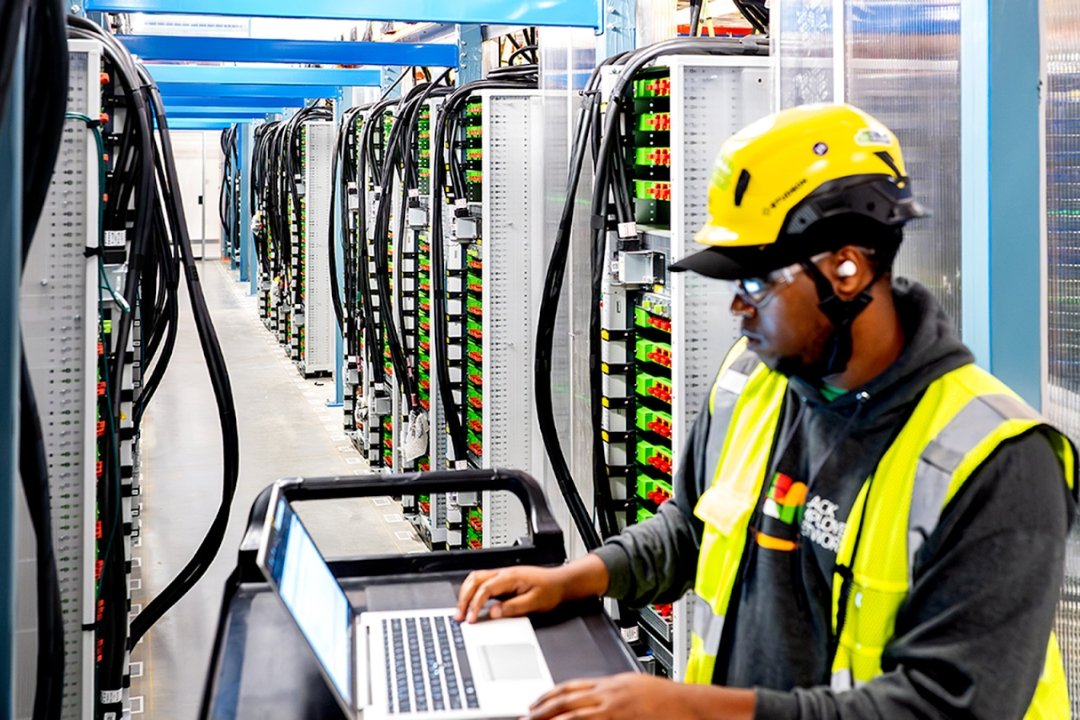
A central part of the investment is the development of sovereign-ready hyperscale infrastructure to support widespread AI adoption. Progress continues at the India South Central cloud region in Hyderabad, which is expected to become operational in mid-2026. Microsoft said this will be its largest hyperscale region in the country, featuring three availability zones and covering an area roughly equivalent to two Eden Gardens stadiums combined.
In addition, the company is planning further expansion of its existing data centre regions in Chennai, Hyderabad and Pune. These facilities are designed to enhance performance for both public and private sector organisations by providing low-latency services and resilient cloud capacity.
Microsoft also announced the introduction of Sovereign Public Cloud and Sovereign Private Cloud for Indian customers. Sovereign Public Cloud will be available through Microsoft’s existing regions in India, offering structured deployment and governance capabilities using Sovereign Landing Zones. Sovereign Private Cloud, powered by Azure Local, will support both connected and disconnected environments directly within customer or partner-operated data centres.
The company said these developments reflect its intention to build an ecosystem that supports national AI growth through infrastructure development, integration of AI into public platforms, and workforce readiness initiatives. The goal, it said, is to help position India as a global leader in AI adoption and innovation in the years ahead.