
The International Finance Corporation (IFC) and the Abdul Samad Rabiu Africa Initiative (ASR Africa) have announced a major expansion of the She Wins Africa programme, increasing the number of women entrepreneurs supported from 100 to 1,000 across Sub-Saharan Africa. The decision follows strong early performance from the pilot phase and the mobilisation of more than $4 million in startup financing by participating businesses.
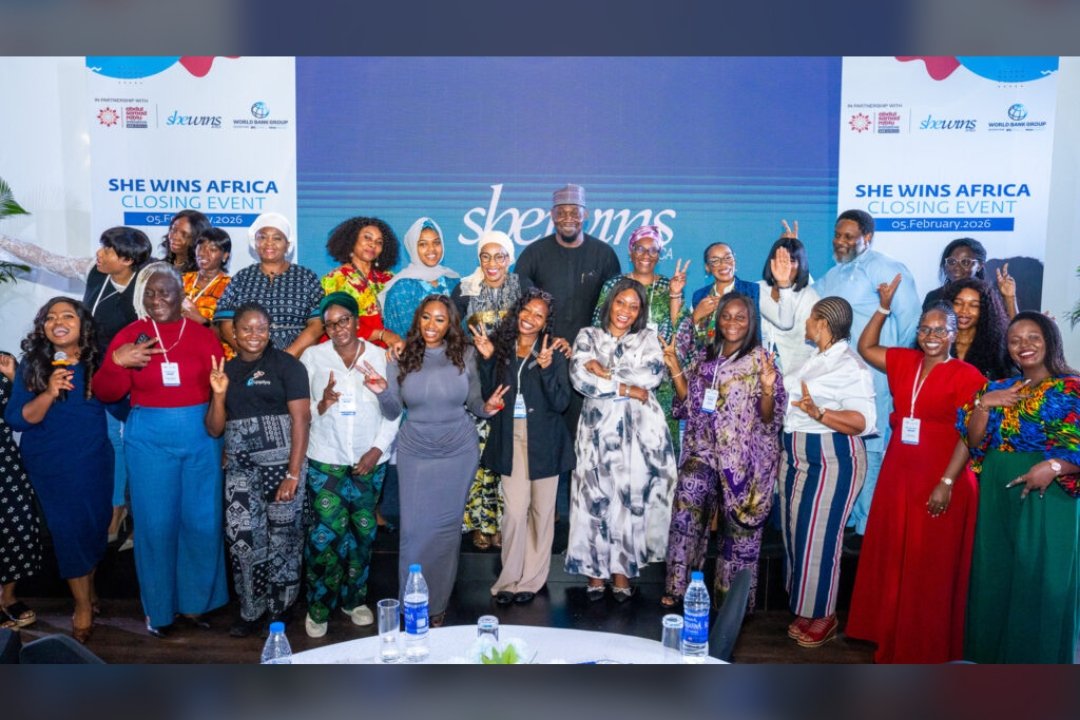
The announcement was made at the She Wins Africa closing event held recently in Lagos. The event marked the conclusion of the programme’s first cohort, which delivered measurable gains in business growth, investment readiness and access to finance for women-led enterprises operating in several African markets.
Over the past year, the initiative provided structured support to women-led small and growing businesses, with a focus on improving operational capacity and strengthening links to investors. According to IFC and ASR Africa, the results exceeded initial expectations and demonstrated the potential for wider regional impact.
Speaking at the event, Marieme Niang Camara, IFC’s Senior Operations Officer and Regional Gender Hub Lead for Africa, explained the rationale behind the scale-up. She said: “When we started with 100 women entrepreneurs, it was a successful pilot, but we realized that 100 is just the beginning for a region like Africa. When you look at the impact it created and the kind of access to capital and markets it gave to those women entrepreneurs, you see this is a program worth scaling. Now we’re moving from 100 to 1,000, and we’re doing it strategically through segmentation—from startups to growth-stage and scale-up companies. We’re offering tailored technical assistance, investment readiness support, and direct access to capital through both funds and IFC-backed banks. This is how we turn pilot success into regional transformation.”
Camara added that startups participating in the first phase collectively raised more than $4 million, with 17 women-led businesses securing external financing, surpassing the programme’s original targets. She noted that the initiative delivered technical assistance at scale, including 123 hours of targeted support. In addition, 22 startups received tailored advisory services beyond standard training programmes.
The programme also facilitated 275 investor connections across regional and international markets and brought together 100 mentors from across Africa. According to IFC, these efforts were aimed at strengthening business fundamentals, improving governance and enhancing engagement with potential investors.
Dr Ubon Udoh, Managing Director and Chief Executive Officer of ASR Africa, described the programme as having continent-wide significance. He said: “This is one of the most impactful programs on the continent, empowering women entrepreneurs. What they do is not just for individual countries; it’s strengthening the economy of the whole continent. We’re scaling up from the first phase of 100 women from 23 countries to 1,000 women across Africa, with an increase in both the number of countries and beneficiaries. This expansion will create a more sustainable impact and extend the program’s geographical reach. We’ve taken valuable learning from the first phase, and we’re applying those insights to ensure the success of this second phase. By supporting this initiative, ASR Africa is contributing to business growth, job creation, and the strengthening of entrepreneurial ecosystems.”
Dr Udoh also said that the collaboration with IFC on She Wins Africa had prompted ASR Africa to review its own mentorship programme, which is designed to support young female entrepreneurs across the continent. He highlighted the programme’s hybrid model, which combines business knowledge with access to capital, as a key factor behind the success of the first phase.
She Wins Africa provides a range of support services, including business coaching, masterclasses and investment-readiness training. These are designed to help founders strengthen internal operations, refine business models and improve their ability to attract private investment. A central element of the programme is the use of catalytic funding to help draw in additional private capital for women-led enterprises.
Through an initial catalytic grant envelope of around $100,000, the programme helped mobilise close to $400,000 in follow-on investment. This was achieved in partnership with regional and local investment firms, including Octerra Capital, IMEX, Sahel Capital, Nubia Capital and Convergence Advisory.
The funding enabled participating startups to make critical operational investments, such as expanding production capacity, improving infrastructure and hiring additional staff. According to the organisers, the approach also helped reduce investor risk and accelerate business growth.
The inaugural cohort included women-led businesses at various stages of development, ranging from early-stage ventures to more established companies. IFC said this inclusive structure allowed for stage-appropriate support throughout the entrepreneurial journey and helped strengthen the pipeline of investment-ready businesses.
With the expansion to 1,000 entrepreneurs, the programme enters the first of four projects initially planned under the She Wins Africa umbrella. IFC and ASR Africa said the next phase will significantly widen the programme’s reach, deepen regional engagement and improve access to finance and technical expertise.
They added that future phases will prioritise scale-ready ventures while continuing to support early-stage businesses, with the aim of building a more resilient pipeline of women-led enterprises capable of driving inclusive economic growth across Africa.