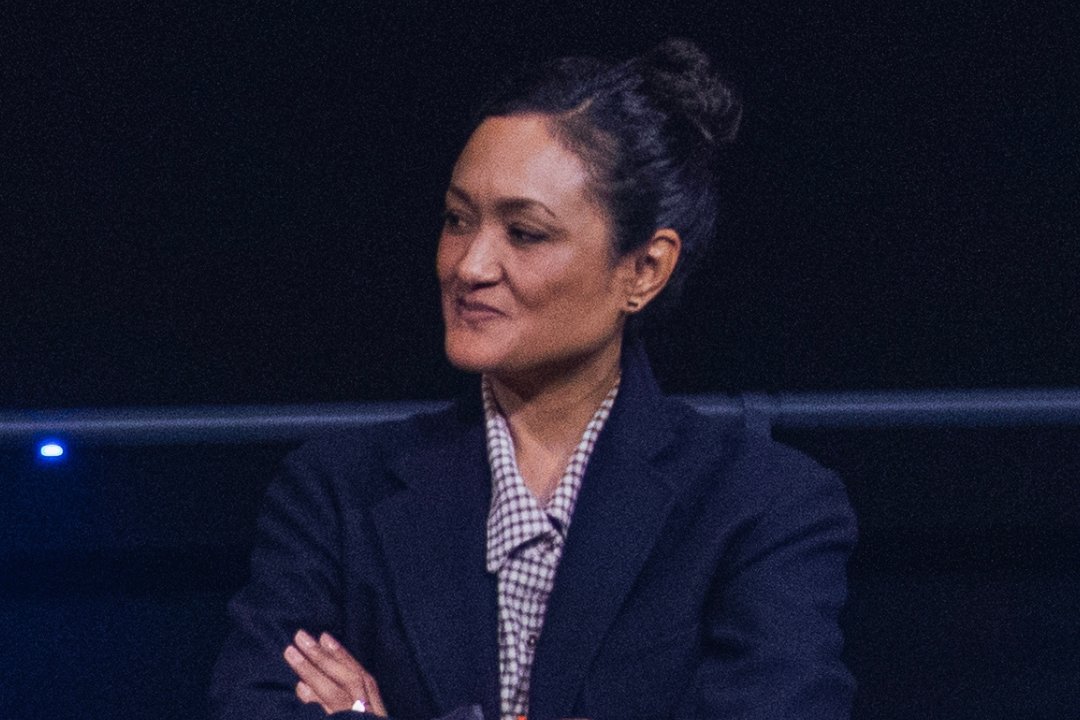

The name Mira Nair has long held a place in the global vocabulary of filmmakers, cinema enthusiasts and anyone who has followed Indian or American cinema since the 1980s. Although she has never faded from the wider cultural conversation, her name has resurfaced prominently in recent months. The renewed attention has come not only from industry leaders revisiting her groundbreaking body of work, but also from the public spotlight surrounding her son, Zohran Mamdani, whose recent election as Mayor of New York City briefly drew attention back to the creative environment he grew up in. For many, the moment placed Nair once again at the centre of discussions on cultural influence and leadership.
Mira Nair stands among the key figures who introduced Indian cross-cultural cinema to Hollywood with depth, nuance and authenticity, opening the door for South Asian culture to be represented on screens far beyond the subcontinent. Her international influence was recognised early on. She became the first woman to win the Golden Lion, the highest honour at the Venice Film Festival. In 2012, she received the Padma Bhushan from the Government of India, the nation’s third-highest civilian award.

Image source: Bollywood Hungama/Wikimedia Commons
Mira Nair began her filmmaking career with documentaries before moving into narrative features to gain greater control over the stories she wanted to tell. Her acclaimed early works include Jama Masjid Street Journal (1979), So Far From India (1982) and India Cabaret (1985).
Her first narrative feature film, Salaam Bombay! (1988), was the project that became her breakthrough. It was filmed in a documentary style with non-professional actors. Made for $450,000, it went on to earn roughly $7.4 million worldwide. It became only the second Indian film to receive an Academy Award nomination for Best Foreign Language Film and won the Caméra d’Or at Cannes, reinforcing her international standing. Her 1991 film Mississippi Masala, starring Denzel Washington and Sarita Choudhury, grossed $7.3 million and won Best Original Screenplay at the Venice Film Festival. Her most significant commercial success came with Monsoon Wedding (2001), produced on a $1.5 million budget and filmed in 30 days. The film grossed more than $30 million globally, including $13.9 million in the United States, a record for an Indian film in North America until 2017.
Collectively, Salaam Bombay!, Mississippi Masala and Monsoon Wedding cost under $7 million to produce and earned over $45 million worldwide, cementing Nair’s reputation as one of the most accomplished independent filmmakers of her generation. Independent filmmaking is often defined by its grounded storytelling, focus on social realities and modest budgets. Nair’s career demonstrates that films anchored in lived experience and artistic conviction can still reach wide audiences and achieve commercial impact.
Throughout her career, Nair has consistently prioritised artistic integrity and meaningful storytelling over purely commercial considerations. She has carefully chosen projects that align with her vision, a strategy that has allowed her to make a lasting impact on Indian crossover cinema in Hollywood while maintaining both creative control and cultural authenticity. She famously prioritised The Namesake (2006) over other opportunities that she came across at the time, a decision that proved pivotal as The Namesake became a landmark in the history of Indian crossover cinema in Hollywood.

(L-R) Screenwriter Sooni Taraporevala, Actor Irrfan Khan and Filmmaker Mira Nair at the release of the book The Namesake | Image source: Bollywood Hungama/Wikimedia Commons
Nair has consistently chosen projects that examine social realities, challenge patriarchal norms and spotlight marginalised communities. Far from limiting her commercial prospects, these choices have strengthened her global brand. Her work proves that artistic purpose and commercial success are not mutually exclusive; rather, they can coexist through clarity of vision and deep audience insight.
Mira Nair’s wider filmography also includes Vanity Fair (2004), The Perez Family (1995), Hysterical Blindness (2002), Amelia (2009) and The Reluctant Fundamentalist (2012). Her most recent feature film, Queen of Katwe (2016), tells the true story of Ugandan chess prodigy Phiona Mutesi. In addition to films, Nair also directed series such as Netflix’s A Suitable Boy (2020) and an episode of National Treasure: Edge of History (2022). Her works have also made it to stage, with Monsoon Wedding’s adaptation seeing a sold-out run at Berkeley Repertory Theatre in 2023.
Colleagues often describe Nair as a sharp business strategist, evident in the balance her films achieve. They remain culturally grounded and socially observant while still resonating with mainstream audiences. Monsoon Wedding exemplifies this blend: it incorporates elements familiar to Indian cinema, such as music and celebration, yet frames them through a fresh, emotionally intelligent lens.
Nair founded Mirabai Films in 1989 to maintain creative control over stories exploring identity, diaspora and underrepresented voices. She also used the proceeds from Salaam Bombay! to launch the Salaam Baalak Trust, which supports homeless and working children in Delhi NCR. In 2004, she created the Maisha Film Lab, a non-profit initiative nurturing emerging East African filmmakers.

Mira Nair has built a global career rooted in authenticity, purpose and a deep understanding of the human experience. She tells stories “from the inside,” drawing from lived realities rather than distant observation. This grounding gives her films their signature authenticity, emotional clarity and lasting power.
For today’s leaders and creative industries, Nair’s trajectory offers a compelling blueprint: innovation does not require abandoning identity and commercial scale does not demand cultural compromise. Her blend of artistic conviction, social responsibility and entrepreneurial clarity continues to define her as a great example for the success of alternative cinema, making a case for those who dare to innovate. Besides being one of the most influential voices in contemporary cinema, she is also a model for those who seek to lead with both purpose and impact.