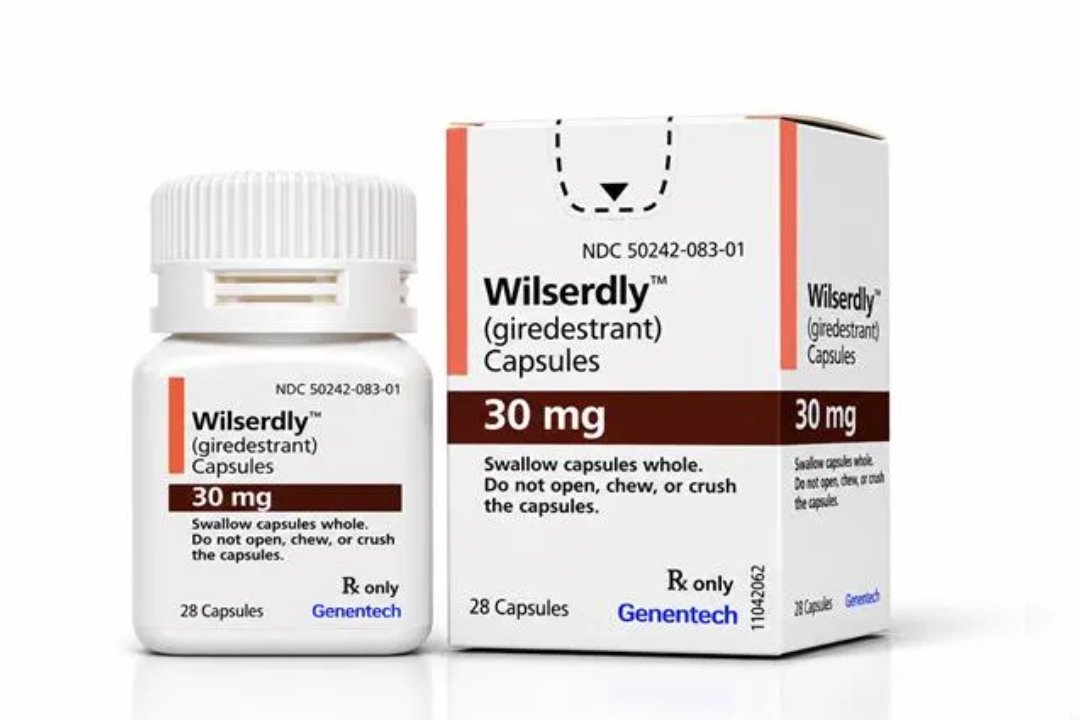

The US Food and Drug Administration (FDA) has approved Swiss pharmaceutical company Roche’s oral breast cancer treatment Wilserdly for adults with certain forms of early-stage breast cancer, marking a significant development in hormone-based cancer therapy after more than 20 years without a new treatment option in this category.
Announced on 23 November 2026, the approval covers patients with oestrogen receptor-positive (ER-positive), HER2-negative breast cancer at stages I, II and III who face an intermediate to high risk of the disease returning. The treatment is intended for use following initial cancer treatment to help reduce the likelihood of recurrence.
Wilserdly, also known by its generic name giredestrant, is a once-daily oral medication developed to interfere with the role of oestrogen in supporting the growth of certain breast cancer cells. It belongs to a class of medicines known as selective oestrogen receptor degraders (SERDs), which work by blocking and breaking down oestrogen receptors in cancer cells.
The approval was supported by findings from Roche’s phase III lidERA Breast Cancer study, which involved 4,170 adults diagnosed with early-stage ER-positive, HER2-negative breast cancer. Participants received either Wilserdly or established hormone treatments, including tamoxifen and aromatase inhibitors, for up to five years.
Results showed that patients treated with Wilserdly experienced a 30% lower relative risk of invasive disease recurrence or death compared with those receiving standard endocrine therapy. The findings demonstrated an improvement in invasive disease-free survival, a measure used to assess how effectively treatment prevents cancer from returning or progressing.
The FDA’s decision provides an additional treatment option for a form of breast cancer that accounts for approximately 70% of all breast cancer diagnoses. Although many patients are diagnosed during the early stages, the risk of recurrence can remain a concern even after surgery and other treatments have been completed.
According to Roche, approximately 225,000 women in the United States are diagnosed with hormone receptor-positive, HER2-negative breast cancer annually, with around 90% of cases identified at an early stage.
Teresa Graham, Chief Executive Officer of Roche Pharmaceuticals, described the approval as an important step in the company’s ambition to establish Wilserdly as a major endocrine treatment across different stages of breast cancer.
Roche is continuing to investigate the medicine’s potential in additional treatment settings and in combination with other therapies, as part of its broader efforts to improve outcomes for people affected by breast cancer.
The latest authorisation follows another FDA approval granted earlier in November for Wilserdly in combination with everolimus to treat certain patients with advanced or metastatic breast cancer carrying an ESR1 mutation.
With the two approvals, Wilserdly has become the first selective oestrogen receptor degrader authorised by the FDA for use in both early-stage and advanced ER-positive breast cancer.
Roche said the medicine is expected to become available in the United States within days of the approval, with a monthly list price of approximately US$22,500. The actual amount paid by patients may vary depending on insurance coverage and available financial assistance.
While the clinical findings indicate a reduced risk of cancer recurrence, whether Wilserdly improves overall survival remains under evaluation. Patients enrolled in the study will continue to be monitored, and Roche is expected to provide additional survival data to US regulators.
The regulatory decision represents an important advancement in breast cancer treatment, particularly for patients who remain vulnerable to recurrence despite receiving conventional hormone therapies. It also highlights continued pharmaceutical investment in developing more targeted treatment options for one of the most common cancers affecting women worldwide.