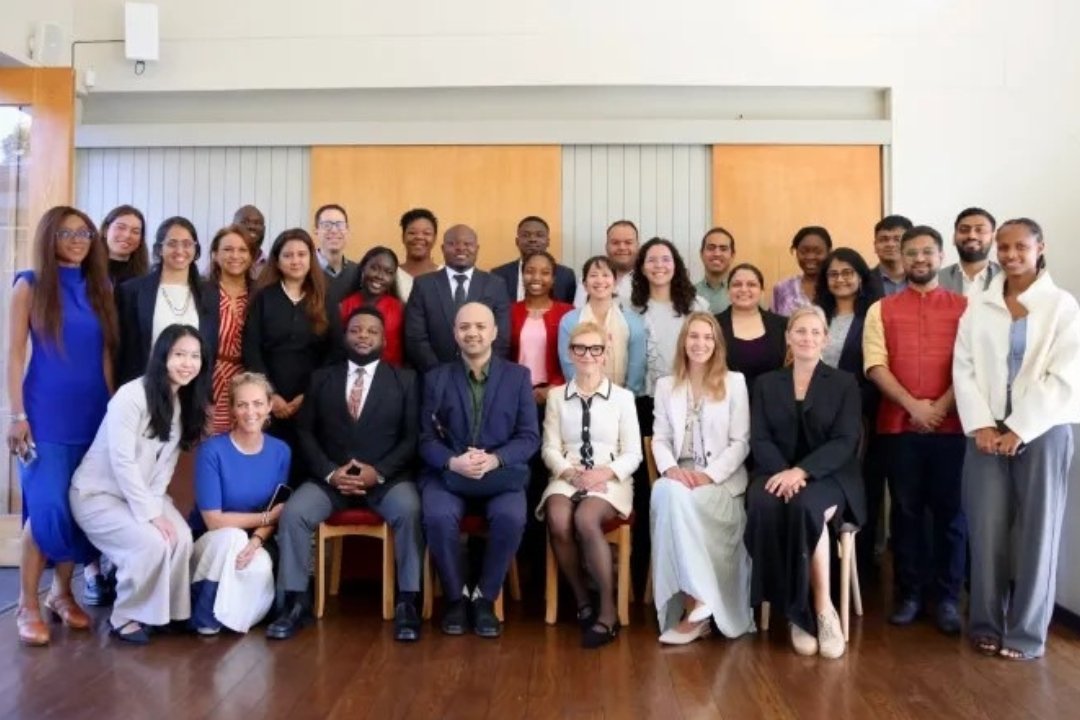

A new global initiative to support frontier technology for women’s health has officially launched in Pretoria. The UNICEF Femtech Ventures programme aims to bridge the gap in sexual and reproductive health rights across Africa and Asia. This week, founders from the inaugural cohort gathered in South Africa to begin a year-long journey of scaling their digital solutions. The five-year investment platform is backed by the Government of Sweden and the Temasek Foundation.
The programme received more than 1,100 applications from 85 different countries. From a shortlist of 151 startups, 89 per cent of which were woman led, a final group was chosen to receive support. These entrepreneurs are using advanced technologies like artificial intelligence, data science and blockchain. Their work focuses on maternal care, safe transport, financial inclusion and responding to gender-based violence.
“The most important innovation for women and girls is already being built – by the entrepreneurs closest to the challenge. UNICEF Femtech Ventures backs them with the capital, technical support and partnerships to turn what works locally into access at scale,” said Thomas Davin, Global Director, UNICEF Office of Innovation.
Selected startups will receive up to US$100,000 in equity-free capital. They also gain access to a year of specialised technical assistance and business mentorship. This model is designed to de-risk these businesses for future investors. Anna-Karin Eneström, Ambassador at the Embassy of Sweden in Pretoria, stated: “Investing in local founders solving local problems is an effective use of public funding. It is how African- and Asian-built innovations thrive, scale and solve some of the world’s most intractable sexual and reproductive health challenges. Improving outcomes for girls and women is proven to have a catalytic social economic effect.”
The cohort includes diverse projects such as Dotoh in Benin, which uses AI messaging for youth health, and India’s Uli, which detects social media abuse. Other startups like SafeRide in Kenya focus on transport safety, while Zambia’s DawaMom combines chatbots with community health workers. This cross-regional approach allows founders to share knowledge across different markets. Throughout the week in Pretoria, these leaders are meeting with investors and regulators to refine their products and plan for international growth.