
Under a cotton tree in West Africa, a group of women passes a shared pot of coins. Each person adds what she can and takes what she needs when her turn comes. Thousands of miles away, forty professional women join a video call across three time zones to vote on which grassroots project to fund this quarter. It is the same instinct, centuries apart. Both are called giving circles.
What if the future of global giving was actually its oldest idea?
It was never called charity. It was just what women did.
For centuries, women have built their own financial systems, not from a desire for recognition but from necessity. When formal banks and legal structures excluded them, they turned to each other. This was not charity. It was survival, solidarity and sisterhood.
Around the world, these traditions carry different names but share the same purpose. In West Africa, it is the sou sou, a rotating pot where each member contributes regularly and takes the full sum when her turn comes. In Korea, the geh worked on the same principle. In Mexico, it was the tanda. In South Asia, communities relied on the committee, a trust-based pooling system still active across Pakistan, India and Sri Lanka today. From the hagbad in Somalia to the pardner in the Caribbean and the stockvel in Southern Africa, women have always known that pooled resources create a safety net.
These systems were built precisely because formal financial structures had shut the door on them. No banks, no credit, no access. So they created their own.
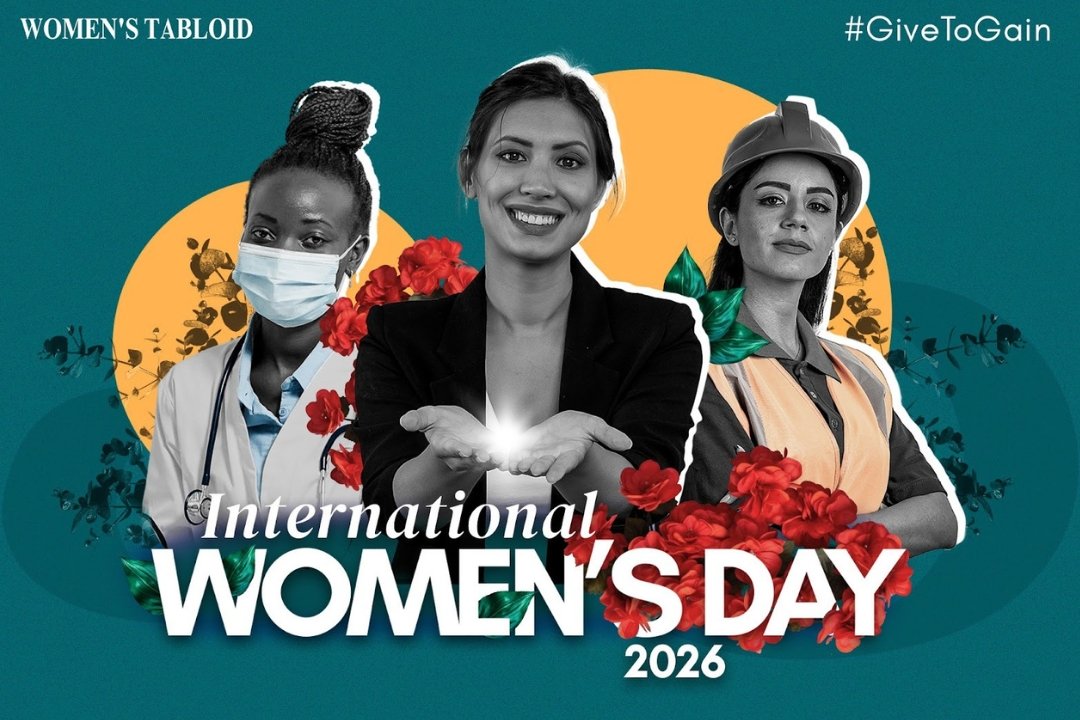
The IWD 2026 theme of Give to Gain did not invent this idea. Women did, centuries ago.
From pot to portfolio: The modern giving circle boom

Today, this practice is experiencing a strong revival. In 2024, Axios described giving circles as the fastest-growing form of philanthropy right now, following a study that tracked their rise across every continent. The numbers back it up: between 2017 and 2023, nearly 4,000 collective giving groups mobilised approximately 370,000 donors to give more than $3.1 billion, according to the In Abundance study. The movement is on course to double again within the next five years.
The reasons women join go beyond giving money. According to the same study, 82 per cent of members said they joined to build relationships with like-minded people, and 91 per cent reported that participation had a positive impact on their sense of belonging. At a time when social isolation is rising globally, giving circles are filling a gap that goes well beyond philanthropy.
By 2023, 60 per cent of giving circles were composed entirely of women, up from 53 per cent in 2006. The causes they support most consistently are human services, women and girls and education. Not abstract causes, but immediate, community-rooted ones.
Geographically, the reach is growing fast. In the UK, women’s philanthropy networks are expanding in cities and towns alike. In the United States, Impact100 now operates more than 75 chapters globally, each granting $100,000 or more annually to local non-profits. In Kenya, grassroots collectives are pooling resources for land rights and maternal health. In Latin America, tanda-linked giving networks are funding businesses run by women.
These circles are not just social networks. They move women from being passive donors to active decision-makers. As Melissa Walker, a giving circle participant, described in the In Abundance study, a 2024 analysis of collective giving in the United States: “It changed the way I walk through the world. It gave me an understanding of a power I didn’t realize I had, a power I wasn’t deploying before my circle. And that is the power I have when I walk with my people.”
That is the Give to Gain principle in its most human form.
Who is walking into the circle now?
For too long, the image of the philanthropist was fixed: older, wealthy, male and overwhelmingly white. Giving circles are changing that picture from the inside.
From 2016 to 2019, 17 per cent of giving circle members identified as people of colour. By 2020 to 2023, that figure had risen to 27 per cent, an increase of nearly 60 per cent in under a decade. At the same time, 60 per cent of giving circles now report an explicit commitment to addressing racial and ethnic equity as a core part of their work.
This is not just about moving money. It is about moving power. By bringing more voices into the room, these circles ensure that the gains reach those who have been passed over by traditional funding for far too long. This is not philanthropy being reformed from the top. It is being rebuilt from within.
You don’t need a billion. You need each other.
The strength of giving circles is their arithmetic. Ten women contributing £50 each create £500. That is a girl’s school term, a micro-loan for a new business or a legal consultation for a woman in crisis. It is not a small thing dressed up as a large one. It genuinely is a large thing.
Scale is not required. Commitment is.
According to the 2025 Women & Girls Index, produced by Indiana University’s Women’s Philanthropy Institute, giving to women’s and girls’ organisations in the United States now exceeds $11 billion annually, and the grassroots giving circle model is a key part of that growth. This comes despite women’s causes still receiving just over 2 per cent of all charitable giving in the US. The room to grow is considerable.
According to McKinsey, women in the United States alone are expected to control $34 trillion in wealth by 2030. If even a fraction of that flows through collective giving models, the impact will be felt for generations.
When you give through a circle, you gain more than the act of helping. You gain a network, a sharper understanding of real social issues and a sense of shared purpose. One person can make a difference. A group can build a movement.
The circle continues
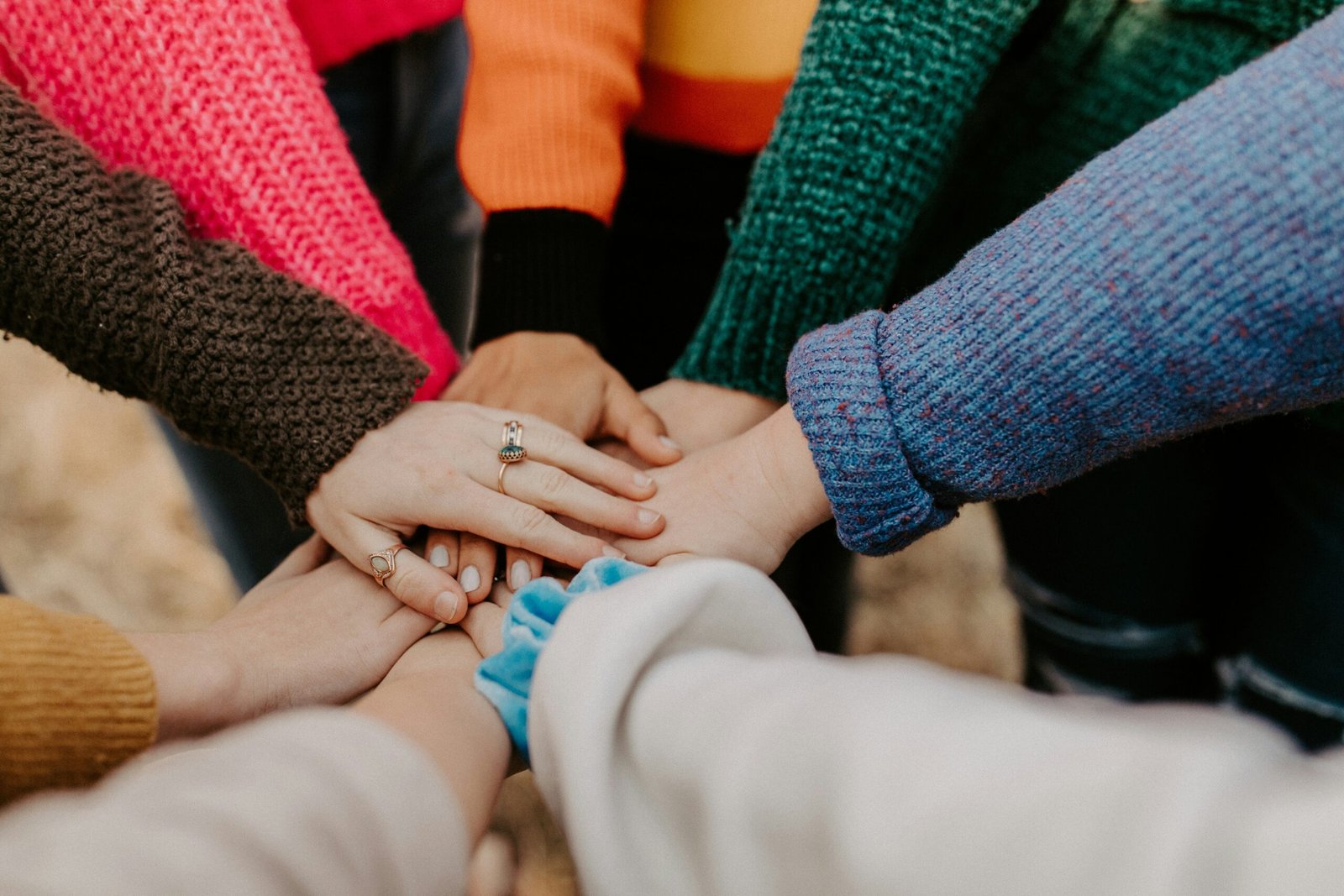
Return for a moment to those two opening images: the women under a cotton tree and the women on a video call. Different countries, different centuries, different tools. The same understanding, that giving multiplies when it is shared.
This is what the IWD 2026 theme is pointing to, even if it cannot name the full history behind it. When women give together, the gains do not divide. They grow. They always have.
The circle has no beginning because it was never meant to end.