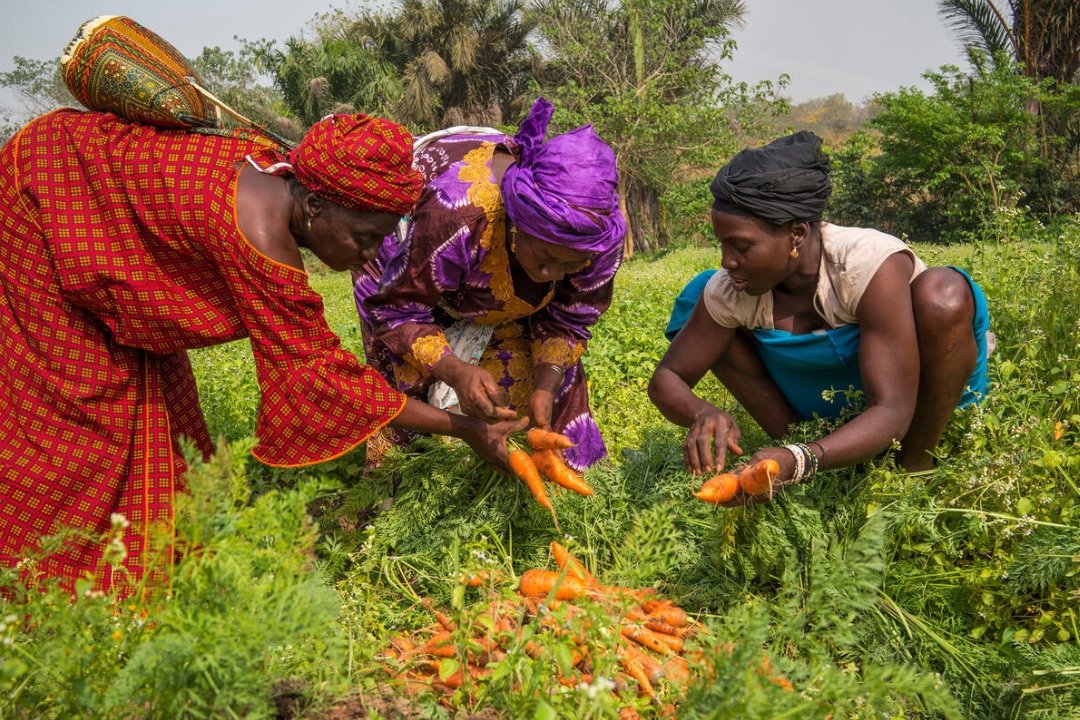

The Food and Agriculture Organization of the United Nations (FAO) has formally launched the International Year of the Woman Farmer 2026, a global initiative designed to draw attention to the vital – yet frequently overlooked – contributions of women across agrifood systems. The campaign, unveiled yesterday in Rome, seeks to prompt renewed international action to address the structural inequalities that continue to affect millions of women working in agriculture.
The observance was designated by the UN General Assembly in 2024 and will run throughout 2026. FAO will coordinate activities in partnership with the International Fund for Agricultural Development (IFAD) and the World Food Programme (WFP). The initiative aims to highlight the experiences of women farmers and encourage policy reforms, increased investment, and stronger international cooperation to advance gender equality within agrifood systems.
Women make up a substantial share of the global agricultural workforce, with agrifood systems employing 40 percent of working women in 2021, nearly the same proportion as men. Their work spans production, processing, distribution, and trade, and is central to household food security and nutrition. However, according to FAO, many women continue to work under more precarious conditions than men, with limited access to land, finance, technology, education, and decision-making spaces.
The Year was launched during a ceremony on the sidelines of the 179th Session of the FAO Council. Delivering opening remarks, FAO Chief Economist Maximo Torero warned that global progress on women’s empowerment in agrifood systems has stalled. “The cost of inaction is enormous. We know from recent estimates that closing the gaps between men and women in agriculture could raise global GDP by one trillion dollars and reduce food insecurity for 45 million people,” he said. He urged governments and institutions to focus on “bringing policy attention to the multidimensional challenges they (women farmers) face, and promoting legal reforms and policy and programmatic action that allow women to have equal land rights, equal access to finance, to technology, to extension services, to markets, and to decision-making.”
The event was co-organised by Jordan and Ireland, represented by Princess Basma bint Ali, FAO Regional Goodwill Ambassador for the Near East and North Africa, and Maria Dunne, Assistant Secretary-General at Ireland’s Department of Agriculture, Food and the Marine.
FAO Deputy Director-General Beth Bechdol closed the ceremony by stressing the need for sustained action beyond the Year itself. “Throughout 2026, the International Year will move from today’s sharing of personal stories and discussions to practical work — national policies, community partnerships, research, investment, and dialogue between farmers, cooperatives, governments, finance institutions, youth networks, and universities. The goal is simple: turn commitment into practice, and practice into measurable impact,” she said.
The campaign will also draw on findings from recent FAO reports, including The Status of Women in Agrifood Systems and The Unjust Climate, which detail the persistent gender gaps in land productivity, income, climate resilience, and wage equality.
Who Is a Woman Farmer?
Women farmers include smallholder producers, peasants, agricultural labourers, fishers and fish workers, beekeepers, pastoralists, processors, traders, agricultural scientists, rural entrepreneurs, traditional knowledge holders, and women in both formal and informal roles. They come from diverse backgrounds, including Indigenous communities, local groups, young and older generations, women with disabilities, and displaced or refugee populations.