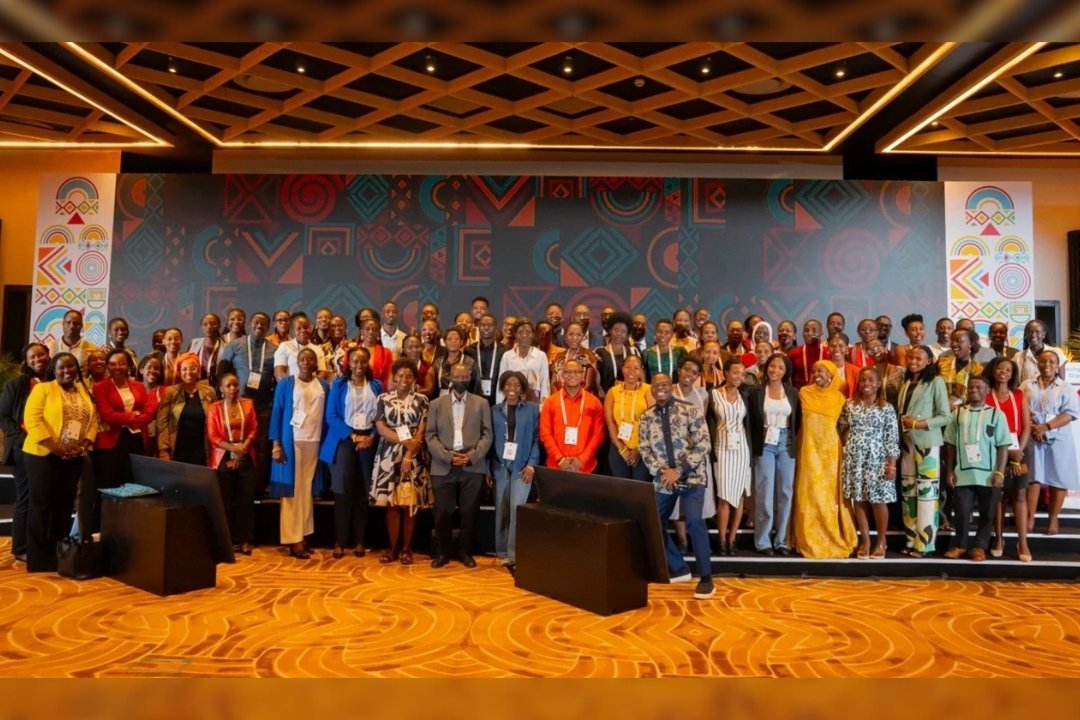

Rwanda’s government, financial institutions, and development partners have renewed their commitment to widening access to inclusive finance for rural young women, arguing that such efforts remain vital to supporting the country’s economic transformation. The pledge came during the Mastercard Foundation’s Young Africa Works Dialogue Series – Rwanda 2025, held in Kigali on 27 November 2025.
Although Rwanda records a financial inclusion rate of 96 percent, many rural women-led enterprises continue to face obstacles including collateral requirements, short loan terms, high perceived risk, and financial products that do not reflect their day-to-day realities. Participants at the Dialogue said addressing these challenges requires coordinated action across institutions.
Speaking at the event, Dr. Abdallah Utumatwishima, Minister of Youth and Arts, said: “Access to finance begins with belief. Young people are already earning, upskilling, and honouring their commitments. The financial sector must meet them with trust. We believe in them — and they are ready.” He added that the voices of young rural women, youth with disabilities, and young refugees must continue to shape national planning, particularly around financial inclusion.
Young entrepreneurs from across Rwanda contributed their experiences, highlighting both the scale of the challenges and the potential impact of better-tailored financial services. Ruth Tuyirungire, an animal feeds producer from Kayonza District, said: “We are determined to grow our businesses and we believe real progress is within reach. What we urgently need is access to collateral-free financing and support for our operating costs. A grace period of at least six months before repayment would allow us to reinvest in our businesses and repay loans from profits, not from the initial capital. That is what will set us up for success.”
Financial institutions and policymakers used the platform to reflect jointly on the financing landscape. Ivan Ntwali, Country Director of the Mastercard Foundation in Rwanda, noted: “Today, we begin a conversation that sits at the intersection of three forces: the social norms and biases that influence how young women are perceived within financial systems; the design of financial products — what exists, what is missing, and what must be reimagined; and the policies and regulations that, when implemented with intentionality and inclusivity, can unlock real opportunities.”
Institutions outlined several measures aimed at improving access, including collateral-light lending, expanded risk-sharing mechanisms, improved data-sharing, and broader financial literacy initiatives. Nick Barigye, Deputy Governor of the National Bank of Rwanda, stated: “We must continue to strengthen partnerships that advance financial literacy among young people — because knowledge is the foundation of confident borrowing, responsible investing, and long-term financial empowerment.”
Sconaid McGeachin, Chief of Public Affairs at the Mastercard Foundation, added: “We believe that when we work together to dismantle the systemic barriers limiting young women’s access to opportunities, we create pathways that are not only impactful — but scalable and sustainable.”
Young entrepreneur Umuhoza Hyacentha expressed optimism, saying: “Our hope is that the deliberations and commitments made during this dialogue will translate into action. We have seen many valuable ideas shared at such forums, and ensuring they are followed through will make all the difference for women like us.”
The Dialogue concluded with a joint commitment to maintain momentum and track progress toward expanding inclusive finance for rural young women, positioned as central to Rwanda’s long-term economic ambitions.