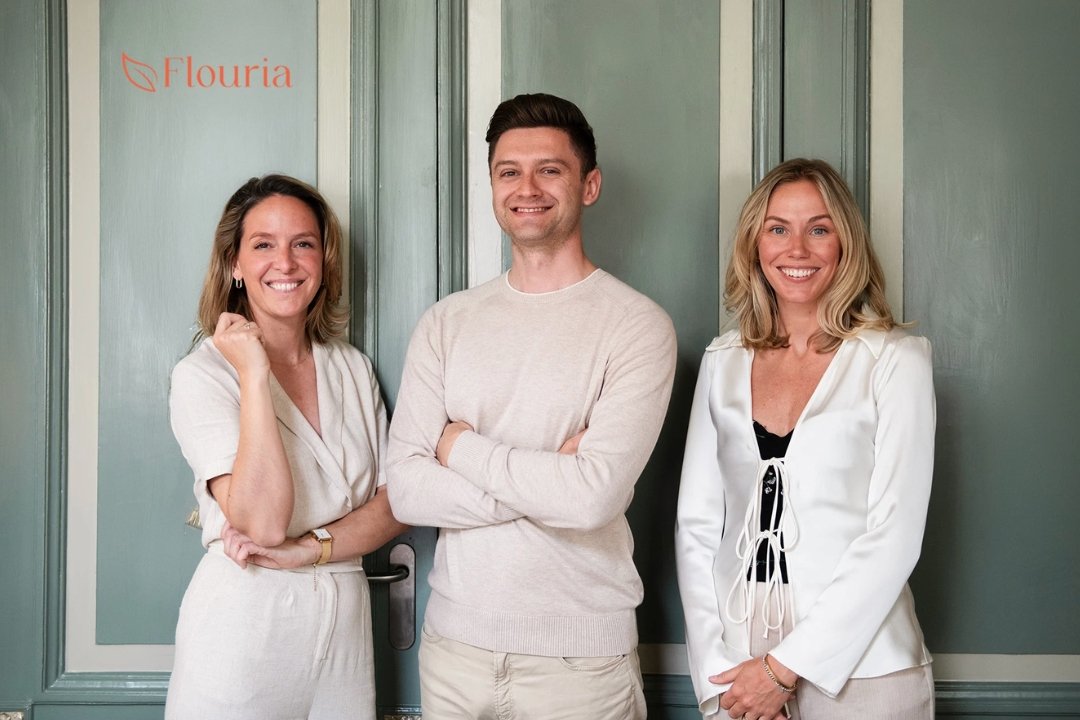
Dr. Maria Chatzou Dunford is a pioneering entrepreneur in the biotechnology industry, and founded the world’s first federated genomics platform for unified and secure research over distributed big data. Her company, Lifebit, is a one-of-a-kind platform that seeks to make biomedical and genomic data accessible and usable to aid potentially life-saving research. Dr. Maria leads Lifebit with innovation, passion and curiosity- all of which are demonstrated in the company’s constant growth and commitment to make positive change in the world. Lifebit has made news owing to its key partnerships with biopharma companies, research and government agencies, as well as its innovations such as the latest AI-Automated Airlock to improve data security for biomedical and genomic data. In this interview for our Women in Entrepreneurship Series, Dr. Maria speaks about her journey as an entrepreneur, the vision and mission behind Lifebit, the company’s present innovations and what comes next.
Women’s Tabloid: As a pioneering founder in a niche market at the intersection of AI and biotechnology, could you share insights into your entrepreneurial journey?
Dr. Maria Chatzou Dunford: When I was young, I imagined working in space — either as an astronaut or studying the cosmos. I was drawn to big, complex questions. What I discovered later was that the same sense of wonder exists inside the human body. Realising that every cell is its own tiny universe shifted my focus from outer space to inner space.
That curiosity became a calling when someone in my family faced a serious illness. Understanding what was happening biologically, yet knowing how limited our tools were for turning data into action, sparked something in me. It made the work feel urgent.
As I went deeper into computational biology and genomics, I kept running into the same barrier: the data that could transform healthcare was scattered, inaccessible and incredibly difficult to use safely. That pain point, experienced daily in my research work, is what ultimately led me to build Lifebit. Entrepreneurship wasn’t the goal. Solving the problem was.
WT: Lifebit has been instrumental in making integral biomedical data more accessible, driving research and innovation with real-world impact. How did the concept behind Lifebit first take shape?
MCD: The idea grew out of frustration with how inefficient scientific work can be when data is locked away. During my biomedical research years, we often spent far more time trying to manage data than learning from it.
My co-founder and I started questioning why the industry was so focused on moving sensitive data between systems, something that introduces risks and slows everything down. We imagined a different model: instead of shifting data around the world, what if researchers could securely reach the data where it already sits?
That thought became the foundation of Lifebit. A federated platform that protects privacy, keeps organisations in control, and still enables global-scale research. Today, that very concept is powering national health systems, large federal programmes and biopharma partners worldwide.
WT: How did Lifebit approach the process of securing early-stage funding and investment, as the world’s first federated genomics platform for unified and secure research over distributed big data?
MCD: Early fundraising meant explaining a vision that didn’t fit neatly into existing categories. Many organisations were still adjusting to cloud-based research, let alone federated models.
What helped us break through was demonstrating that the challenge we were tackling wasn’t theoretical — it was something every health system, research agency and biopharma company was experiencing at a growing rate. There was enormous data potential, but no safe, scalable way to use it.
We backed that vision with a team that had both the scientific depth and engineering capability to deliver it. Once investors saw the breadth of the problem and the credibility of the team solving it, our funding rounds gained strong momentum. That combination of clarity, evidence and conviction made all the difference.
WT: What were some ethical concerns that you came across in making a platform that seeks to make clinical and genomic data open source? How did you deal with these ethical concerns?
MCD: Genomic and health data carry a level of sensitivity that goes far beyond typical datasets, so security shaped our decisions from the start. The key concerns we needed to address were privacy, data sovereignty, and ensuring that research use is always transparent and governed properly.
We built the platform so that data doesn’t need to move from where it’s meant to stay. Instead, researchers work within secure, controlled environments that record every action and enforce strict compliance rules. This allows organisations to collaborate and generate insights without compromising trust.
Our belief has always been that data accessibility and usability should never come at the cost of protection. The goal is to advance science while reinforcing, not eroding, the safeguards around patient data.
WT: Lifebit has recently made news with the launch of its AI-Automated Airlock, an innovation meant to ensure automation, compliance, and transparency in the handling of sensitive biomedical data. Could you elaborate on its broader significance, and share your views on data security and governance in an era of rapidly advancing AI?
MCD: One of the most sensitive steps in any secure research environment is exporting results. Traditionally, this relied on manual checks, which made the process slow and vulnerable to inconsistency.
The AI-Automated Airlock brings automation, structure and transparency to that process. Every output goes through systematic review steps, ensuring that nothing leaves the environment unless it meets stringent privacy and regulatory requirements. It creates confidence for institutions and researchers alike.
More broadly, as AI becomes more integrated into biomedical research, strong governance can’t be optional. AI accelerates workflows, amplifies expertise and reduces human errors, but only when paired with rigorous controls and the right governance framework. The AI-automated Airlock, as well as, the rest of Lifebit AI solutions are part of that next chapter, where innovation and responsibility move forward in sync.