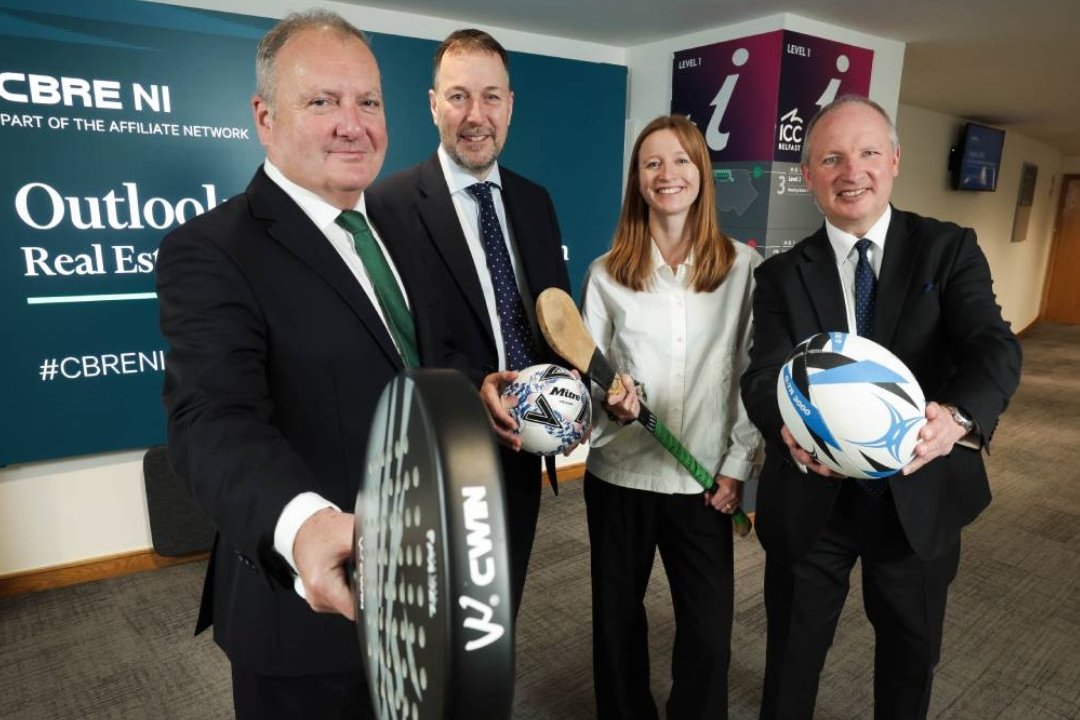

Northern Ireland’s economy could see a boost of as much as £120 million if Belfast is selected as a host city for the 2035 FIFA Women’s World Cup, as per what was revealed at CBRE NI Outlook 2026 event.
The potential impact was discussed at an event held at ICC Belfast by property consultancy CBRE, themed Real Estate and Sports-Led Regeneration. Around 500 attendees were told that Windsor Park’s inclusion in the proposed tournament could deliver a significant economic return for the region.
The Clearer Twist National Stadium at Windsor Park is among 22 venues listed in a joint bid by the Football Association, Irish FA, Scottish FA and FA of Wales to host the tournament in nine years’ time. It is currently the only bid submitted. However, Windsor Park’s existing capacity of 18,500 would need to be increased to meet FIFA’s minimum requirement of 20,000 seats in order to be considered among the final 16 stadiums selected to host matches.
Speakers at the conference said Belfast could benefit from an economic uplift of between £70 million and £120 million, depending on the number and profile of games staged at Windsor Park. The estimates follow analysis carried out by James Hamilton, global lead of entertainment and host cities at Turner & Townsend.
Hamilton said:
“Successful sports-led regeneration requires a clear national sports venue strategy aligned with urban development priorities, supported by robust feasibility studies and realistic funding. Venues should be designed to enhance the fan and athlete experience, with strong transport links, accessibility, sustainability, and long-term community benefit.
“Ambition without practical planning creates risk. Opportunities, such as being part of a bid to host a Rugby World Cup or hosting a Tour de France stage, are achievable for Northern Ireland, but only if carefully assessed. When delivered effectively, major sporting events can accelerate regeneration and create destinations that continue to generate value long after the competitive action is over.”
Brian Lavery, Managing Director of CBRE NI, said:
“Sports-led regeneration has the potential to be genuinely transformational for Northern Ireland, delivering not only economic benefit but lasting social and community value. Major sporting events and venues – from rugby and football stadiums to padel tennis courts – can act as powerful catalysts for investment when there is a joined-up, long-term approach.
“We were delighted to announce plans to establish the United By Sport initiative in Northern Ireland. Bringing together more than 500 people at our Outlook event from across real estate, infrastructure, government and sporting bodies demonstrates the strong appetite for collaboration, and we look forward to having discussions with the relevant stakeholders through the United By Sport programme.”
Becky Stormer, Head of CBRE’s UK Sports Sector, said:
“Major sporting projects create far more than short-term economic impact – they can reshape how cities are perceived, inspire participation, and leave a lasting social and cultural legacy.
“For Belfast, the opportunity is about thinking holistically – from stadium capacity and surrounding infrastructure to community access and inclusion. If those elements are aligned, sports-led regeneration can deliver meaningful economic growth while also enhancing quality of life.”