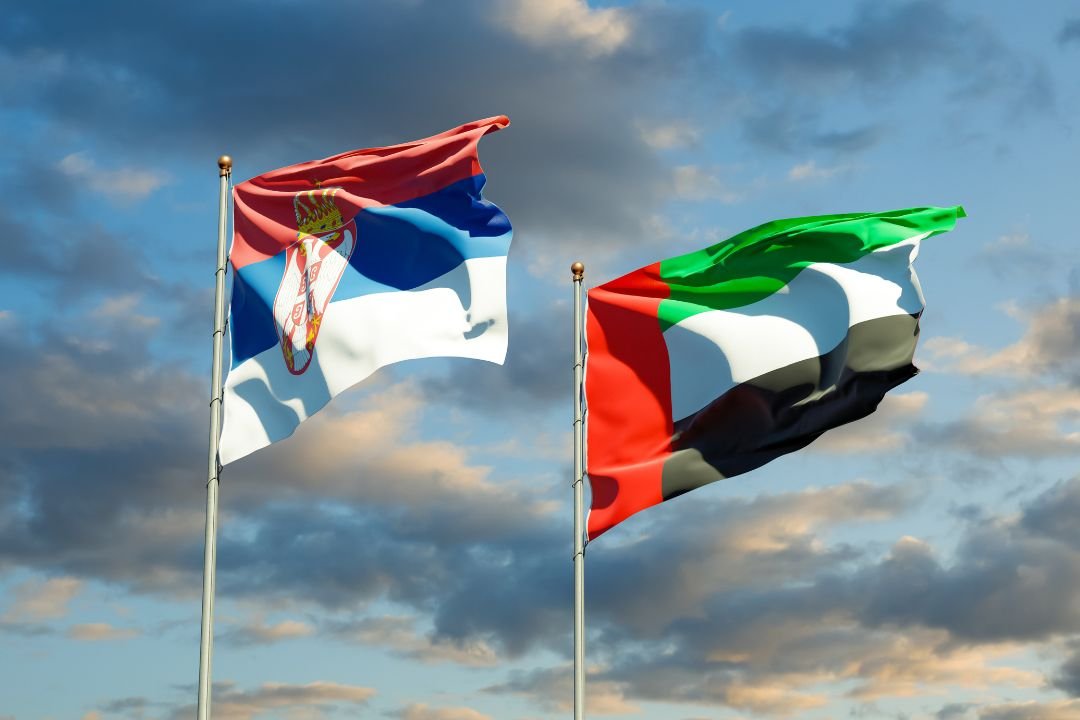

Dr. Thani bin Ahmed Al Zeyoudi, Minister of State for Foreign Trade, stated that the Comprehensive Economic Partnership Agreement (CEPA) between the UAE and the Republic of Serbia represents the inaugural agreement under the UAE’s economic partnership initiative with a non-WTO member country.
This agreement includes a reduction and elimination of tariffs on up to 96 percent of customs tariff lines, surpassing the terms established with some other WTO member countries. Dr. Al Zeyoudi shared with the Emirates News Agency (WAM) that this initiative aims to significantly boost non-oil trade between the two friendly nations, following the exchange of the Comprehensive Economic Partnership Agreement (CEPA).
Dr. Al Zeyoudi highlighted that the agreement serves as a crucial link to the Balkans and Southeast Europe, reflecting the shared ambitions of the UAE and Serbia while promoting sustainable economic growth for both countries. He highlighted that the agreement is designed to enhance trade and investment between the two countries, strengthen cooperation, and foster private-sector partnerships. Additionally, it aims to empower business communities, encourage investment, facilitate knowledge sharing, and create opportunities for collaborative development projects in key areas like logistics and food security.
Dr. Thani bin Ahmed Al Zeyoudi, Minister of State for Foreign Trade said, “The total non-oil bilateral trade between the UAE and Serbia reached $122.9 million in 2023, and is expected to reach $500 million in non-oil foreign trade with Serbia over the next five years. The UAE is currently the third-largest market for Serbian exports in the Middle East and the fourth-largest trading partner for Serbia among Arab countries and Africa, according to 2023 data.”
The minister highlighted that the UAE is Serbia’s largest trading partner within the Gulf Cooperation Council (GCC), representing 55% of Serbia’s trade with Gulf countries. Dr. Al Zeyoudi noted that foreign direct investment (FDI) between the two nations has surged in key sectors such as renewable energy, agriculture, food security, infrastructure, and logistics services.