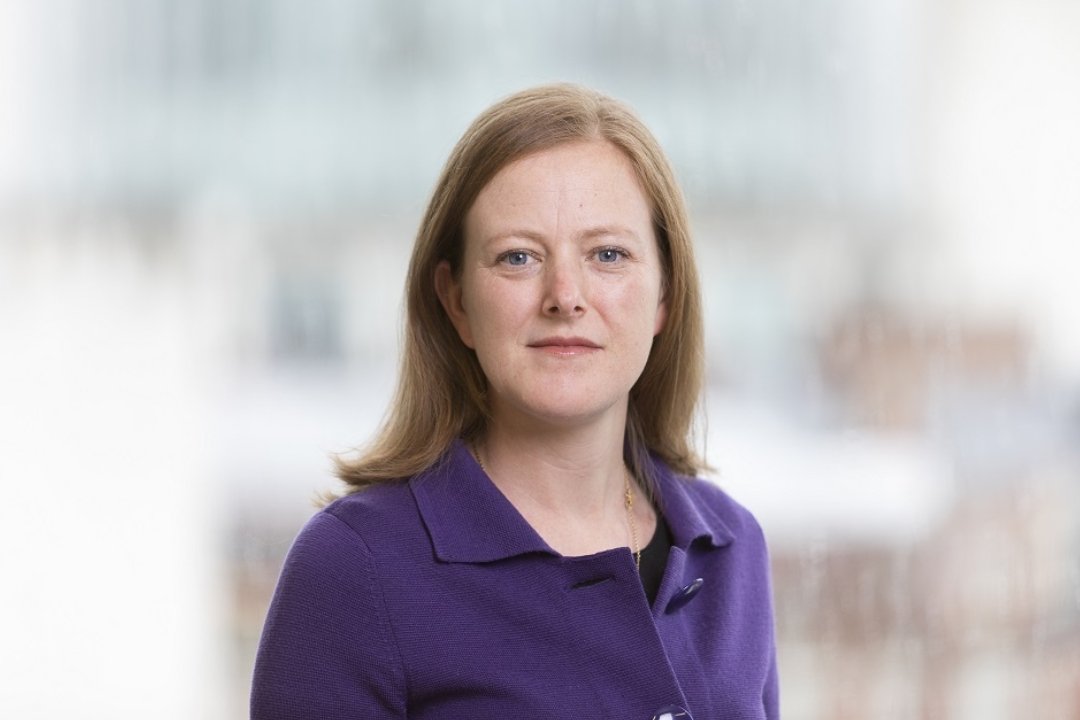

Ms. Alyona Mysko is the Founder and CEO of Fuelfinance, a financial operations platform that combines automated software, AI-powered insights, and human CFO expertise to give startups and SMBs complete clarity over their numbers. Before becoming a founder, Alyona built her career as a CFO, where she saw how often entrepreneurs were forced to make decisions without accurate financial visibility. After building hundreds of models and repairing scattered reporting systems, she identified a deeper need: a finance infrastructure that founders could trust. This insight led her to create Fuelfinance, which now manages over $500M in customers’ P&Ls and supports SaaS companies and professional agencies with real-time dashboards, forecasting, and strategic financial guidance. Alyona’s leadership blends financial discipline with a product-driven mindset, focused on accuracy, transparency, and empowering teams to make faster, smarter decisions. Through our exclusive Q and A article, we had the opportunity to interview Ms. Alyona Mysko, whose visionary thinking, disciplined leadership, and innovative spirit continue to inspire founders around the world.
Women’s Tabloid: Before founding Fuelfinance, you held the role of CFO. What inspired your transition from senior financial leadership to becoming a startup founder, and what lessons from your CFO experience have influenced the way you lead Fuelfinance?
Ms. Alyona Mysko: I didn’t leave the CFO role because I wanted to “be a founder.” I left it because I kept seeing the same painful truth: founders were making decisions without real numbers, living with financial anxiety, and often discovering problems only when it was too late. After building hundreds of models and fixing reporting for so many companies, it became obvious that the real problem wasn’t skill — it was the lack of a system that founders could trust.
Years in finance shaped how I run Fuel: accuracy over assumptions, clarity over noise, and delegation over doing everything manually. A founder shouldn’t reconcile spreadsheets — they should make decisions. That mindset is embedded in how we build our product and how I lead: stay deep enough in the numbers to understand reality, but never so deep that it prevents you from driving the company forward.
WT: How do you see AI and fractional CFO services transforming the economic productivity of small and mid-sized businesses in the U.S. over the next five years, and what role will Fuelfinance play in that transformation?
AM: Most SMBs still operate with outdated financial habits — delays, scattered data, and decisions based on gut feeling. Over the next five years, AI and fractional CFOs will close that gap by giving businesses real-time visibility that used to be available only to large enterprises. AI will take over the manual, repetitive layers of finance: forecasting variations, checking anomalies, building reports, and running dozens of “what ifs” that humans simply don’t have time for.
Fuel’s role is to combine that automation with financial judgment founders can trust. Fuel AI CFO predicts based on real numbers and helps SMBs understand the consequences of decisions instantly while human CFO expertise guides strategy, prioritization, and context. AI agents will be doing the manual work and they will be a ‘frontend’. Meanwhile, finance managers will have more time and capacity for strategic decision making.
Together, this will make SMBs far more profitable, more resilient, and significantly faster at making high-impact decisions.
WT: What differentiates Fuelfinance’s hybrid model, combining software automation with human CFO expertise, from purely SaaS FP&A tools in the U.S. market?
AM: Fuelfinance stands apart because it doesn’t just automate financial workflows — it connects financial and operational data into one system and adds real CFO expertise on top. We plug into accounting, banks, payroll, and operational tools like CRMs, so leadership teams can finally see metrics like revenue, pipeline, margins, capacity, unit economics, price per customer, profitability and other in one place. Most FP&A tools don’t support that level of operational depth, or they’re built for generic use cases rather than real business models.
Fuel is specifically tailored for professional agencies and SaaS companies, which is why our dashboards, metrics, and forecasting logic match how these businesses actually run. Add to that the human layer — every customer gets a finance manager who can answer questions and guide decisions — and now the AI layer with Fuel AI CFO, which predicts based on real data and runs instant what-ifs, dashboards, and anomaly checks. Pure SaaS tools give you templates; Fuel gives you automation + expert judgment + AI, all designed around the business models we serve best.
WT: What criteria does Fuelfinance use to determine the right fit for its services, and how do you tailor financial dashboards and CFO insights differently for venture-backed startups versus bootstrapped small businesses?
AM: Fit always starts with business model and complexity. Fuel is strongest for SaaS and professional agencies — companies with recurring revenue, project-based economics, or multi-entity structures. We also look at how teams currently track metrics, where their data lives, and whether they have clarity around their goals. Every onboarding starts with questions about KPIs, legal entities, revenue streams, billing cadence, and strategic priorities. This is why our setup is highly customized — it has to mirror reality, not theory.
Dashboards differ dramatically depending on the company. Venture-backed startups care about burn, runway, scenario planning, CAC/LTV, and plan vs. actuals — their world is forward-looking because fundraising and hiring cycles depend on it. Bootstrapped businesses care about profitability, cash gaps, payables/receivables behavior, gross margin trends, and weekly operational metrics. The product is the same — but the lens and financial story behind the numbers are completely different.
WT: Beyond managing over $500M in customers’ P&L, what internal metrics or impact indicators does Fuelfinance use to measure its success, such as client retention, fundraising outcomes, or profitability improvements?
AM: We look at three main layers:
- Retention & NPS — Because staying with Fuel is the strongest confirmation that teams trust their numbers more than before.
- Time saved — Many teams cut 8–10 hours a week of manual finance work. For agencies, this often translates directly into higher profitability.
- Real-world outcomes — fundraising success, reaching profitability, improving margins, or avoiding cash gaps thanks to early anomaly detection.
Our case studies say it best: companies raising millions because their models are airtight, agencies increasing profit margins, founders finally understanding their numbers. These are the indicators we care about most because they reflect real business transformation, not just software usage.