
As a purpose-driven city, our role is to translate these values into systems: creating impact-driven programmes that respond to real gaps and convening diverse voices to turn dialogue into action.
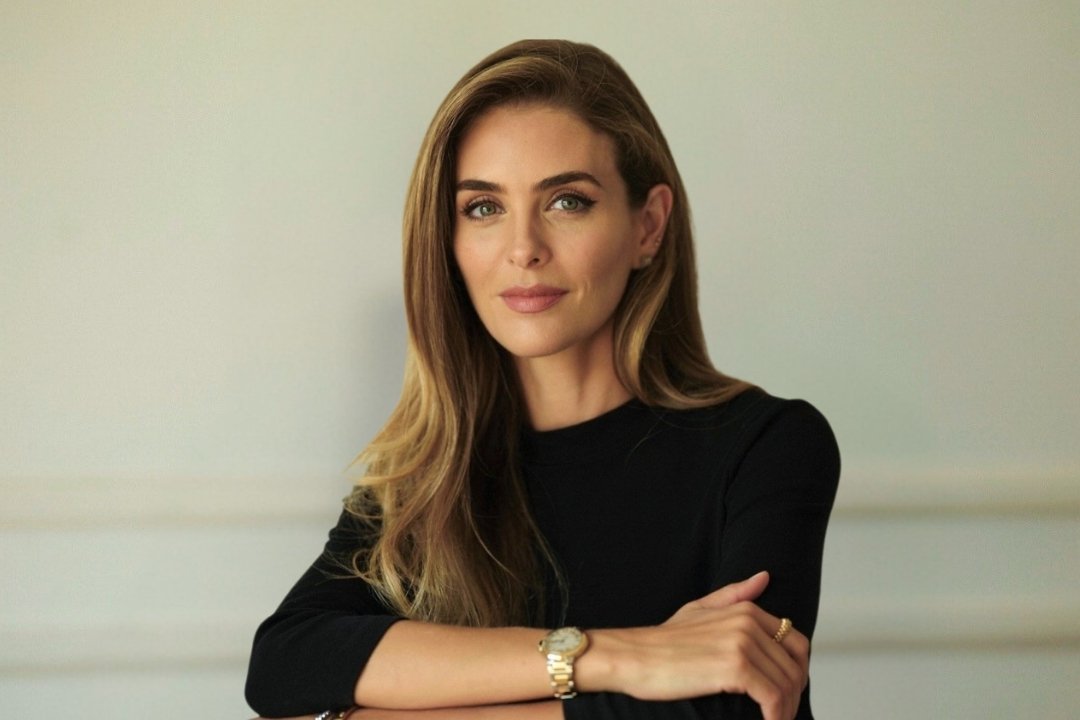
Maha Gorton is the Head of the Women’s Pavilion at Expo City Dubai, where she leads its strategic vision, programming and partnerships, positioning the Pavilion as a regional platform for dialogue and impact on women’s empowerment. Since joining Expo City Dubai in 2023, she has overseen initiatives and exhibitions addressing women’s participation across economic, social, health and sustainability agendas, working closely with government entities, global institutions and the private sector.
With more than 15 years’ experience in branding, events and strategic partnerships, Maha has worked with leading international and regional luxury brands in senior consultancy roles. She holds a degree in Business Management from Manchester Business School. At the Pavilion, she has delivered flagship programmes linked to International Women’s Day, COP28 and women’s health, and established partnerships with UN agencies, financial institutions and healthcare organisations. She also represents the Pavilion at global forums, contributing to discussions on inclusive growth and future-ready societies.
Women’s Tabloid: As head of women’s programming at Expo City Dubai, what does it mean to lead a purpose-driven platform within a destination positioning itself as a global hub for future-focused industries and pioneers?
Maha Gorton: Expo City Dubai has a critical role to play, both as the new centre of Dubai’s future and as a blueprint for sustainable urban development. We believe that enabling and empowering women to both participate in and actively shape urban centres and future-focused industries is both a responsibility and an opportunity.
As a purpose-driven city, our role is to translate these values into systems: creating impact-driven programmes that respond to real gaps and convening diverse voices to turn dialogue into action. Whether we are working with young students, women returning to the workforce, innovators in women’s health or senior leaders across sectors, our work is grounded in the conviction that thriving cities and economies are rooted in the contributions and engagement of women.
WT: Expo City has positioned itself as a convening platform for leaders across industry, government and civil society. What role do you believe the city, as a new urban destination, can play in shaping public policy on gender inclusion?
MG: Gender inclusion is not a standalone issue, cutting across everything from healthcare and education to economic participation and climate resilience. Similarly, cities are more than their physical infrastructure – a living and ever-changing intersection of communities, businesses and diverse interests that have always been catalysts for progress, including gender equity.
As a new urban destination, Expo City had the unique opportunity to embed inclusion both in its design and its culture from the outset and to broaden and deepen its impact as it continues to evolve. And, having hosted the 2020 World Expo, COP28 and the recent Asia Pacific Cities Summit, our strength lies in our ability to bring the world together and bridge silos, driving meaningful progress beyond Expo City’s boundaries to shape urban centres that are inclusive, future-ready and reflective of the communities they serve.
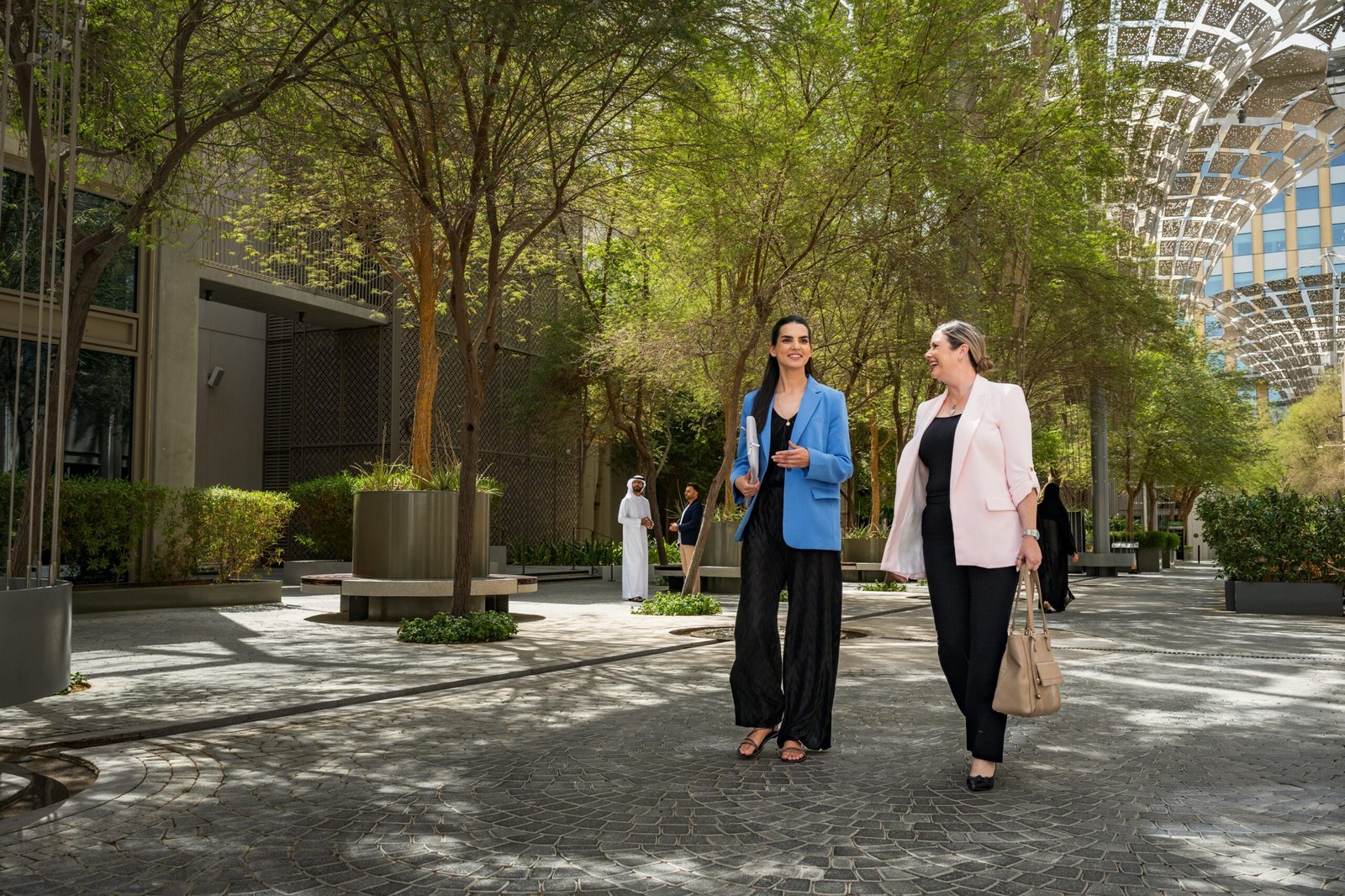
Dubai,17 April 2025,Al Waha Campaign at Expo City Dubai. Photo by Suneesh Sudhakaran/Expo City Dubai.
WT: The UAE has made significant strides in gender inclusion, setting new benchmarks at both local and federal levels. What are the key strategies and initiatives that can accelerate women’s representation in leadership across public and private sectors in the country?
MG: The UAE’s progress in gender inclusion has been driven by intentional leadership, clear policy direction and a strong commitment to progress.
As we move forward, targeted leadership pipelines are essential, with programmes that identify, develop and support women at all stages of their careers, particularly in sectors where representation still lags.
As an example, the Women’s Pavilion’s Return to Work Programme at Expo City provides targeted upskilling and mentorship to enable women who have taken career breaks to overcome re-entry challenges and bring their experience back into the economy. Beyond programmes, there is also a need to shift the recruitment narrative – recognising the opportunities and unique perspectives presented by career breaks, caregiving responsibilities and non-linear paths, rather than viewing them as barriers to advancement.
For any initiative aimed at increasing diversity in leadership, measuring and monitoring impact is essential – both to ensure accountability and transparency, but also to demonstrate that diverse leadership delivers tangible organisational value.
WT: How do you see women’s leadership shaping sectors such as sustainable development and urban planning in the region in the near future?
MG: By 2050, when nearly 70 per cent of the global population will reside in urban centres, the challenge of sustainable development becomes inseparable from the challenge of inclusivity. The most resilient cities of the future will be those that transcend traditional ‘one-size-fits-all’ planning to cater to the diverse realities of all residents and capitalise on the value they offer.
Despite clear evidence that cities designed with and for women are safer, more accessible and more economically prosperous for everyone, women remain significantly under-represented in urban planning – holding just 10 per cent of the highest-ranking jobs at the world’s leading architecture firms, according to the latest figures.
Women leaders bring vital, holistic perspectives shaped by their lived experiences across areas such as mobility, caregiving and community wellbeing. Reflecting these experiences in policy is something we expect to see as cities strive to create more functional, human-centric ecosystems – and Expo City Dubai is committed to contributing to this important agenda both within and beyond our city.
WT: How can purpose-driven platforms like Expo City Dubai inspire and equip the next generation of female leaders in the Middle East to meet industry demands, particularly in STEM and innovation-driven sectors?
MG: Purpose-driven platforms must go beyond storytelling to provide access, exposure and skills development. At Expo City, this means creating opportunities for young women and girls to engage directly with industry – from hackathons and mentorship programmes to hands-on learning and real-world problem solving – complementing education systems and nurturing talent to align with economic priorities.
Early exposure to STEM and innovation-driven sectors or roles helps demystify these fields and build confidence. Meanwhile, representation is a crucial bridge between interest and ambition; we have seen firsthand across our various learning and engagement programmes that witnessing women lead in these sectors transforms how young girls see themselves and their own future potential.
WT: Looking ahead to 2026, what emerging trends do you believe will most significantly shape women’s leadership across the Middle East and globally?
MG: As industries converge and challenges become more complex, those comfortable navigating technology, policy and people and operating across disciplines will become more important. Meanwhile, wellbeing, caregiving and flexibility will be reinforced as leadership, rather than personal issues, leading to greater talent retention and, subsequently, performance.
More broadly, the conversation is shifting from representation to impact and outcomes. Having measurable targets and implementing data transparency will help transform inclusion from an aspiration into action with a strong business case.