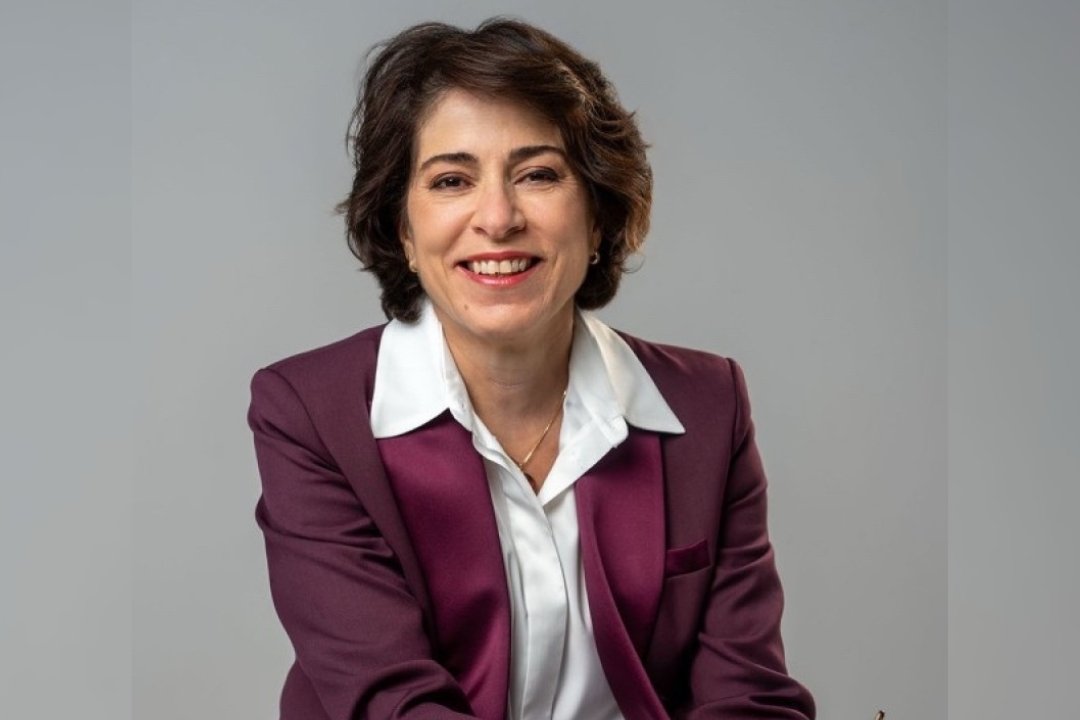


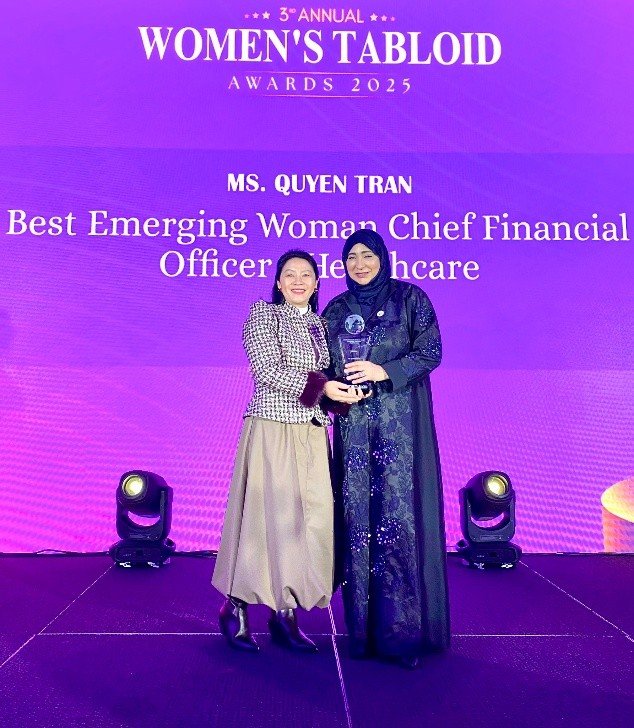
When healthcare finance is done right, it directly improves the quality of care and ultimately saves more lives,” said Ms. Tran Le Quyen, Chief Financial Officer of FV Hospital. With over two decades at FV, Ms. Tran has been central to building the hospital’s financial system from the ground up, closing Vietnam’s largest healthcare deal and keeping patient welfare at the heart of every financial decision. Recently named Best Emerging Woman CFO in Healthcare for 2025 by Women’s Tabloid, she opens up about what hospital finance truly demands and why the role of a CFO goes far beyond the numbers. She also reflects on how FV has managed to invest in world-class technology while keeping costs stable.
Women’s Tabloid: Congratulations on this recognition. How does it feel to be named among some of the world’s most respected women leaders?
Ms. Tran Le Quyen: The recognition came as a genuine surprise. Women’s Tabloid first came across my work through FV’s merger with Thomson Medical Group. If I’m honest, I have always focused entirely on the work itself and thought of myself simply as part of the FV family. Only when I stood at the ceremony in Dubai, looking at the list of recipients from the United States, France, and across Europe, did I fully appreciate the honour of having my work at a Vietnamese hospital recognised on an international stage.
WT: You joined FV in 2002 and were instrumental in laying the foundations of the hospital’s financial system. What was your vision from the very beginning?
TLQ: At the time, there was no established framework for managing finances at an international hospital in Vietnam. From the start, I drew on my training and experience in the United States and held fast to one core principle: that managing cash flow and ensuring commercial success are the most fundamental responsibilities of a CFO. Finance, to my mind, has always been a means of helping the hospital operate more effectively.
In a hospital setting, the ‘product’ is not a physical good. It’s delivered by doctors, nurses, and medical technology, all in service of the patient. I helped build the system from scratch, from patient records software and the IT behind financial accounting, to the way costs and revenues are recorded against each clinical activity.
FV’s financial system was built from the ground up, so every number in our reports accurately shows what’s happening in each department. This approach has guided FV’s financial framework ever since.
WT: FV started as a greenfield project, with 70% of its initial funding coming from debt. How challenging were those first years?
TLQ: The first four years were financially challenging. Private hospital care was a new concept in Vietnam, and it took time to earn patient trust.
FV borrowed from the International Finance Corporation (IFC), the private sector lending arm of the World Bank Group. The IFC set extremely demanding reporting standards on transparency, timing and accuracy. Even though Vietnam didn’t have clear standards for private hospital finance at the time, FV’s financial system was built to international standards from day one.
WT: What was the first milestone that told you the financial system you had built was beginning to bear fruit for FV?
TLQ: The debt restructuring programme in 2007. It may not sound exciting, but at the time it was a matter of survival for FV. The programme saved approximately US$13 million on a total capital investment of US$44 million, easing a heavy financial burden and giving the hospital room to keep growing.
WT: Having worked at an international auditing firm and in healthcare finance in the United States, how would you characterise hospital finance as a field?
TLQ: Hospital finance is arguably the most complex field there is. Most industries produce a standardised product with a roughly fixed cost structure. Hospitals are different. A single operation draws on supplies, equipment and medicines, but it also depends on the surgeon’s skill. Every surgeon has their own approach, operating times and treatment decisions.
And patients themselves vary enormously. Some need a straightforward intervention; others present with multiple comorbidities, longer treatment pathways and very different costs.
The challenge is to build a pricing structure that is competitive, transparent, covers true costs and still delivers a return for investors. To do this, the financial system has to be granular and stay close to what is actually happening in each department.
WT: Financial decisions can have a profound impact on the quality of clinical care. How does FV navigate this?
TLQ: From the very beginning, FV built its mission around the patient. I am very proud to say we have never let financial considerations override a clinician’s judgement.
There are many ways to increase profitability, like ordering more tests, shortening inpatient stays to turn beds over faster, and choosing cheaper supplies. FV does none of these. All clinical decisions sit with the hospital’s medical councils. Finance’s role is to optimise processes and procurement so that clinicians have the best possible conditions to treat patients.
WT: FV is known for investing in the latest equipment, but it has kept service fees stable for years, even as costs and exchange rates have changed. How does the finance team manage these two demands?
TLQ: This is a problem FV’s financial team encounters every day. Our reporting system tracks performance down to individual departments. I negotiate directly with major strategic suppliers to secure the best equipment prices and contract terms. Above all, the hospital knows how to balance pricing with high-quality care, attracting enough patient volumes to spread depreciation and recoup investment on schedule, or sooner.
For example, when we invested over US$5 million in the Hy Vong Cancer Centre late 2018, it was generating about US$2 million per year. Now, through a strategy of optimising the equipment and offering high-quality treatment at affordable prices, that figure has passed US$10 million a year.
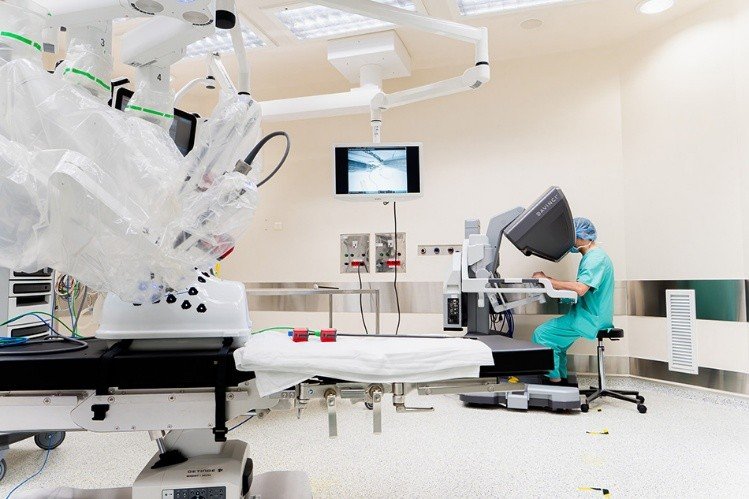
FV recently acquired the da Vinci Xi robotic surgical system, valued at over US$3 million.
FV also recently invested in the Da Vinci Xi robotic surgical system, one of the most advanced in Southeast Asia, valued at over US$3 million. Robotic surgery brings major clinical benefits but does not come cheap; we are now working with suppliers to offer attractive pricing from early 2026.
WT: FV’s merger with Thomson Medical Group is seen as a landmark deal in private healthcare. As the financial leader who guided the process, how did it feel when the deal finally closed?
TLQ: When the deal closed, it really was a ‘wow’ moment. In truth, it was the result of nearly three years of preparation and over twenty years of building a financial system behind it.
FV had the confidence to run a competitive auction with several investors in parallel. Because our financial system tracks 60 departments in detail, we could give investors whatever information they asked for, whenever they asked. They were not just looking at assets; they were looking at a professionally run, transparent and scalable operating model. I am very proud that Thomson Medical Group rated FV’s financial system so highly.

WT: After more than 20 years in healthcare finance, how would you define the role of a CFO today?
TLQ: A CFO is a partner to the business, working to build a sustainable financial foundation. The role calls for high emotional intelligence, the courage to take on challenges, and a commitment to keep learning, including in areas such as artificial intelligence.
When healthcare finance is done right, it does not only help the hospital grow; it directly raises the quality of care and helps save more lives.