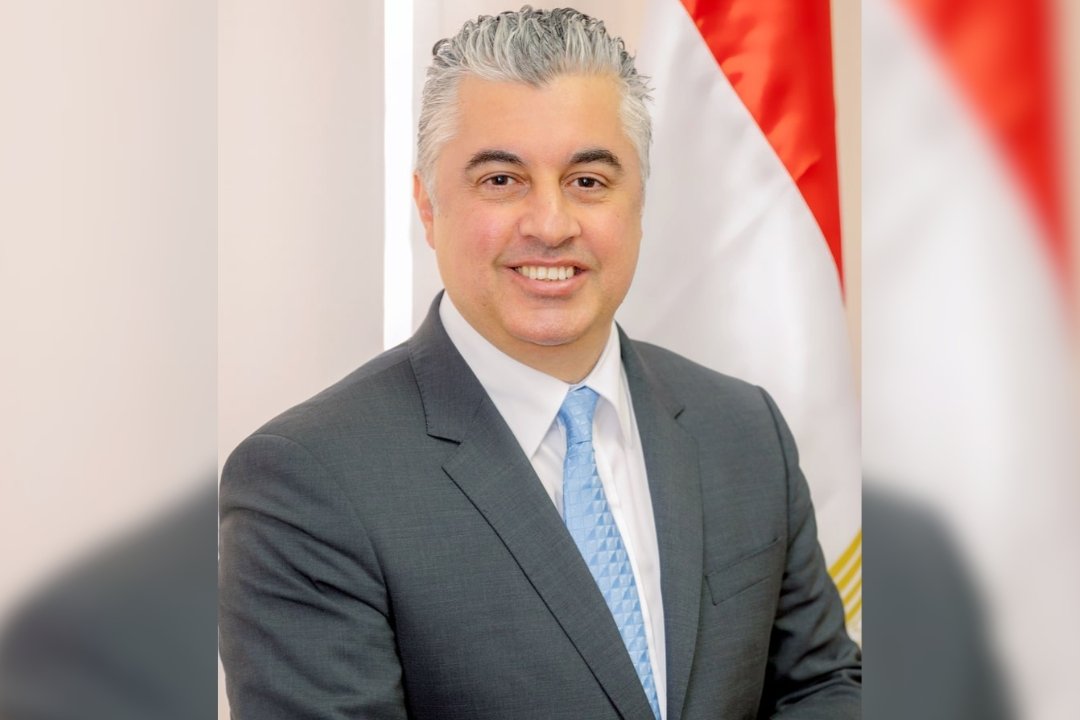

The Suez Canal Economic Zone (SCZONE) has attracted investments worth around $15bn, with foreign investors accounting for 70% of the total and domestic investors making up the remaining 30%, according to Walid Gamal El-Din, Chairperson of SCZONE. He said investors now represent 28 countries, pointing to what he described as rising international confidence in the zone’s investment environment.
Walid Gamal El-Din made the comments during the fifth session of the Tuesday Seminar for the 2025–2026 academic year, which examined the SCZONE project under the theme “The Future of Development Planning in a Changing World.” He said the diversity of investment sources reflects growing trust in the authority’s operating model and development plans.
He outlined the scale of the zone, which covers about 455 square kilometres and comprises four integrated industrial zones: Sokhna, Qantara West, East Ismailia and East Port Said. SCZONE also includes six seaports that act as a logistics base for trade and industrial activity, supporting its role as a regional centre for manufacturing and re-export.
Explaining what has driven recent investment activity, Gamal El-Din pointed to the flexibility of SCZONE’s one-stop-shop services for investors, the availability of infrastructure and utilities that meet international standards, and the institutional link between industrial areas and their associated ports. He said work is continuing to complete infrastructure and utility projects across all industrial ports to meet rising demand, adding that these efforts have improved the zone’s standing among global finance and business circles.
He also highlighted investment potential in several priority sectors, including textiles, electric batteries, tyres and cast iron, as well as pharmaceuticals and building materials. SCZONE is targeting investment across 21 priority sectors covering industry, services and logistics, with a stated aim to localise complete value chains, particularly in green energy-related industries.
On challenges that could affect returns, Gamal El-Din referred to pressures on energy-intensive industries, the high cost of green fuels, global caution around committing to green energy projects, and land characteristics in some eastern areas of the zone.
Looking ahead, he said the authority’s plans include creating about 300,000 direct jobs, increasing export value and placing greater emphasis on renewable energy and the green economy.
Separately, Alaa Zahran, Professor at the Macroeconomic Policies Centre, said the seminar aimed to outline the overall framework of the SCZONE project, reviewing its goals and implementation methods. He added that the session explored development impacts, expected outcomes in the next phase, practical ways to address constraints on returns, and the project’s wider social and economic implications for Egypt’s sustainable development path.