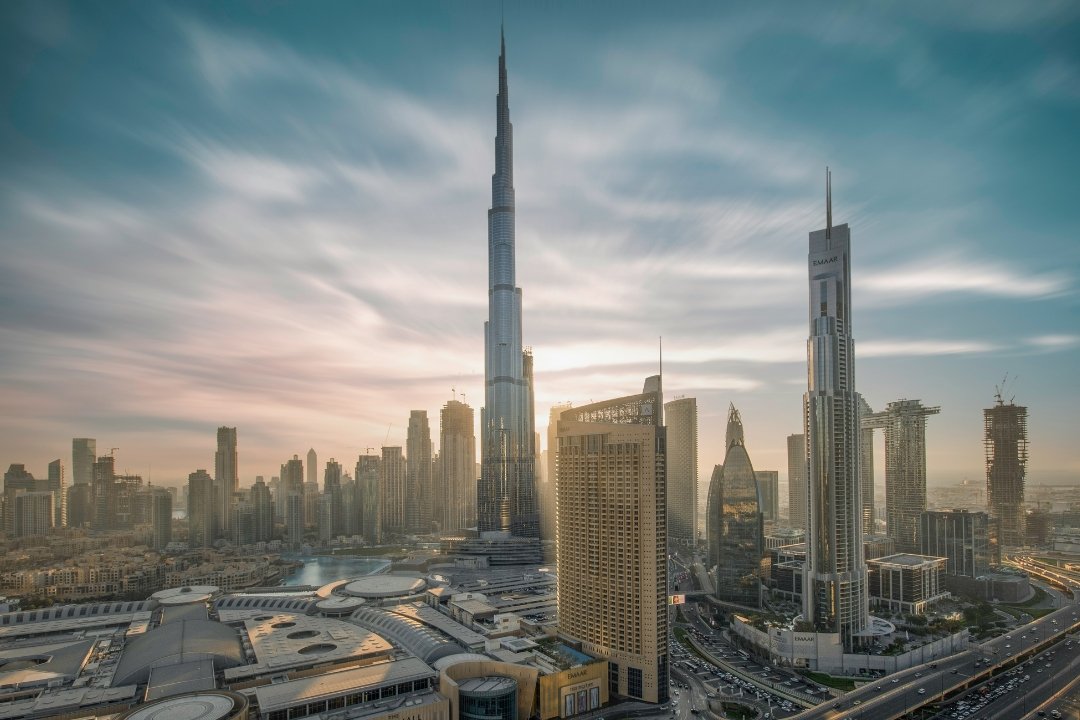

Dubai’s real estate market recorded its strongest performance on record in 2025, with transactions exceeding AED917 billion ($250 billion), marking a major milestone for the emirate’s property sector.
According to official figures, the market registered more than 270,000 property transactions during the year, representing a 20% increase compared with 2024. The results reflect a shift from rapid expansion toward a more stable and mature phase, supported by regulatory clarity, disciplined market practices and long-term investment planning.
His Highness Sheikh Mohammed bin Rashid Al Maktoum, Vice President, Prime Minister and Ruler of Dubai, praised the combined efforts behind the sector’s performance, noting that these initiatives have helped guide the market into a more advanced stage capable of converting investor confidence into sustainable value.
Sheikh Mohammed highlighted that the record outcomes reflect strong trust in Dubai’s long-term vision, the resilience of its economy and the clarity of its development strategy. He also stressed the role of careful planning, transparent regulations and a balanced approach that supports growth while protecting quality of life.
He further pointed to the strategic importance of real estate within Dubai’s diversified economy, adding that innovation continues to shape the sector with a focus on human needs and long-term prosperity.
The results were also attributed to the continued guidance of H.H. Sheikh Hamdan bin Mohammed bin Rashid Al Maktoum, Crown Prince of Dubai, Deputy Prime Minister and Minister of Defence, and Chairman of The Executive Council of Dubai, alongside H.H. Sheikh Maktoum bin Mohammed bin Rashid Al Maktoum, First Deputy Ruler of Dubai, Deputy Prime Minister and Minister of Finance. Their policies and regulatory frameworks have positioned Dubai as a global benchmark for sustainable economic planning.
The strong performance supports progress toward the Dubai Real Estate Sector Strategy 2033, which aims to increase transaction value by 70% to reach AED1 trillion. The growth trajectory also aligns with the Dubai Economic Agenda D33, which targets a doubling of the emirate’s economy and seeks to strengthen Dubai’s standing among the world’s leading cities.
Market activity remained high throughout 2025, with 3.11 million real estate transactions recorded across sales, leases and related services, representing a 7% rise year on year. Officials said this reflects increasing demand, broader market participation and the sector’s expanding role in economic output.
Real estate investment exceeded AED680 billion during the year, spread across 258.6 thousand transactions. This marked a 29% rise in value and a 20% increase in deal volume. The number of investors grew to around 193.1 thousand, up 24%, including 129.6 thousand new investors, a rise of 23%. Resident investors accounted for 56.6% of the total base.
Women continued to increase their participation in the market, investing AED154 billion through 76.7 thousand transactions. This represented growth of 31% in value and 24% in volume, pointing to a more inclusive investment environment.
Luxury real estate investment reached AED3.98 billion, up 5% year on year. Data also showed that the average renter transitioned into property ownership after 4.8 years, indicating growing appeal for long-term investment.
Property sales and mortgage activity remained strong across multiple districts. By transaction volume, the top areas were Al Barsha South Fourth, Business Bay, Wadi Al Safa 5, Dubai Airport City, Dubai Marina, Jebel Ali First, Al Yelayiss 1, Wadi Al Safa 3, Dubai Investment Park Second and Al Thanyah Fifth.
By transaction value, Business Bay led the rankings, followed by Dubai Marina, Palm Jumeirah, Burj Khalifa, Al Barsha South Fourth, Mohammed Bin Rashid Gardens, Dubai Airport City, Wadi Al Safa 5, Wadi Al Safa 3 and Al Yelayiss 1.
Mortgage activity also remained robust. In terms of transaction volume, leading areas included Al Barsha South Fourth, Dubai Marina, Jebel Ali First, Wadi Al Safa 5, Burj Khalifa, Al Thanyah Fifth, Business Bay, Madinat Hind 4, Al Merkadh and Al Hebiah Fourth. By mortgage value, Palm Jumeirah ranked first, followed by Dubai Marina, Business Bay, Al Barsha South Fourth, Burj Khalifa, Al Wasl, Mohammed Bin Rashid Gardens, Al Thanyah Fifth, Jebel Ali First and Al Thanyah Fourth.
Omar Hamad Bu Shehab, Director General of Dubai Land Department, said the sector’s performance reflected a more stable and sustainable market supported by transparency, governance and data-led policies. He added that the results align with both the Dubai Economic Agenda D33 and the Dubai Real Estate Sector Strategy 2033, backed by legislation, digital transformation and collaboration with developers, brokers and other stakeholders.
Bu Shehab said ongoing efforts to streamline processes, improve services and strengthen investor confidence continue to reinforce Dubai’s position as a leading destination for long-term real estate investment.