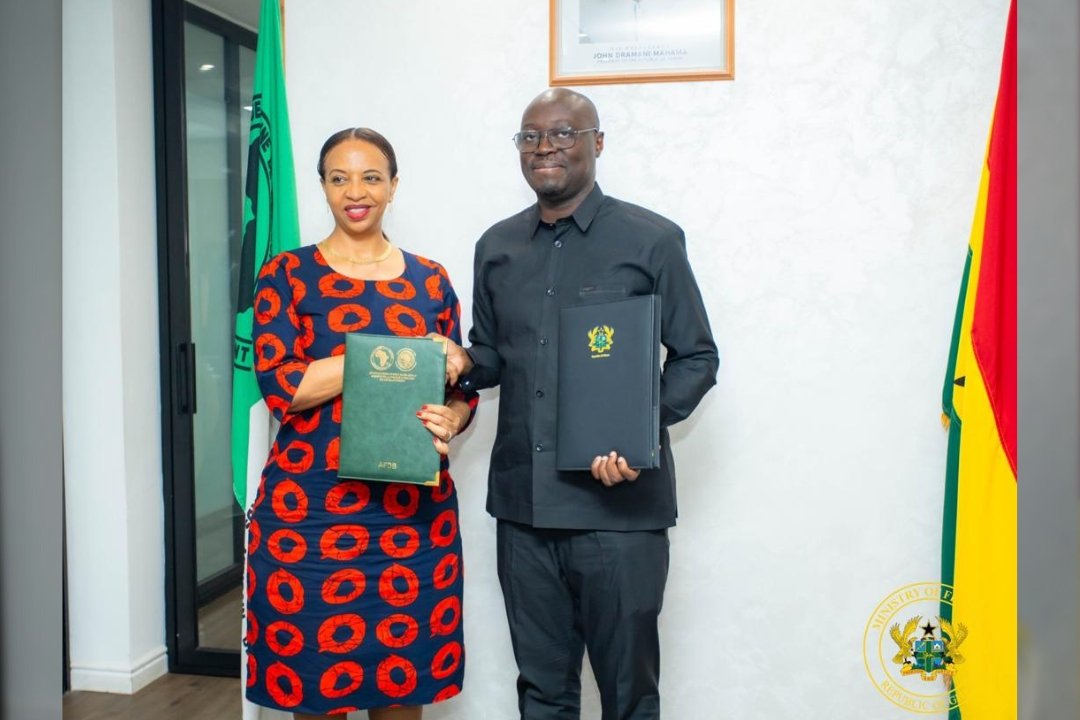

The Government of Ghana has reaffirmed its commitment to working closely with the African Development Bank (AfDB) as it pushes forward its national transformation agenda. This was stated by the Minister for Finance, Dr. Cassiel Ato Forson, during the signing ceremony of the grant agreement for the Ghana Women and Youth Employment and Social Cohesion (GWYESCO) Project.
The initiative represents Ghana’s first Results-Based Financing (RBF) operation backed by the AfDB and is considered a significant step in improving the effectiveness, impact, and accountability of public spending. The AfDB Board of Directors approved a total of US$71.25 million in grants to fund the programme.
GWYESCO is designed to advance Ghana’s long-term development objectives by boosting resilience, creating economic opportunities, and enhancing social cohesion. It aims to improve the livelihoods of women and youth through job creation, support for entrepreneurship, better access to finance, and targeted skills development, especially in underserved and vulnerable communities.
Speaking at the event, Dr. Forson highlighted the importance of women and youth to Ghana’s creative and productive capacity. He noted that structural barriers, including high unemployment, restricted access to finance, and limited skills, continue to hamper their potential.
“With the support of the African Development Bank, GWYESCO will train young people, empower women entrepreneurs, expand financing opportunities, strengthen micro, small and medium enterprises (MSMEs), and build the capacity of key institutions to advance inclusive development,” he said. He also added that the Bank’s involvement would strengthen resilience in communities facing climate-related risks and security challenges.
A key element of the programme is its Results-Based Financing approach, which ties funding to measurable and verifiable outcomes. This marks a shift from traditional input-based financing and is expected to increase transparency, efficiency, and accountability while reinforcing national systems for sustainable programme delivery. Anticipated results include higher employment levels, increased household incomes, expanded business opportunities, and stronger community resilience.
The AfDB Country Director, Fasika Eyerusalem, praised the Government of Ghana for its leadership, ownership, and professionalism during the programme’s design and negotiation. She reaffirmed the Bank’s commitment to providing ongoing technical and strategic support to ensure that the programme achieves and exceeds its objectives.
The signing ceremony was attended by representatives from the African Development Bank, officials from the Ministry of Finance, and the Social Investment Fund.